Grilled Branzino

Image

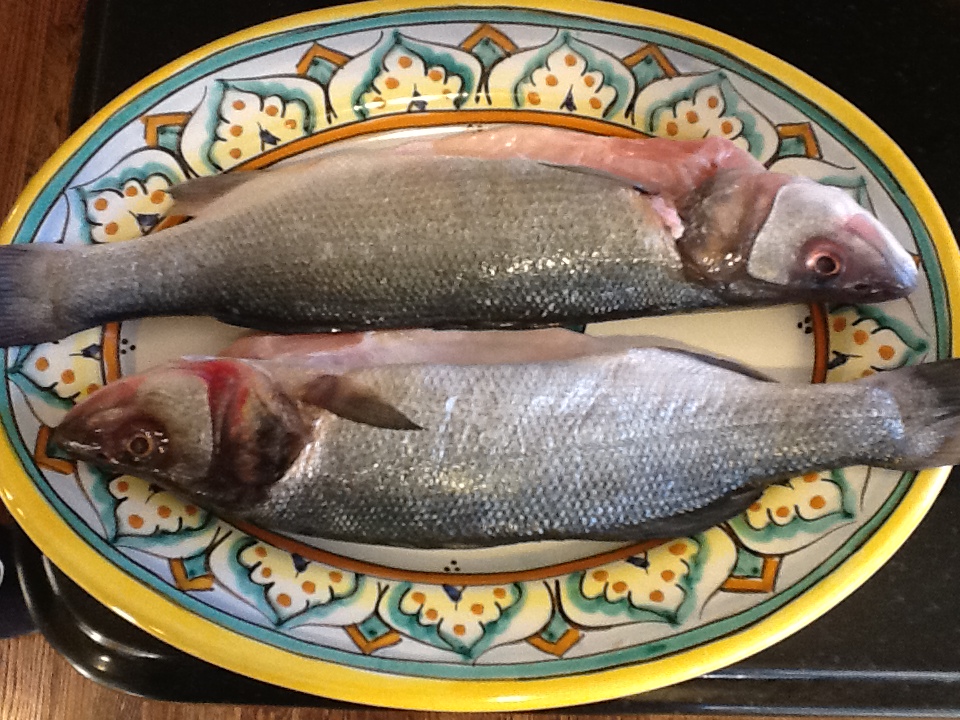
The snow had barely disappeared after this past brutal winter in the Northeast, and I desperately need to grill something…..anything. We usually manage to shovel a path to our grill on our deck periodically throughout the long winter months.  But not this year!  It had been months since I’d  tasted those wonderful, earthy flavors that you can only achieve on an outdoor grill.  So at the first glimpse of spring, I knew I had to choose what would be my first grilled meal.  Sure, hotdogs and hamburgers would have been a good, easy choice, but I felt this called for a celebration and wanted something a bit more festive and perhaps involved.  I wanted to spend some time preparing the food for my first grilling of the season.  I decided on grilled, whole branzino. This is a mediterranean fish, that I first became acquainted with in Italy many years ago. It soon became very popular in high-end Italian restaurants, as well as Greek restaurants.  They all prepare it to perfection, but there is something wonderful about the flavor when you cook this fish on the grill.

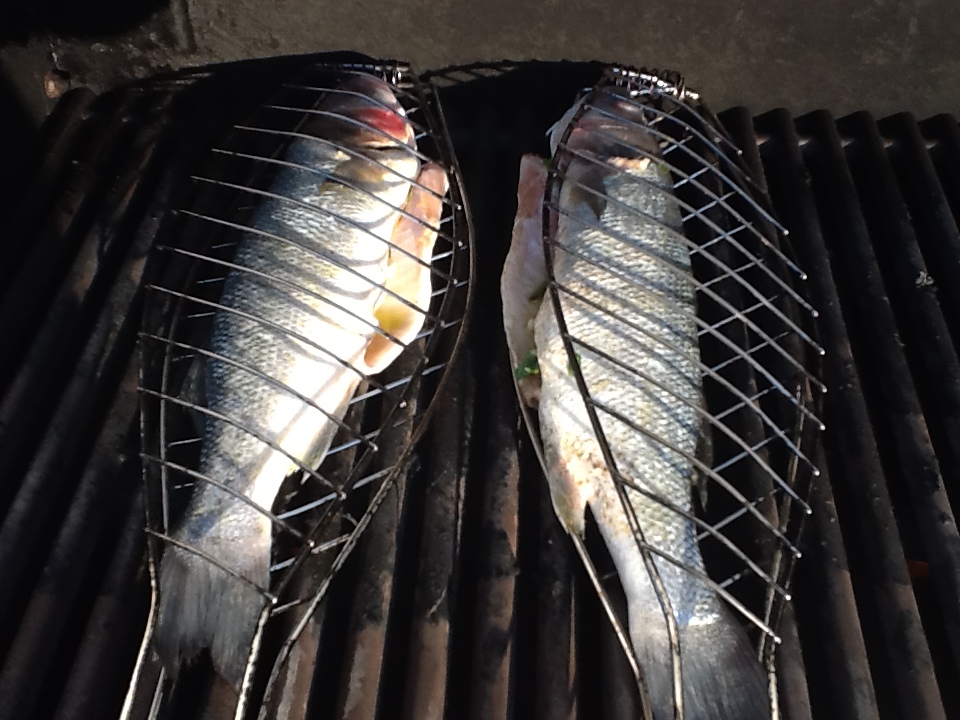
The first time we attempted this, it was a bit daunting.  We had no recipe, but knew how we like our branzino prepared.  First we went out and bought the wire grilling baskets for the fish.  I believe they still sell these contraptions, but I’ve also seen some newer equipment for just this purpose.  However, you want to make sure you can turn the fish to get that grilled, crispy flavor on both sides.  Once you have the right equipment, the rest is very easy.  Did I mention that you have to handle the fish, while they seem to stare directly back at you?  Okay, so this part is not for me.  As a matter of fact, the only part that is for me is the buying and the eating of the fish.  I pass the entire rest of the process on to my husband.  Oh sure, I help chop the parsley and garlic…or slice the lemons, but I’m a baby about actually handling the fish.

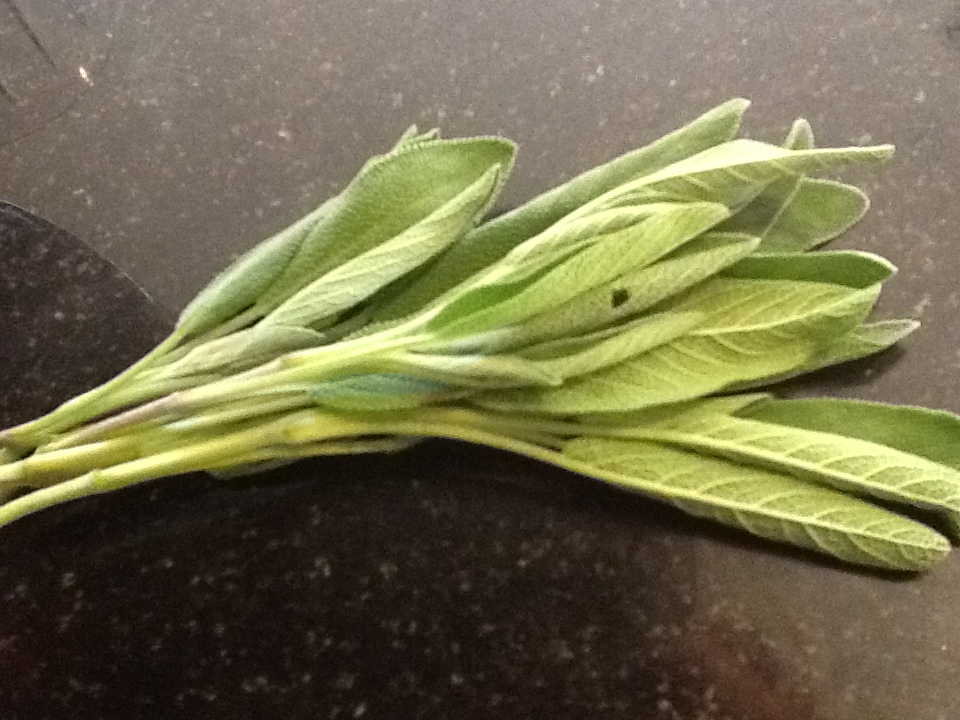
There are a lot of variables with this recipe, and I always like to share these.  First of all, you can really stuff the fish with any herb of your choice.  We used sage and parsley here, but rosemary, thyme, oregano or tarragon are also wonderful. Fresh herbs are always better.   Use what you like.  The amount of garlic is also up to you, but do use at least one clove for flavor.  You can add a little vinegar and/or mustard to the oil to make it more of a vinaigrette.  I strongly urge you to always serve it with lemon wedges (you can also throw some lemon slices in the cavity).  It’s the wonderful, citrus flavor of the lemons that reminds us of the Mediterranean.  It is perfection!


RECIPE: serves 2 to 4

2 whole branzino, approximately 1 1/2 pounds, scaled, cleaned and fins removed

1 cup olive oil

4 -5  large cloves of garlic chopped

1/2 cup parsley, chopped

2 large sprigs of sage ( or herb of voice)

4 lemons, one thinly sliced, and the other 3 cut into wedges

1 TBSP sea salt

pepper to taste

1.  Prepare grill to medium-hot.

2.  Prepare the sauce by combining the garlic, parsley, olive oil,  1/2 TBSP. of salt and pepper.  Mix well.

3.  Season each fish cavity with salt and pepper.  Place the lemon slices, sage and some of the sauce inside the cavity.  Season the outside with the remaining salt and pepper. Drizzle a bit of the sauce (just the oil) on the outside of the fish.  Place each fish in it’s separate basket and close the latch.

4.  Place the fish baskets on the grill.  Cook, turning once, until the skin is crispy and the fish is cooked through, 4 to 6 minutes per side.

5.  Unlatch the baskets, and transfer the fish to a platter.  This makes a beautiful presentation.

6.  If cooked well, filleting the fish is quite easy.  You cut off the head, tail, and the spine will easily come out, leaving two beautiful, plump filets.  Drizzle the remainder of the sauce on top of the filets, and serve with fresh lemon wedges, making sure to squeeze the fresh lemon juice all over the fish.
 

ImageImageImageImageImageImageImageImageImage


Nigella’s Lemon Polenta Cake

Image

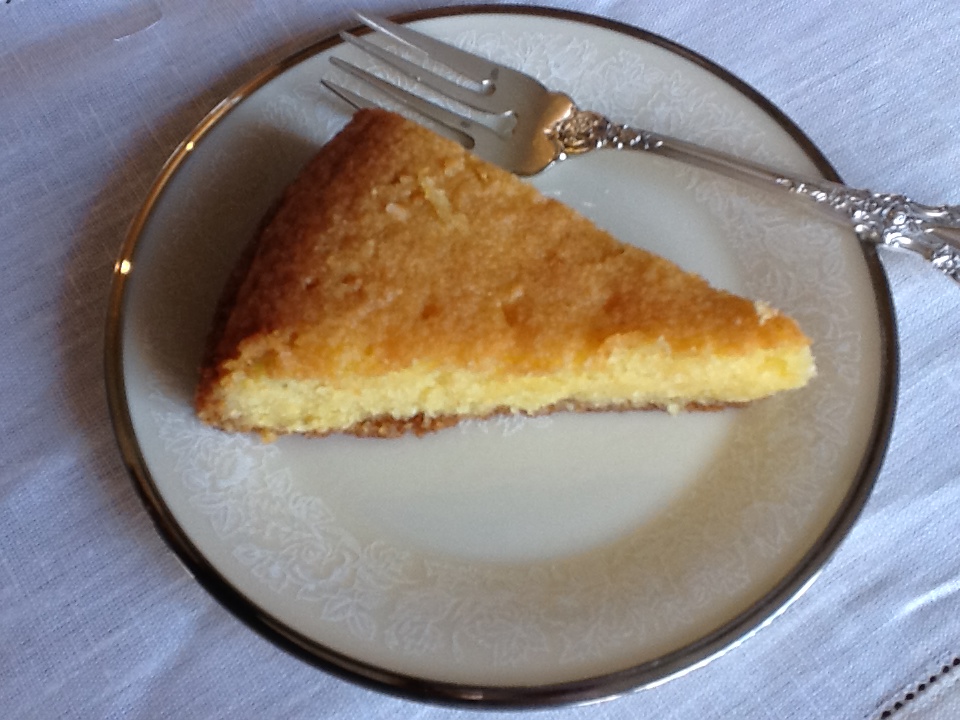
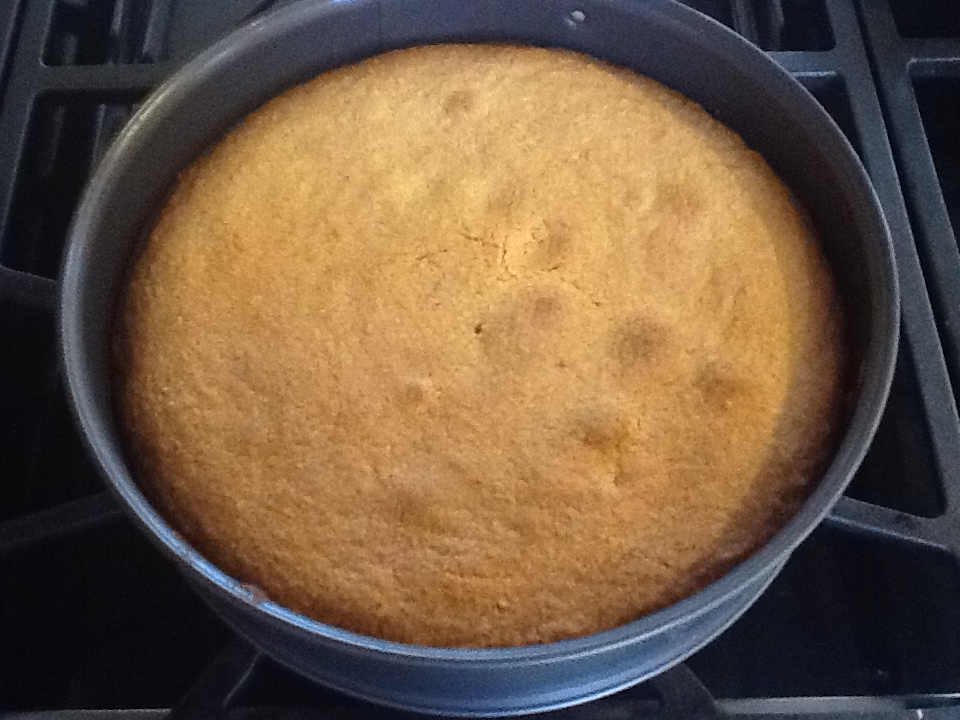
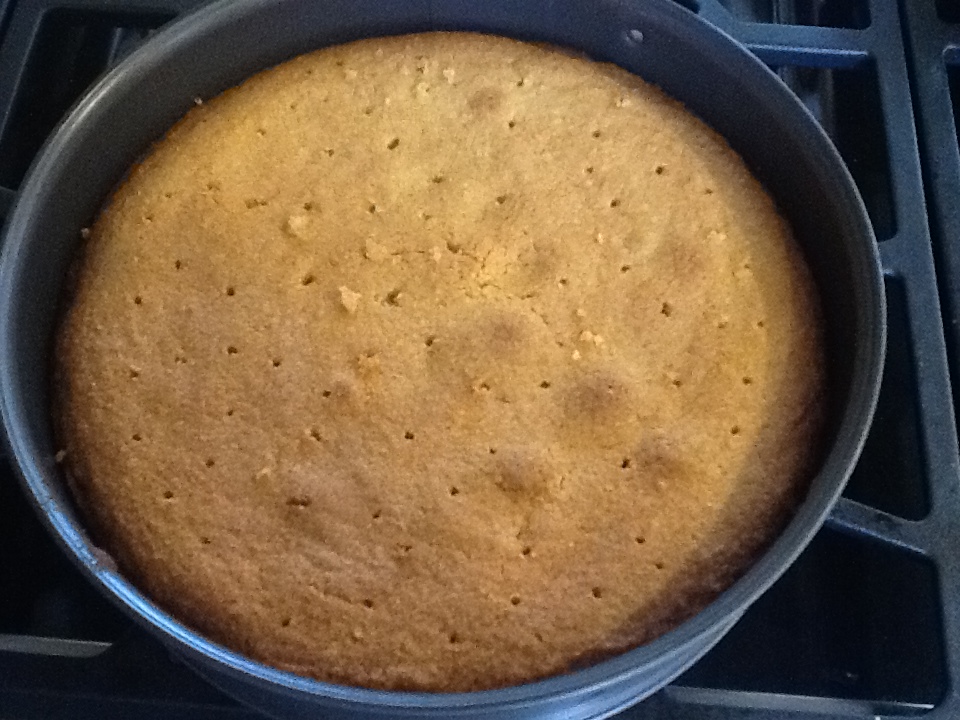
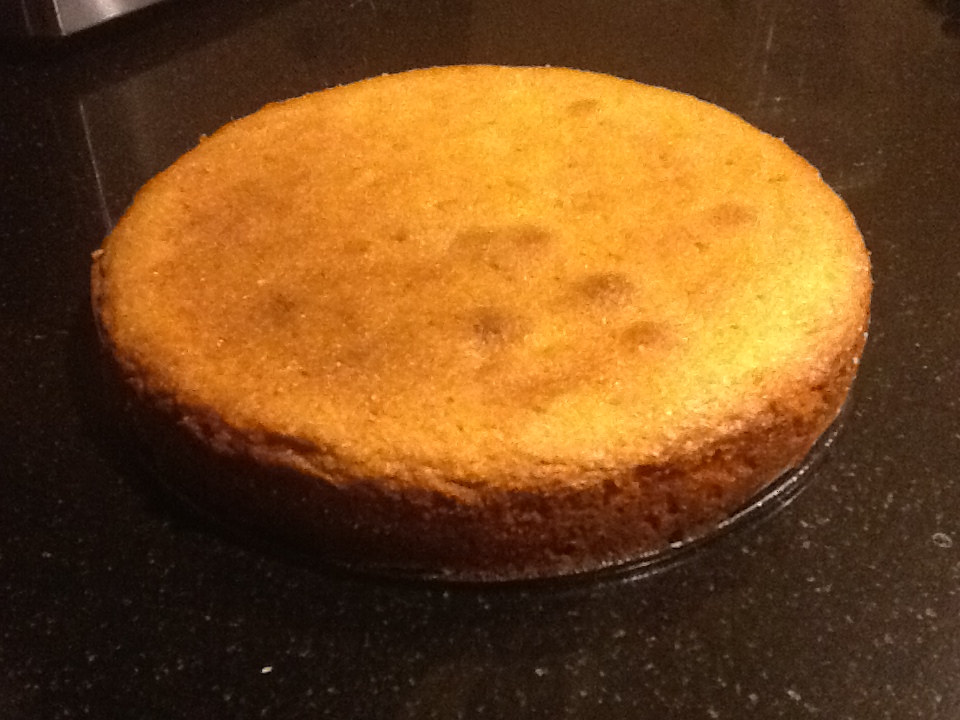
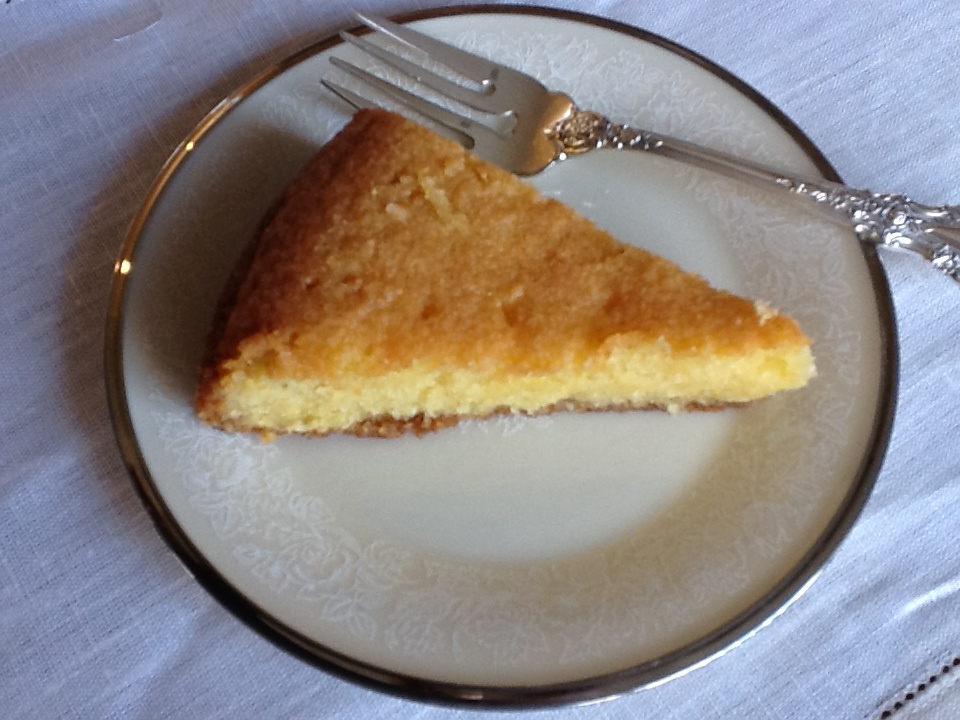
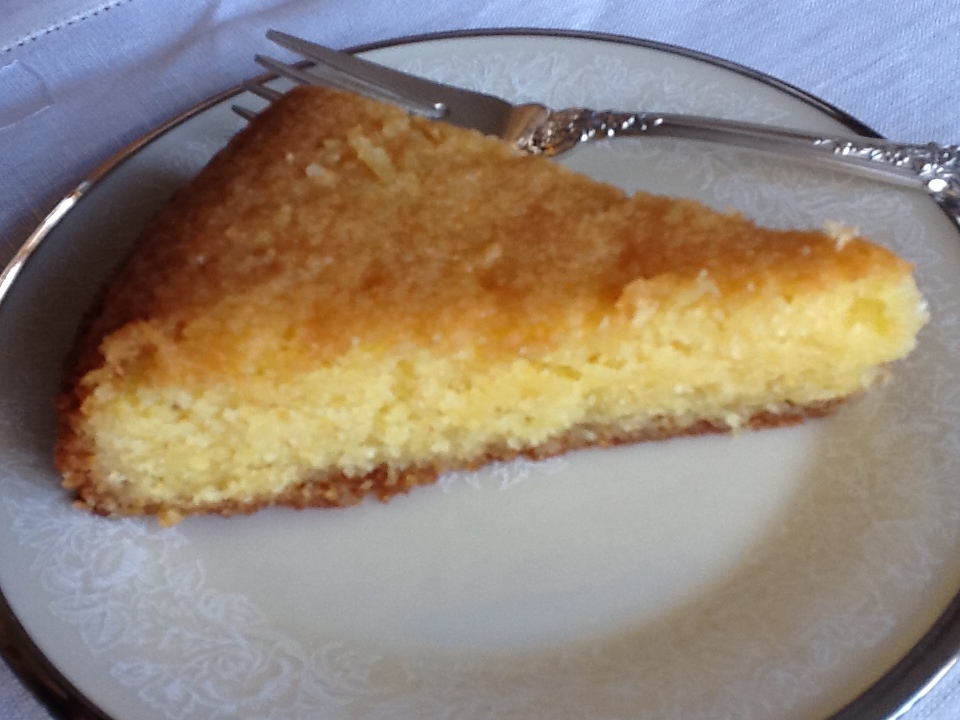
This may be Nigella Lawson’s Lemon Polenta Cake recipe, but the memories that it evokes for me are those of long ago, at Sunday family dinners.  Several months ago my sister made this cake for a family Sunday dinner, and the moment I tasted it, I knew I had eaten this cake before, but I wasn’t quite sure where or when.  The taste haunted me. Each bite brought me closer and closer to realizing the occasion where I might have tasted this nutty, citrusy sweetness.  And then it hit me.  On occasion, my grandmother would bake a cake similar to this, although not exactly the same.  To the best of my recollection, her cake was not as sweet.  I don’t think she added the final touch of the confectioners sugar/lemon syrup.  I wondered if my sister had my grandmother’s recipe, but was greatly surprised when she told me she got it off Nigella Lawson’s website.  I loved this cake then, and I love it now. I especially love the feeling that it arouses in me as I delight in it’s very distinctive taste and texture.  It’s no wonder that it’s unforgettable.

RECIPE:   You will need a 9 inch springform pan.

CAKE:

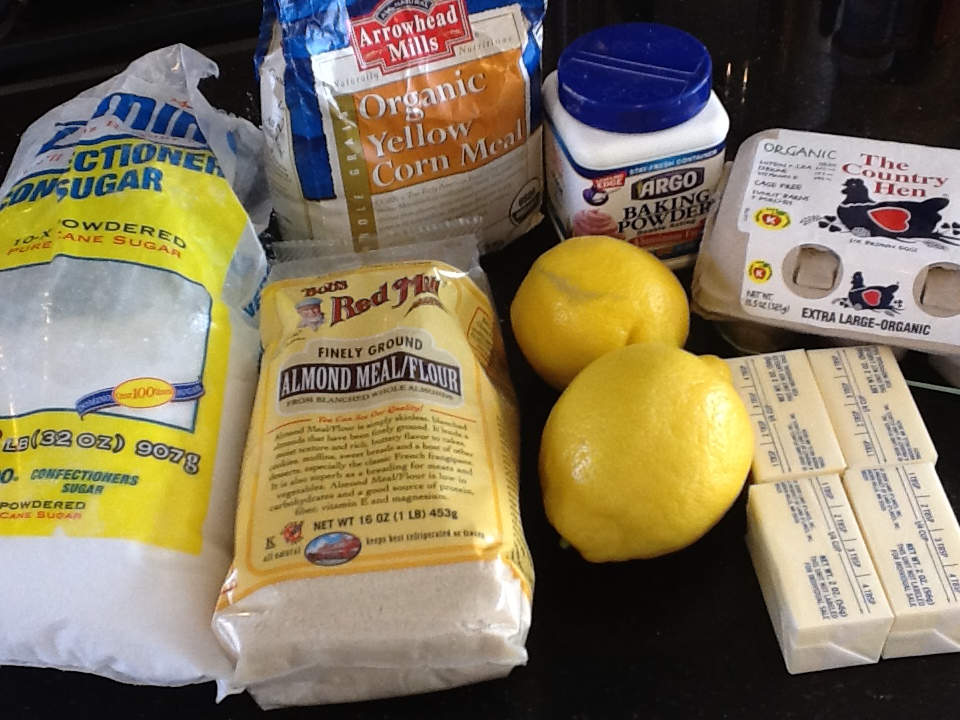
1 3/4 stick  (14 TBSP) soft unsalted butter

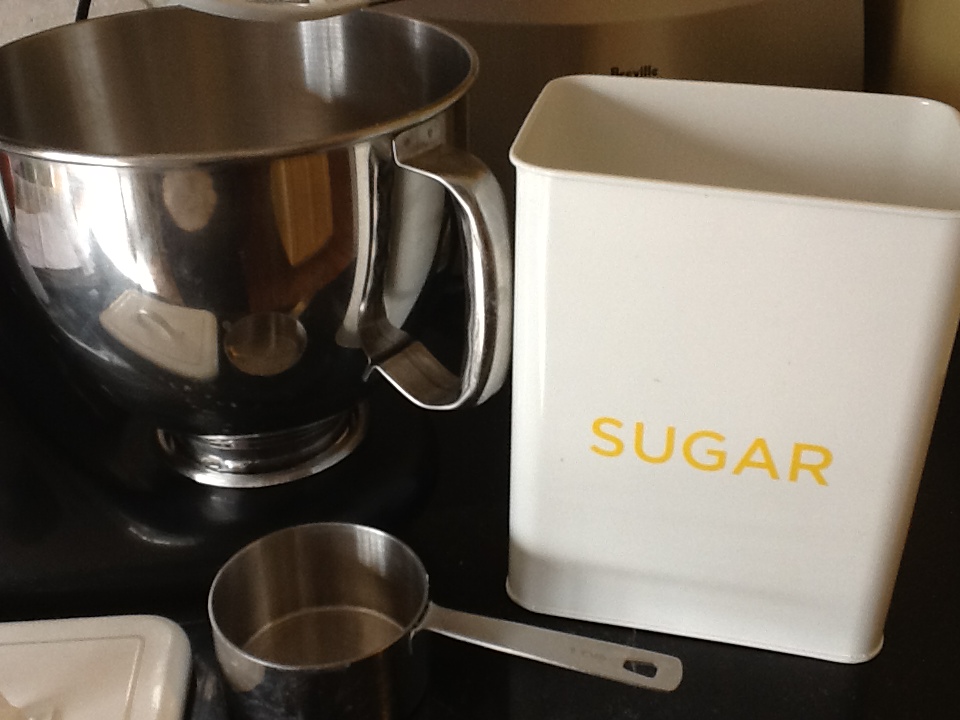
1 cup superfine sugar

2 cups almond meal/flour

3/4 cup fine polenta (cornmeal)

1 1/2 tsps. baking powder

3 eggs

Zest of 2 lemons ( save the lemons to juice for the cake)

SYRUP:

Juice of 2 lemons

1 heaping cup of confectioners sugar

1.  Line the base of your pan with parchment paper and grease it’s sides lightly with butter.

2.  Preheat oven to 350 degrees.

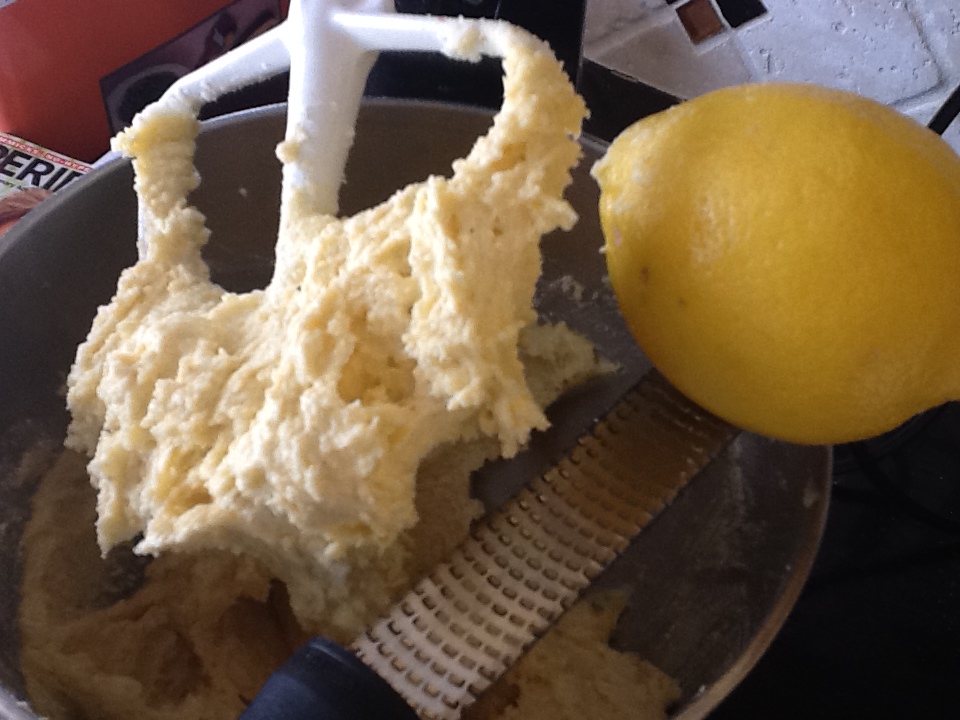
3.  Beat the butter and sugar until whipped.

4.  Mix together the almond meal, polenta and baking powder.

5.  Beat some of the dry mixture into the butter-sugar mixture, followed by 1 egg, then alternate dry ingredients and eggs, beating all the while.

6.  Finally, beat in the lemon zest.

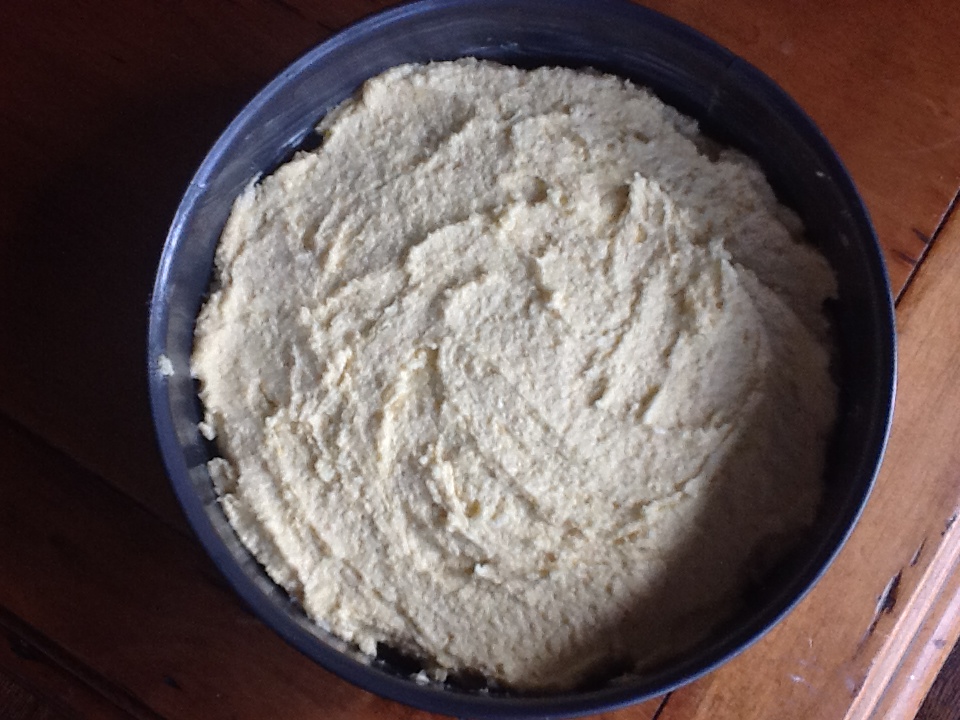
7.  Pour, spoon or scrape the mixture into your prepared pan and bake in the oven for about 40 minutes.  Use a cake taster (toothpick will do) to make sure it is cooked through.  Remove from the oven and cool on wire rack, but leave it in the pan to cool.

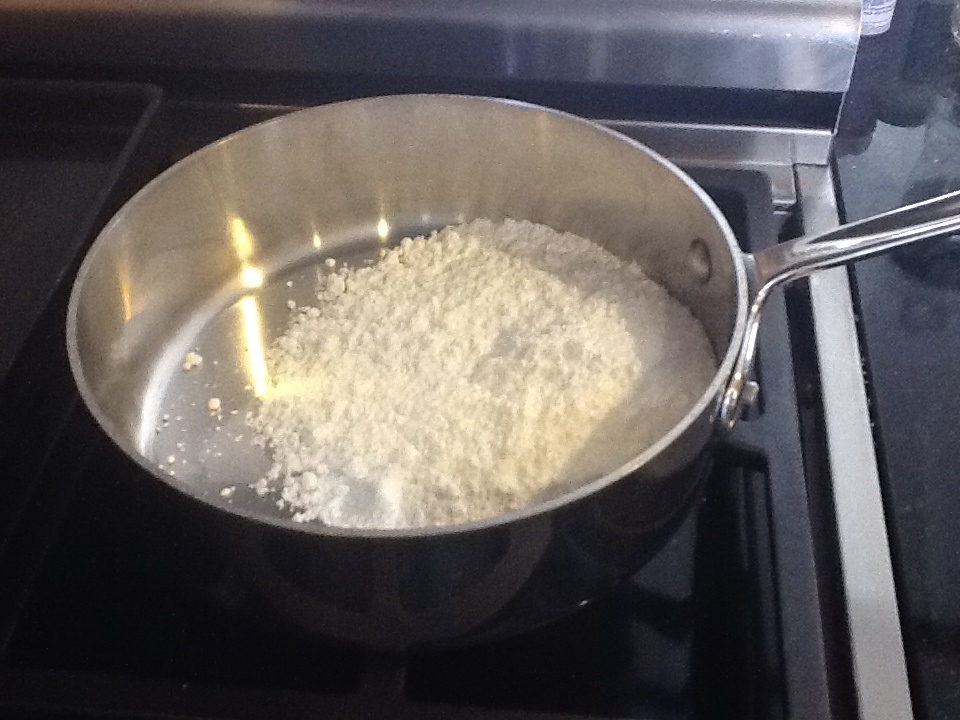
8.  Make the syrup by boiling together the lemon juice and the confectioners sugar in a smallish saucepan.  Once the confectioners sugar has dissolved into the juice, the syrup is done.  Remove from the heat.

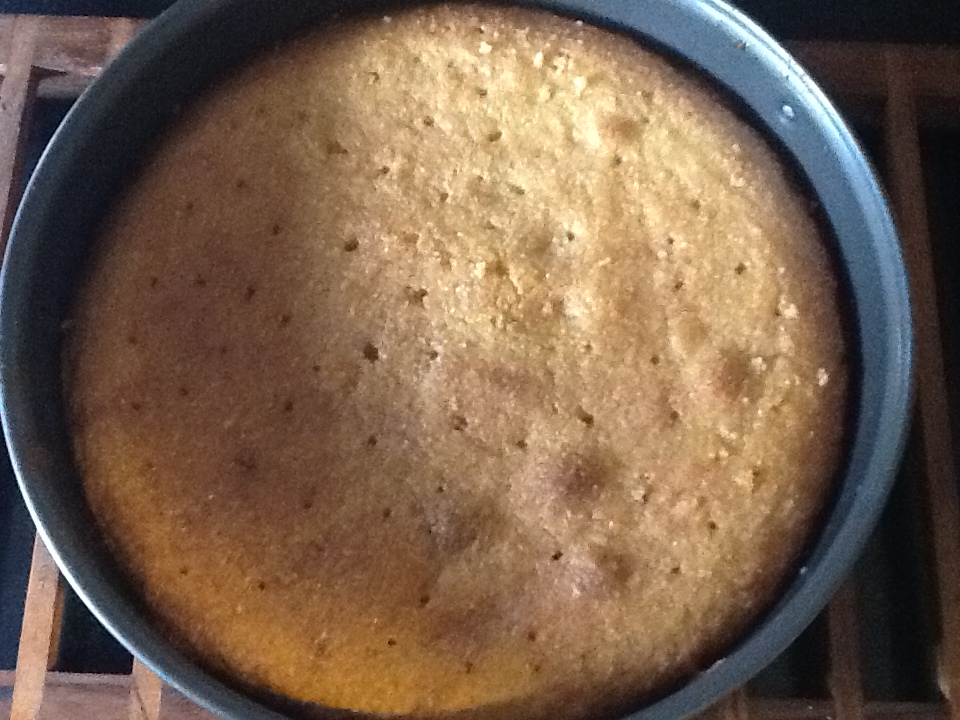
9.  Prick the top of the cake all over with a cake tester (or toothpick) and pour the warm syrup over the cake.  Leave it to cool before taking it out of the pan.

ImageImageImageImageImageImageImageImageImageImageImage

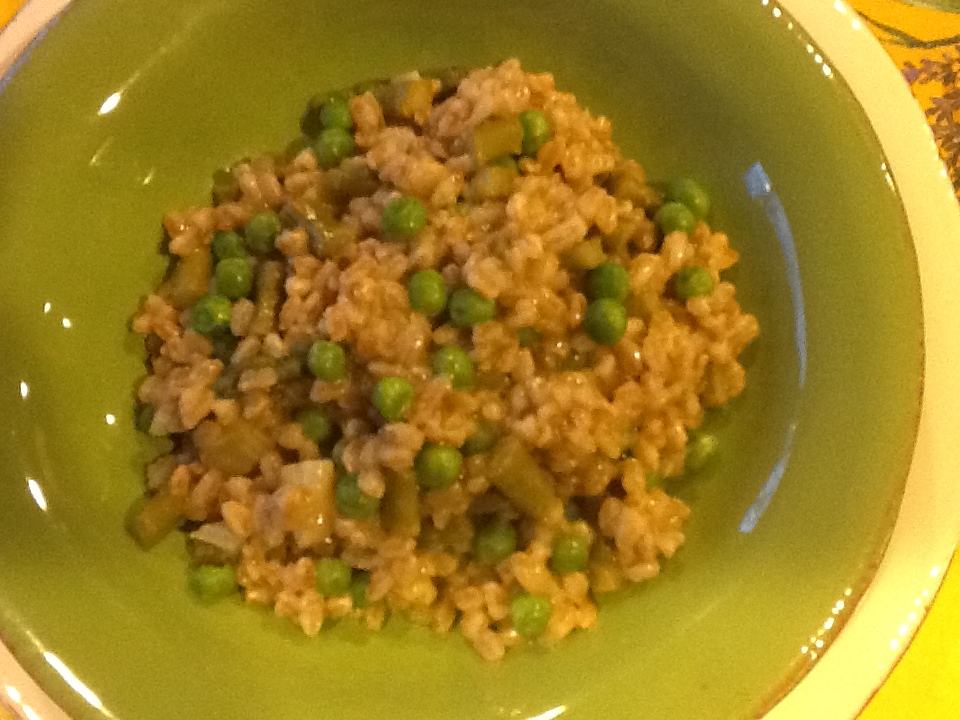
Farrotto with Asparagus and Peas

Image

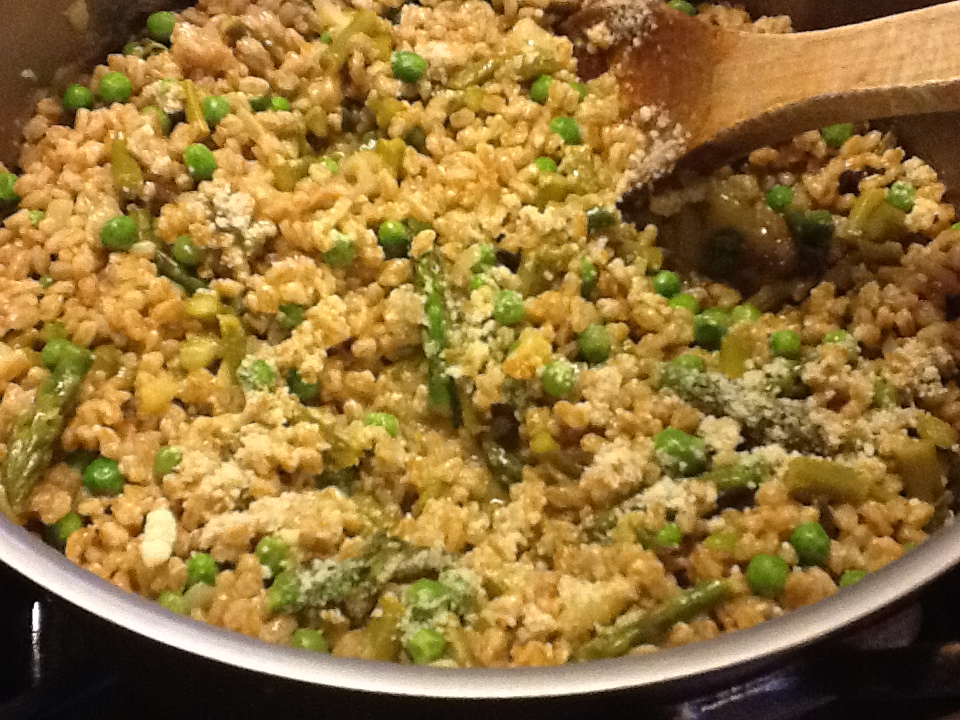
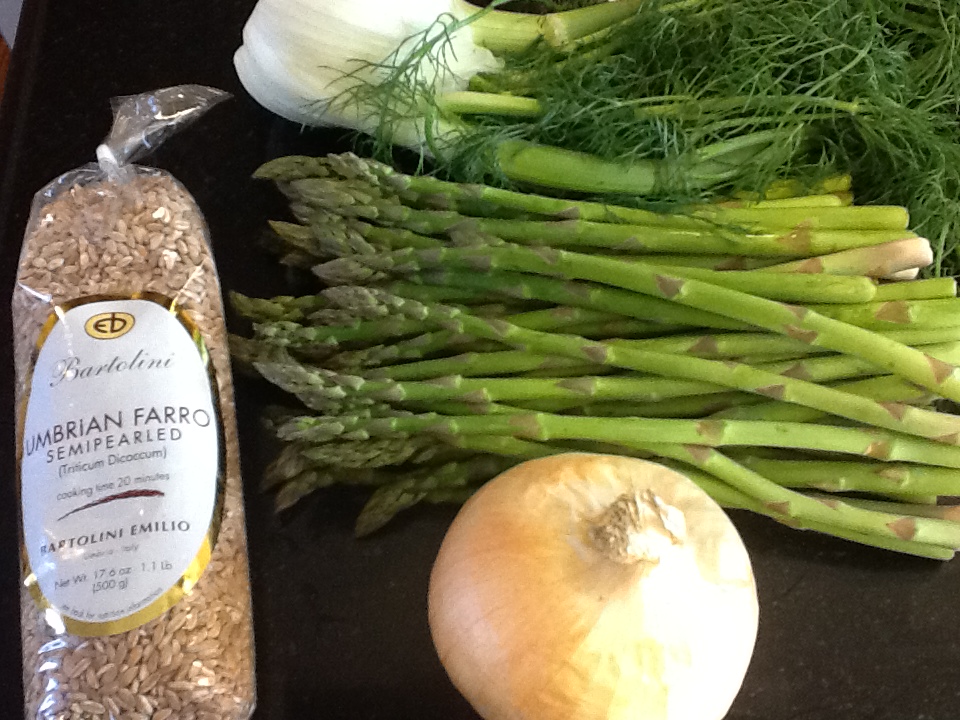
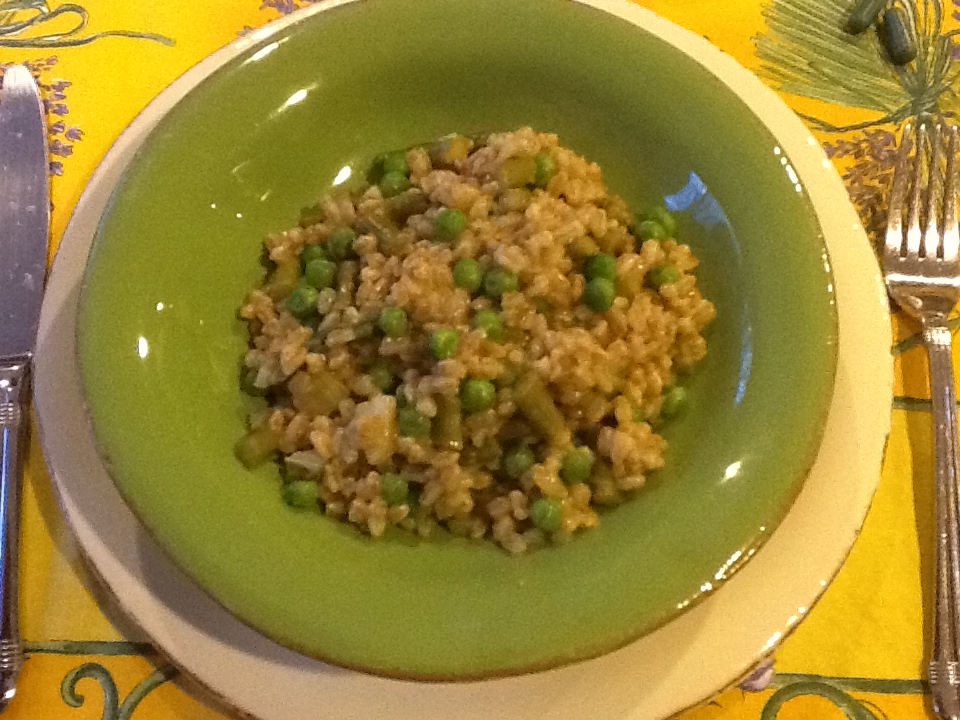
Are you wondering what “farrotto” is?  I’m not sure if this is a correct culinary term, but this is what I call risotto made with farro instead of rice.  I certainly don’t want to take credit for this term, as I’m sure I saw it on a menu somewhere.  I’m just not that clever!  But whatever you want to call this, I’m sure you’ll love it’s crunch, and slightly nutty taste.  It’s much more flavorful than rice, and  much easier to cook than risotto.  You don’t have to stand over the pot, stirring and adding ladles full of broth. It’s also healthier for you than rice as it is a grain, an ancient grain at that.  Italians claim that it’s the original grain from which all others derive.  Of course they do!  When you purchase farro (which is easy to do nowadays), make sure the package says “Triticum dicoccum,” which is farro’s Latin name.  Otherwise it might be a similar grain, such as spelt or barley, and you will find it cooks differently and will be somewhat mushy….not firm to the bite like farro.  They will work, but be careful not to make it mushy.

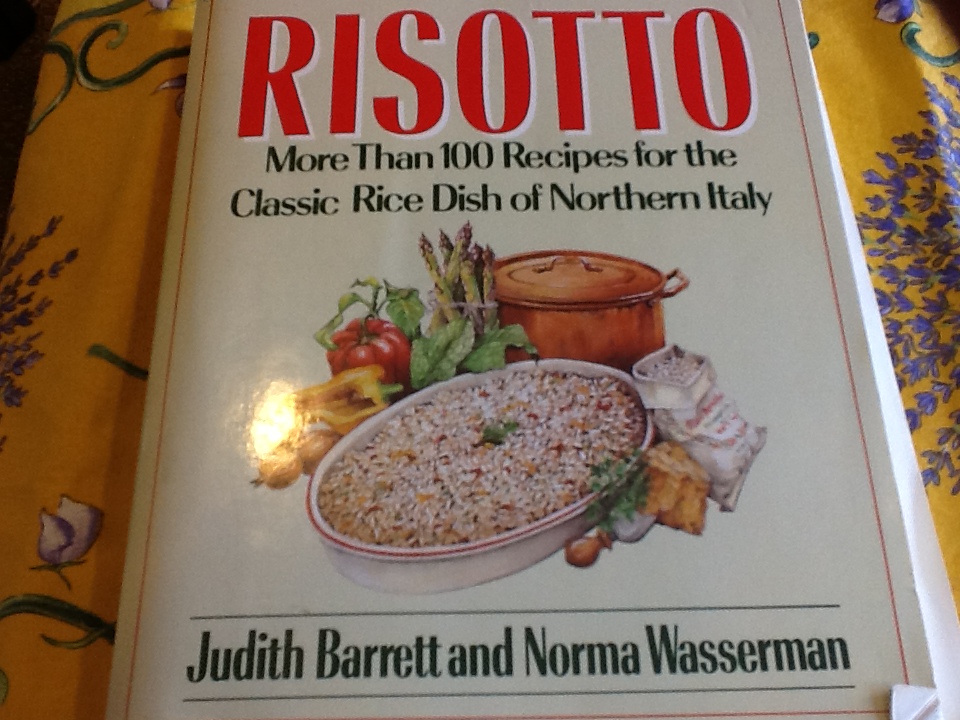
I do still love risotto, made with arborio or carnaroli rice, but I find myself using farro more and more.  I have a favorite risotto cookbook by Judith Barrett and Norma Wasserman.  My sister gave me this cookbook many years (decades) ago, and I would bet I’ve made almost every recipe in it.  One of my favorites is with asparagus, especially in the spring when they’re in season.  I sometimes change it a bit by adding peas and using fennel in the soffritto.  All you have to do is use farro instead of the rice, and wallah, you have farrotto.  I think it’s a nice change.  I hope you do too.  I’d love to know what you think.

RECIPE:  serves 4

BRODO

5 cups vegetable broth, approximately, you might need more

1/2 cup dry white wine

SOFFRITTO  

2 TBSP unsalted butter

1 TBSP olive oil

1/3 cup finely minced onion

1/2 cup chopped fennel (optional, but not really, you’ll love it!)

RISO

1 1/2 cups farro

CONDIMENTI

1 pound  (can be a bit more) fresh asparagus, washed, cut into 1-inch pieces, tough bottom parts discarded and tips reserved separately.

1 cup frozen peas ( or fresh)

1 TBSP unsalted butter

1/3 cup grated Parmesan cheese

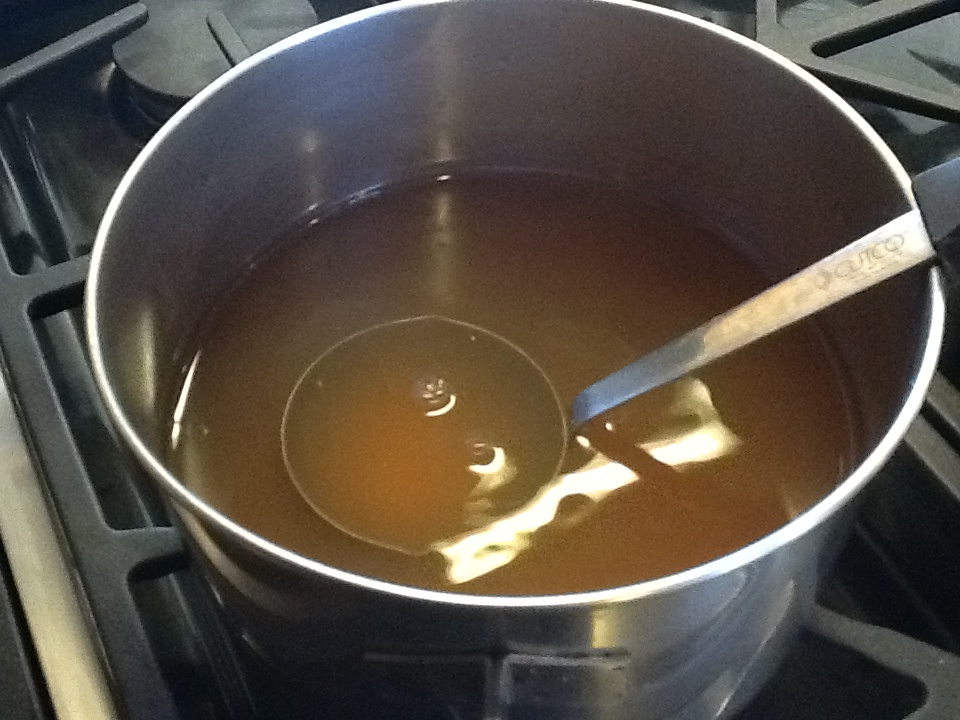
1. BRODO:  Bring the broth to a steady simmer in a saucepan on top of the stove.

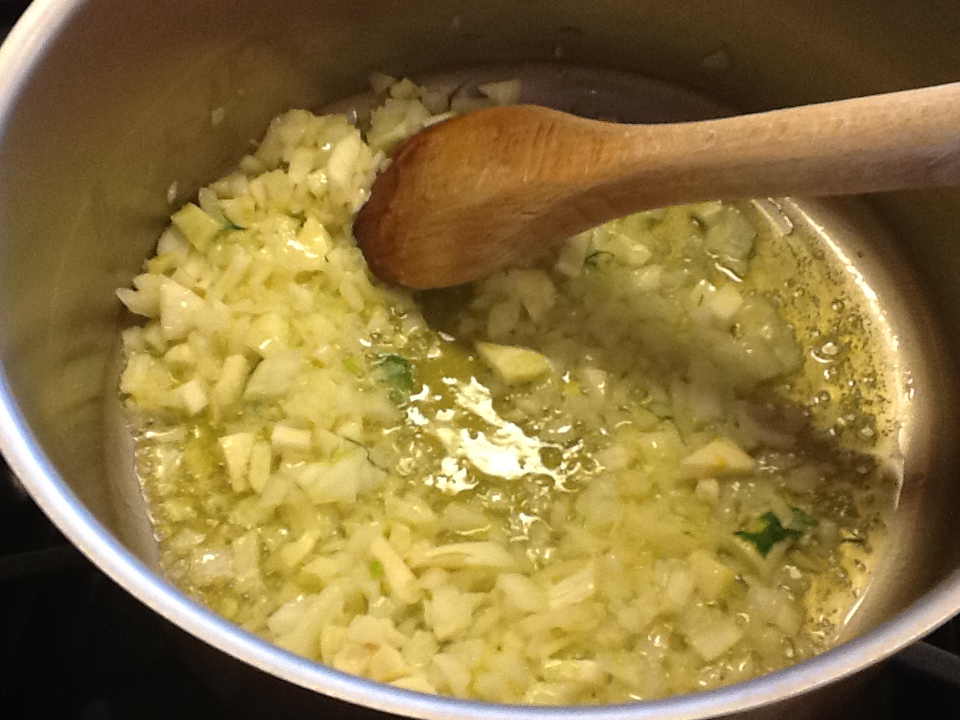
2. SOFFRITTO:  Heat the butter and oil in a heavy 4 quart pot over moderate heat.  Add the onion (and fennel) and sauté for 2 to 3 minutes, until it begins to soften, being careful not to brown it.

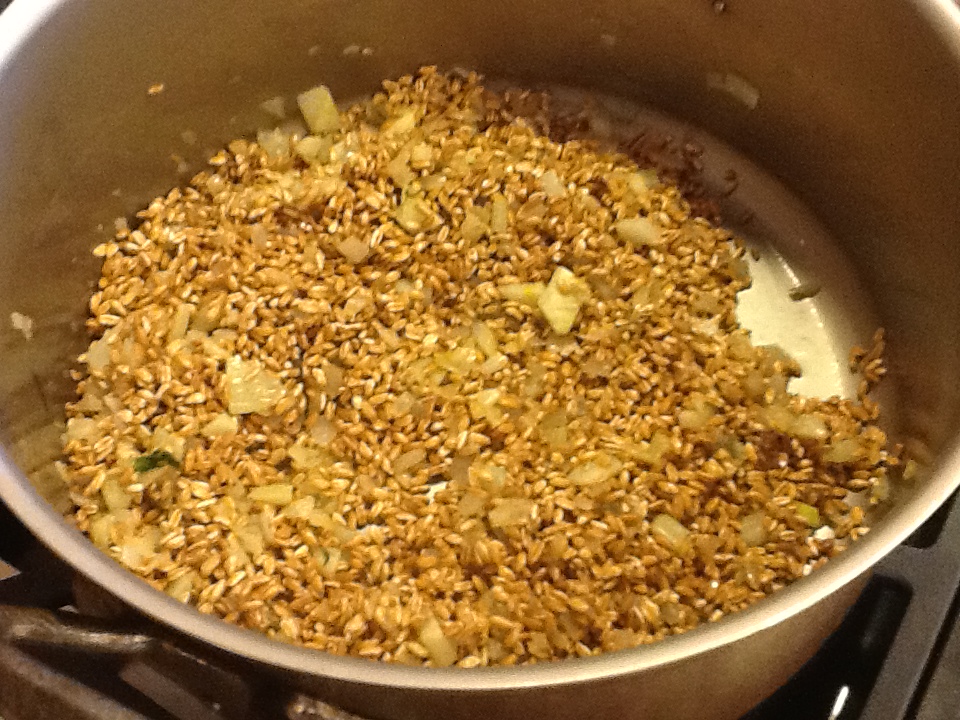
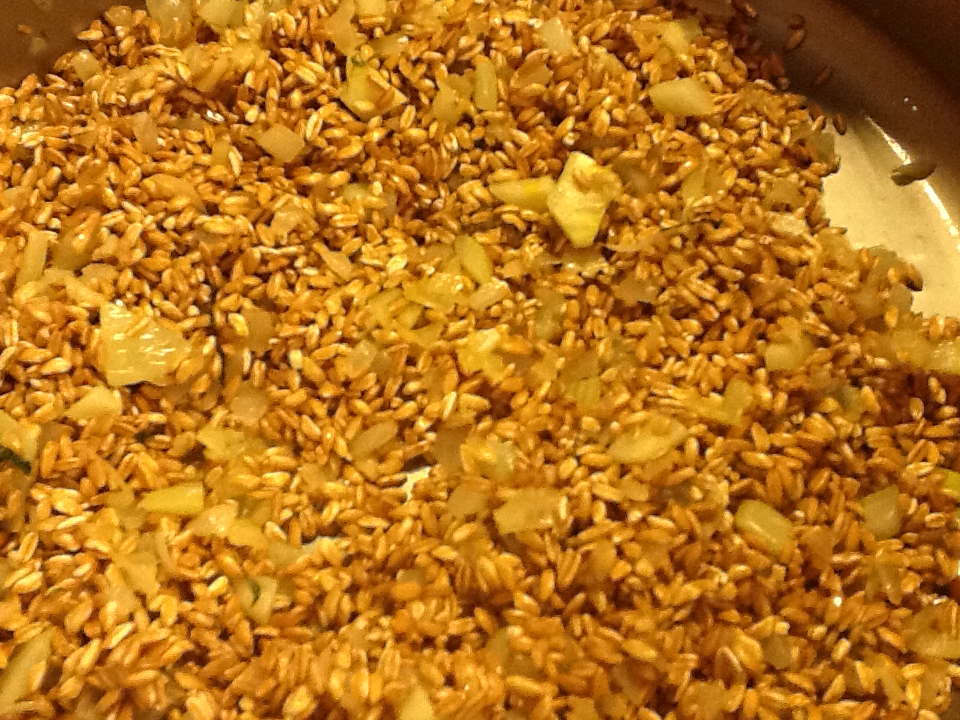
3. RISO:  Add the farro to the soffritto; using a wooden spoon; stir for 1 minute, making sure all the grains are well coated.  Add the wine and stir until completely absorbed.

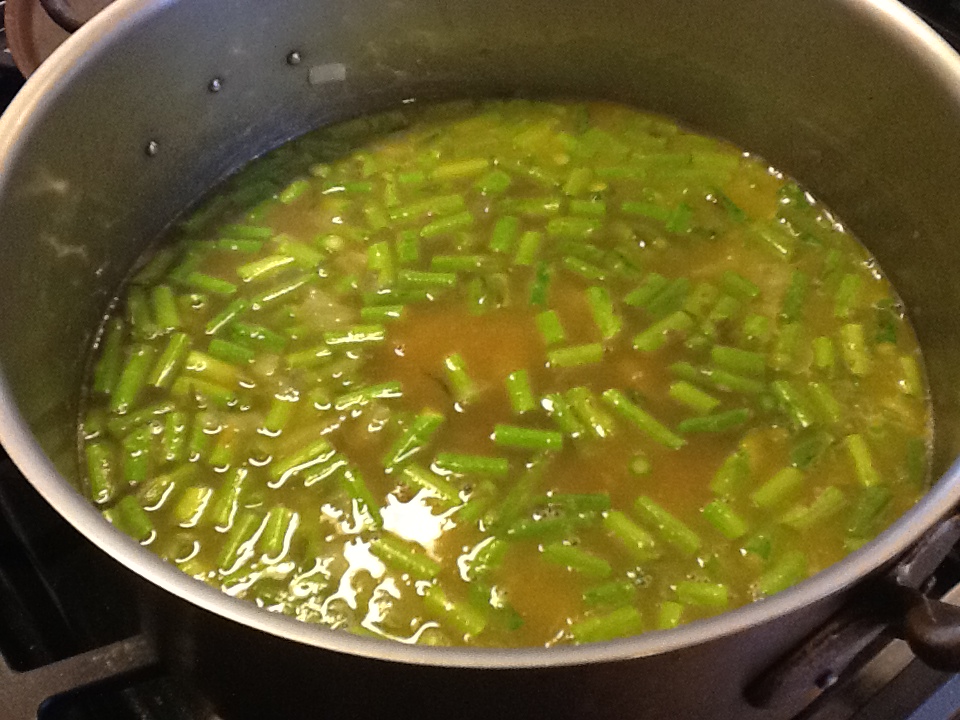
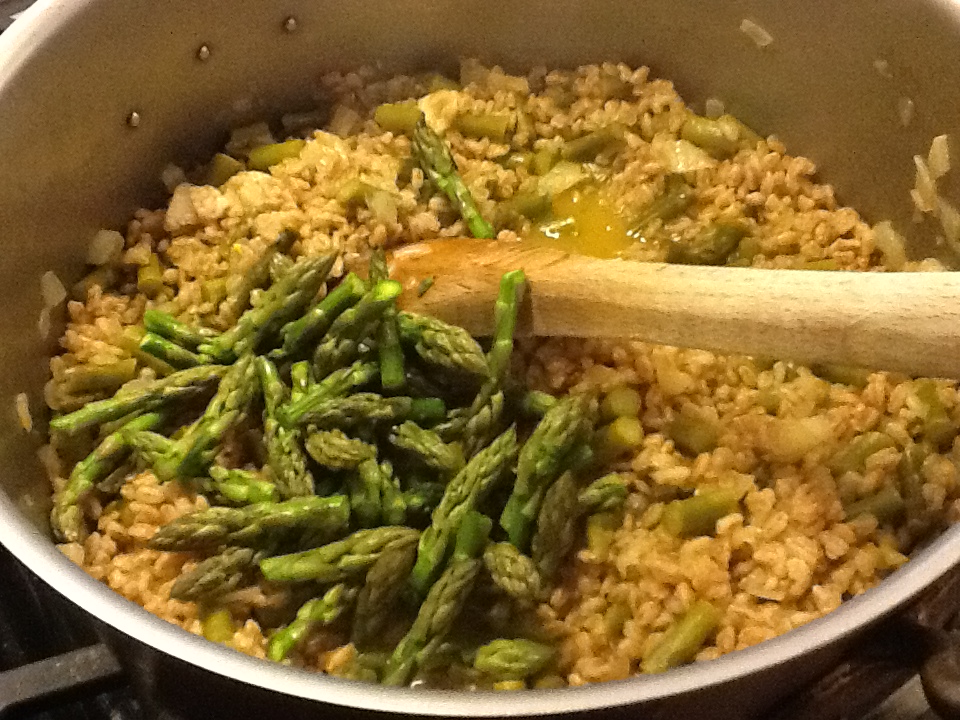
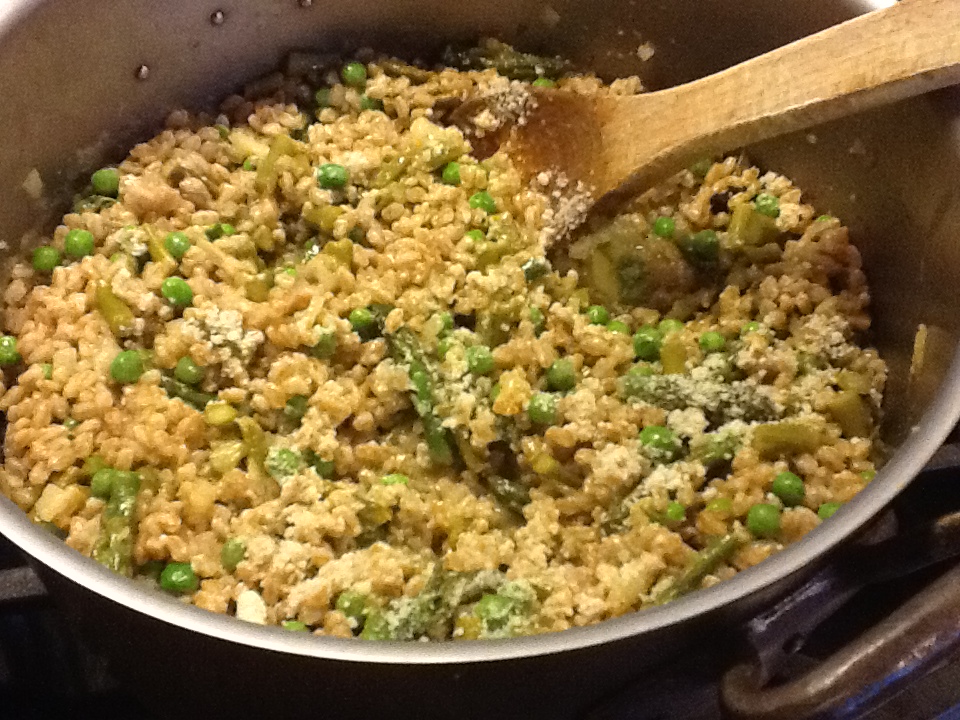
4.  CONDIMENTI:  Add the asparagus ( and peas if using fresh), reserving the asparagus tips, and add two ladles of the simmering broth.  Stir well for several minutes.  Now add the rest of the broth, reserving 1/2 cup for later.  Cover and let it cook until liquid is just about absorbed.  You do have to keep checking, but this should take about 15 minutes.**  Now add the asparagus tips and frozen peas, if using frozen, and the remainder of the broth.  Cover for a few minutes, then stir, uncovered, until liquid is absorbed.  Turn off the heat and add the butter and parmesan.  Stir well.

**NOTE:  You have to be the judge of the cooking time.  By this I mean, that if all the liquid is absorbed, and it is still too crunchy for you, just add more liquid and keep cooking it until desired texture.

ImageImageImageImageImageImageImageImageImageImageImageImageImageImageImage

Pizza Rustica (Rustic Torte)

Image

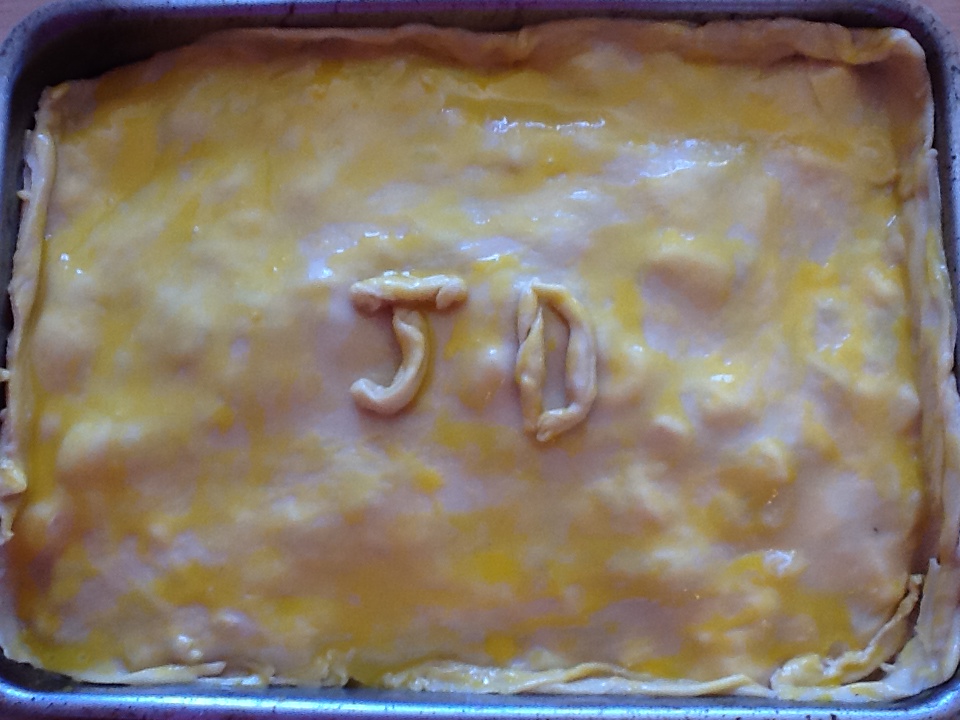
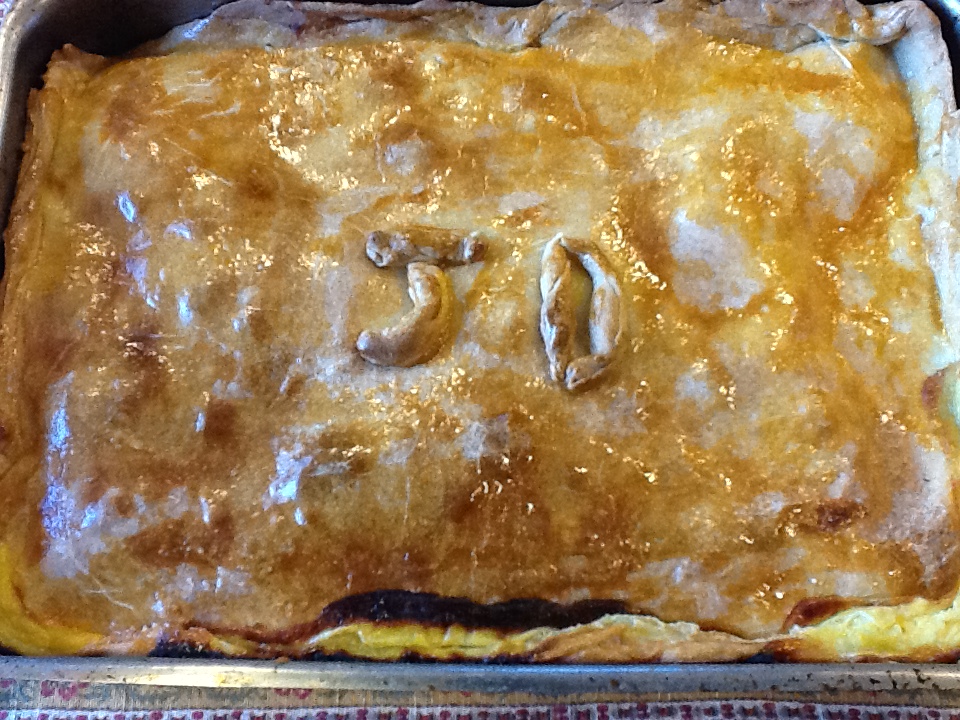
I have to admit that I’ve been obsessed for years over finding the perfect recipe for, what my family calls, “Pizza Rustica.”  This is a very traditional Easter dish for Italian families, but it seems that every family makes it differently, and every family has a different name for it.  Personally, I call it an Italian Quiche Lorraine.  Actually, it’s a quiche on steroids.  The amount of ingredients that go into the filling is amazingly abundant.  It’s very rich, but oh, so delicious!  Over the years, I’ve tried many different recipes and tasted many versions of this torte, and they all were delicious, but I always come back to the way my family ( on my mother’s side) made it for many generations.  While my grandmother on my father’s side was alive, we ate her version (also sensational) every Easter, but after her death, at 103 years old, my mom started making it the way her mother taught her.  Over the years, she must have forgotten how to make it, as I found many recipes in her files with the names of several women in her family on them.  What she did remember, however, were the traditions that went along with this dish. She said that her mother always kept aside a little bit of dough to form my grandfather’s initials on top of the pie.  My mom does the same with my dad’s initials, JD.  She said they always made this on Holy Thursday or Good Friday, but had to wait until after midnight on Good Friday (Holy Saturday) to break the Lenten Fast.  My cousins and I recently visited the house where my mom and her six siblings grew up in Brooklyn.  I can now picture these seven children salivating over this torte, and waiting patiently until Holy Saturday to dig in.  My mom, at 93, still tells this story with a sweet, reminiscent smile, as if it were yesterday,  A psychologist once told me that, “the greatest gift you can give your children is tradition.”  I’m beginning to think she was right.

I hope you enjoy this version of Pizza Rustica… or whatever your family might call it.

RECIPE:

*You’ll need a heavy 9 by 13 baking dish.  This doesn’t have to be exact, just as the ingredients don’t really have to be exact either.  “Rustica” means rustic, obviously, but what it really means is “unsophisticated”…..anything goes.  It will taste delicious no matter what you do!

For the Dough:

4 cups flour

2 eggs and 1 yolk

1/2 cup cold water

1 1/2 baking powder

1 tsp. salt

1/2 cup vegetable oil

For the Filling:

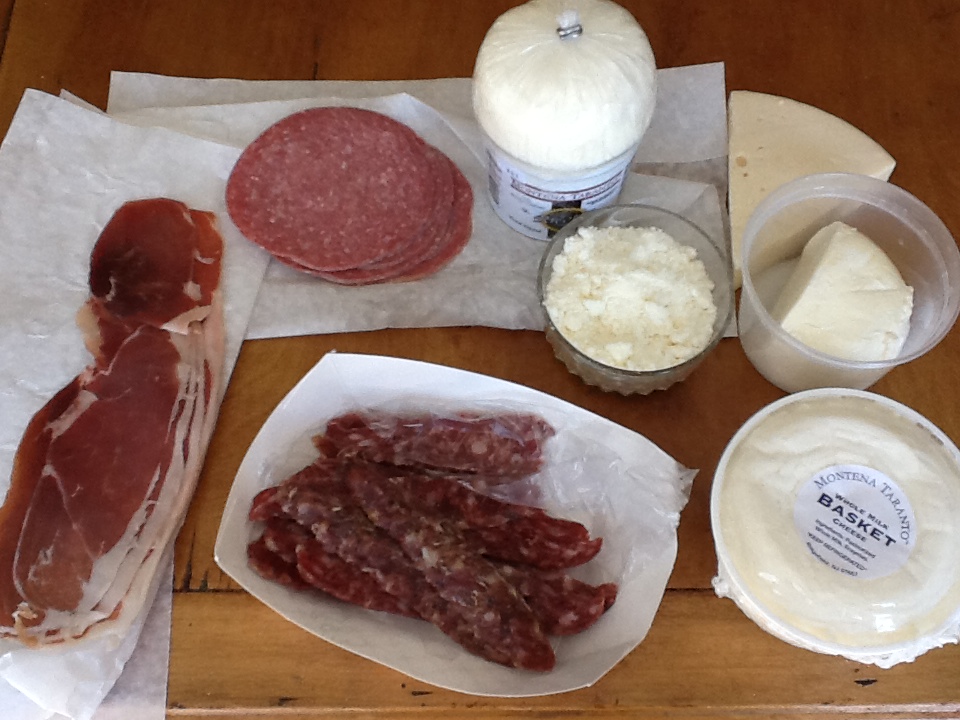
1 1/2 lbs ricotta

1 lb fresh farmers cheese (in basket)…sometimes called basket cheese, cut in small chunks

1/2 lb. mozzarella cheese, cut in small chunks

1/2 lb provolone, cut in small chunks

1 cup grated Romano cheese

1/2 lb. dry Italian sausage, cut into small pieces

1/4 lb sliced salami, cut into small pieces

1/4 lb. prosciuto, cut into small pieces

8 large eggs, plus 2 yolks for the egg wash at the end

Black pepper to taste

1.  Combine all the ingredients for the dough in either a Cuisinart or Kitchen Aid Mixer, using the dough hook for either.  You can do this by hand by making a well with the dry ingredients and putting the wet ingredients in the well, and slowly incorporating them until you have a moist dough.  If my mom is with me, I do the latter.  If not, it’s the Kitchen Aid for me!

2.  Mix until all ingredients are combined well, and a moist ball of dough forms.  Add a little more water if needed.

3.  Put on a lightly floured pastry board, and form into a ball.  cover with plastic wrap, and let it sit for 20 minutes or so.  Don’t ask me why…I’m just doing what my mother told me!

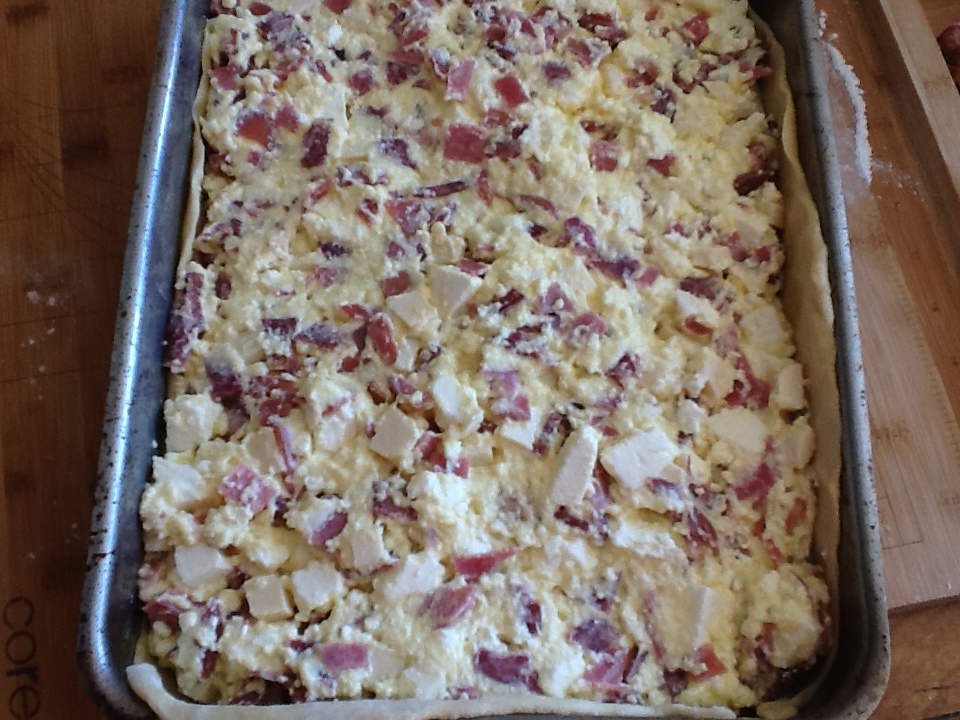
4.  Meanwhile, beat the eggs in a large bowl.  Add all the other ingredients for the filling and mix everything very well.

5.  Cut the dough into 2/3 and 1/3 pieces ( save a little for initials, if you like).  Roll out the larger piece for the bottom of the pan, and up the sides as much as possible.

6.  Pour the filling into the pan.

7.  Roll out the other piece and place on top.  Close off the dough on the sides to seal in the filling.  Add the initials if desired.

8.  Brush the entire top (including sides and initials) with the beaten egg yolks.

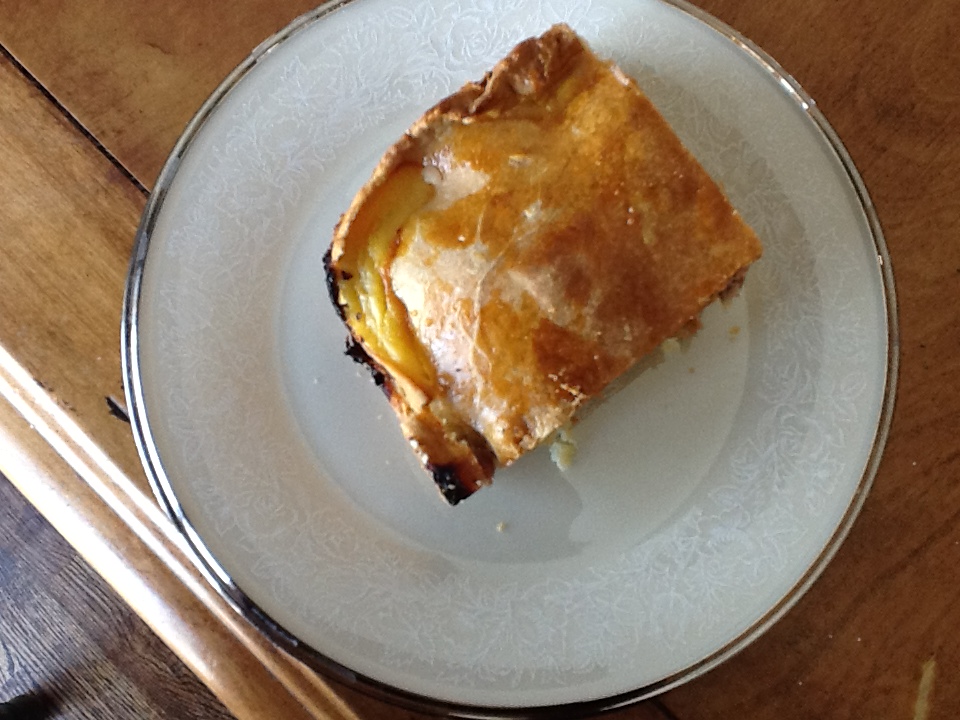
9.  Put in preheated 375 degree oven for an hour and a half, but definitely check after 1 hour.  You might want to lower the heat to 350 at this point, or it might even be just about done.  You want it to be a dark golden brown.

10.  Let it come to room temperature before serving, but leftovers are great warmed up.

ImageImageImageImageImageImageImageImageImage

ImageImageImageImageImage

pizza rustica recipes

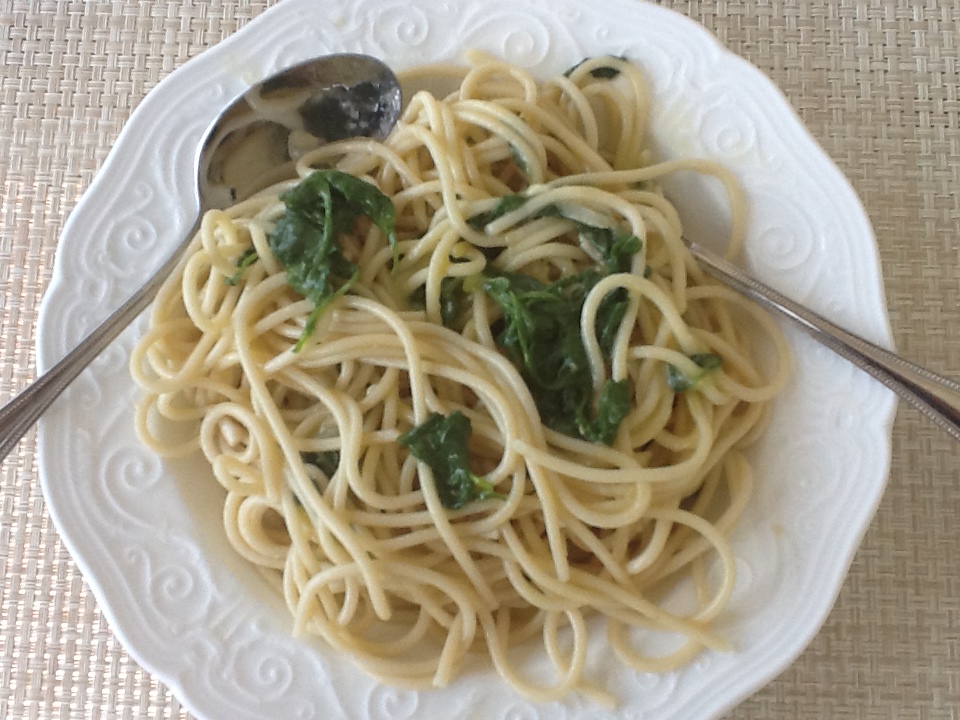
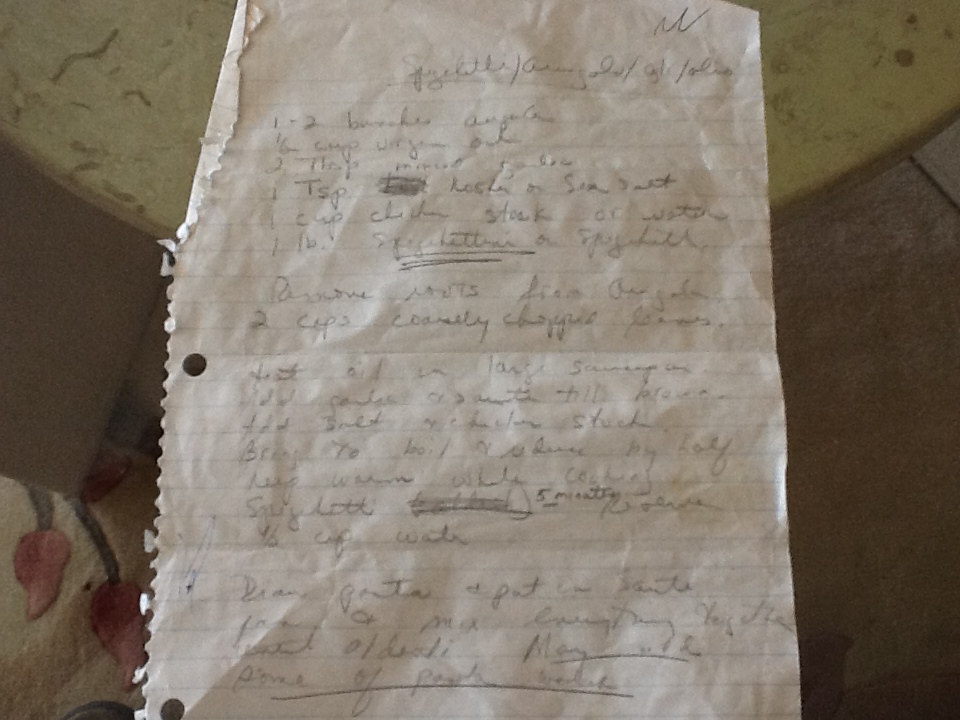
Spaghetti with Arugula

Image


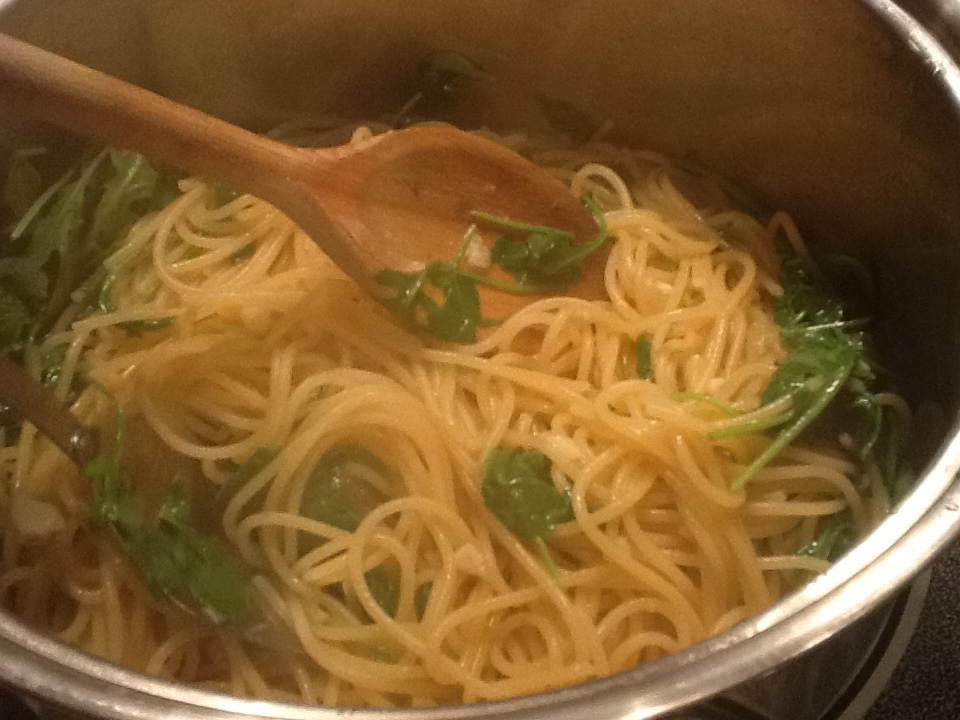
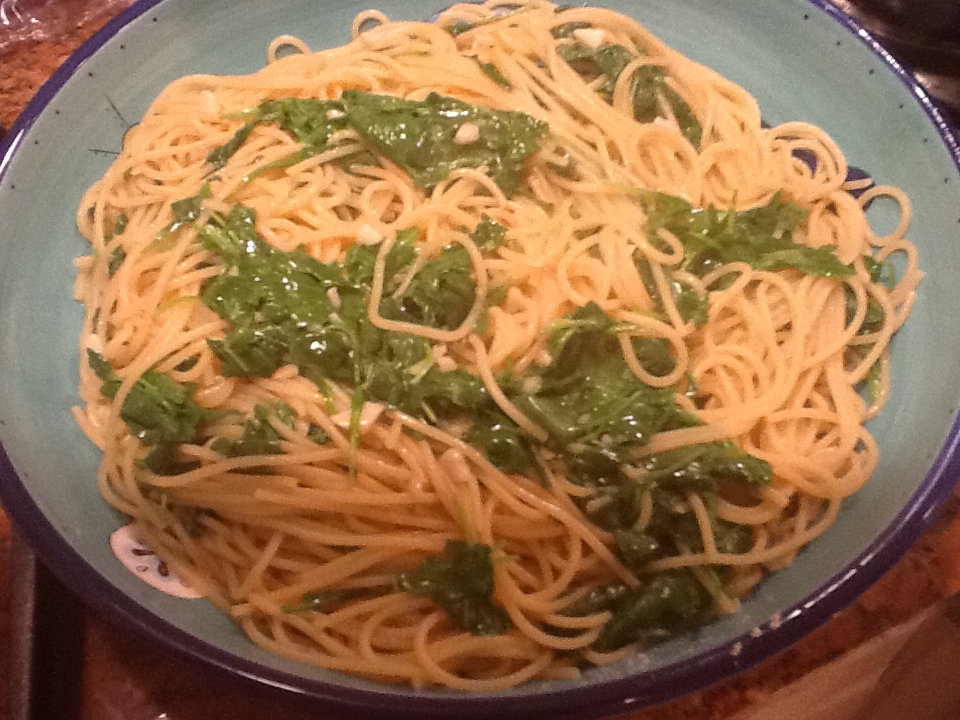
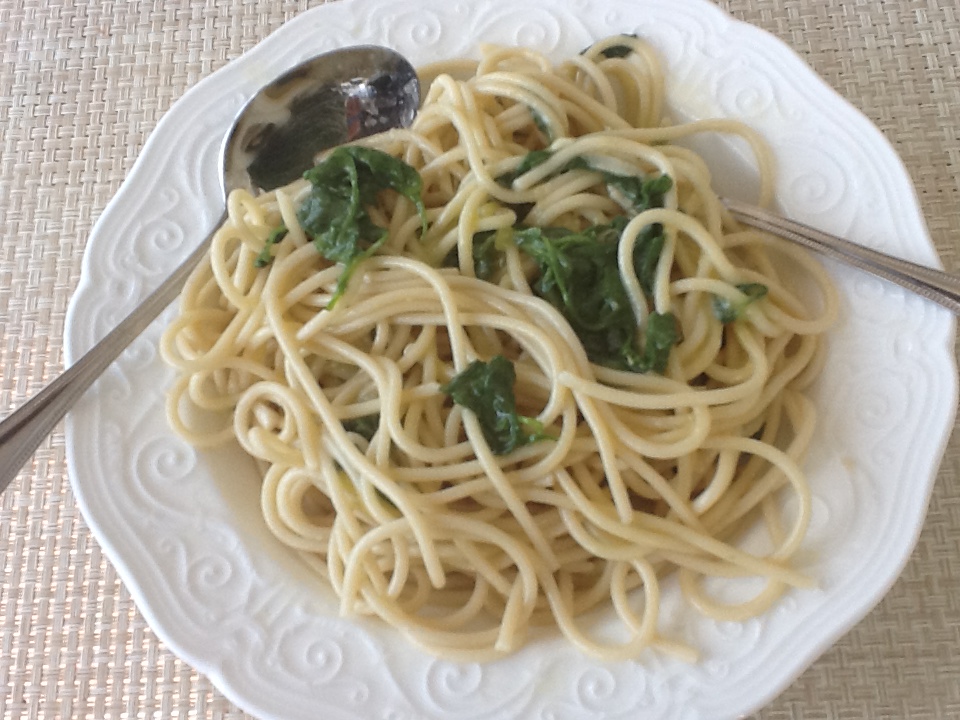
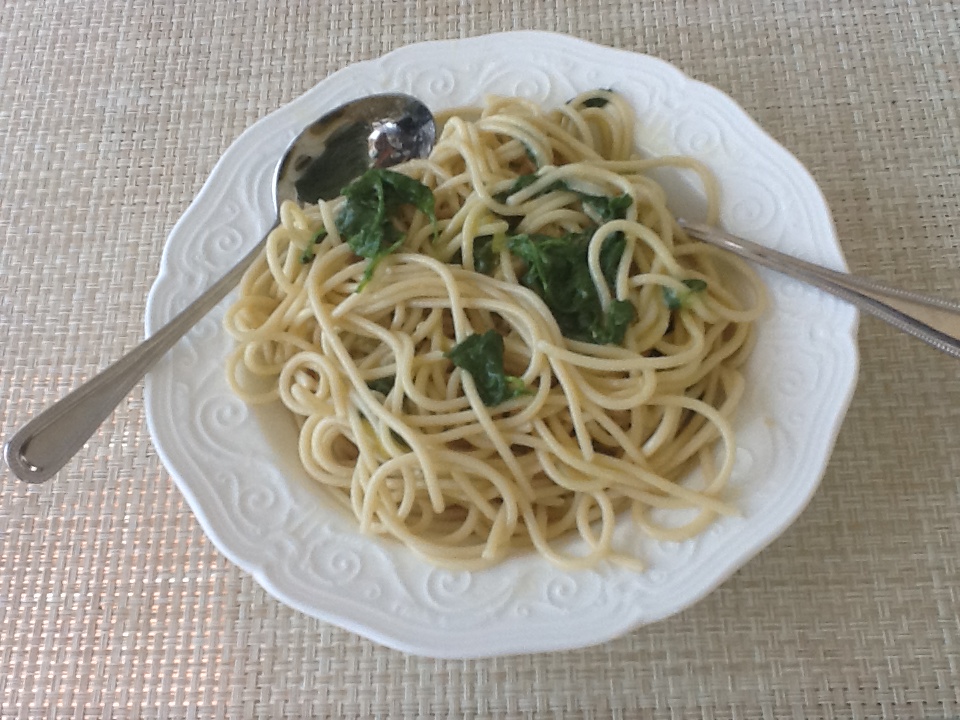
This is a very simple, light dish, but full of flavor.  The peppery taste of arugula, combined with garlic, oil and a little broth, makes each mouthful burst with fresh goodness and intensity.   Who thinks of these combinations?  And how many ways are there to make pasta with vegetables?  In the late 1980s, I met a woman, soon to become a wonderful friend, who had so many recipes for pasta with different vegetables, it was hard to keep up.  “You’ve got to try this…” she would say at least twice a week.  And try I would, and each recipe was better than the next.  She was always on a diet and claimed the recipes were dietetic, but now I know better. They’re dietetic if you eat a small bowl, and really heap on the vegetables.  With this particular recipe, you’ll want to keep eating because it’s so very light and flavorful.  This could be my favorite of her “dietetic pastas with vegetable,” since it really does taste like you’re eating something truly good for you.  I’ve been able to fool myself for all the years.  I hope you’ll be able to do the same.


RECIPE:

1 pound spaghetti

1 to 2 bunches of arugula

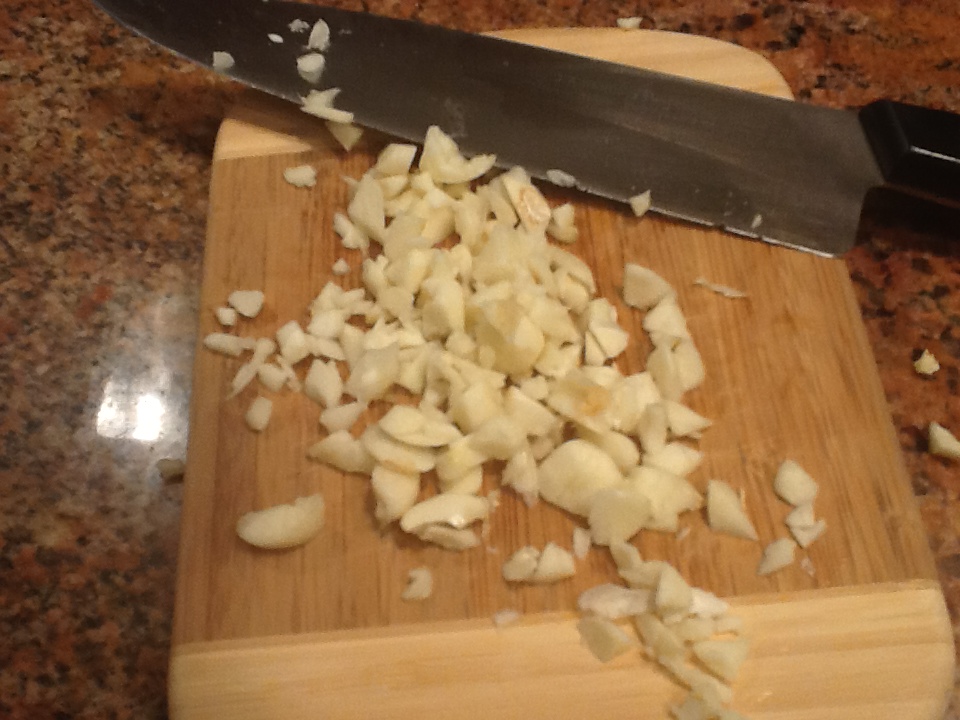
2 TBSP minced garlic

1 tsp. Kosher salt or Sea salt

1 cup chicken (or vegetable) broth

1.  Put up a large pot of water to boil for the pasta.

2.  Discard stems from arugula, and coarsely chop. ( I like large pieces of arugula.)

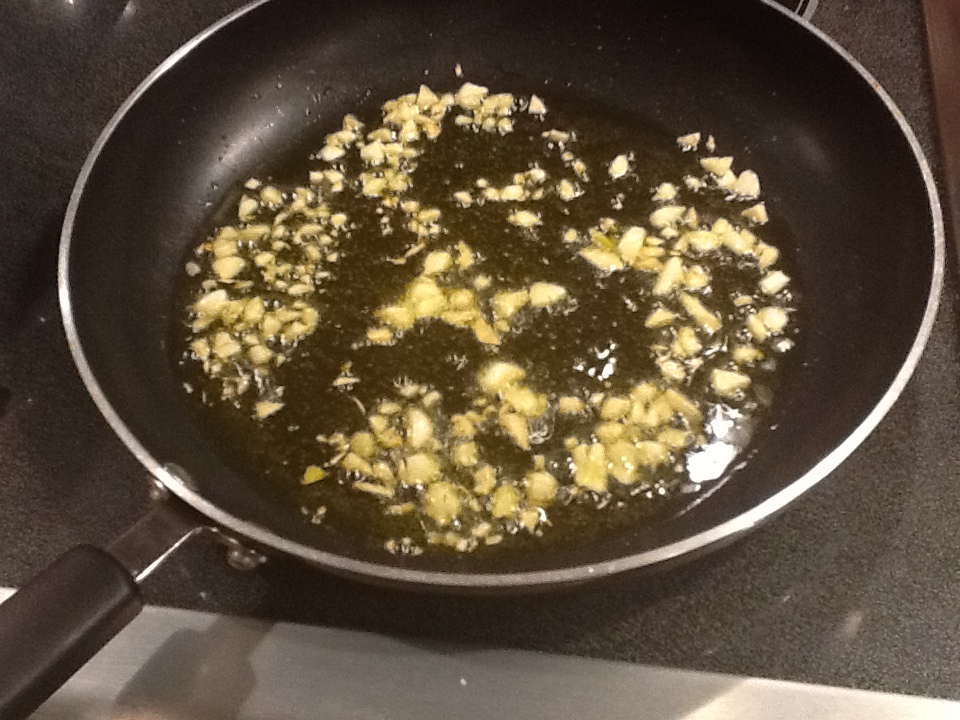
3.  Heat oil in large saucepan or fry pan.  Add garlic and sauté until lightly browned, but be careful not to brown it too much.

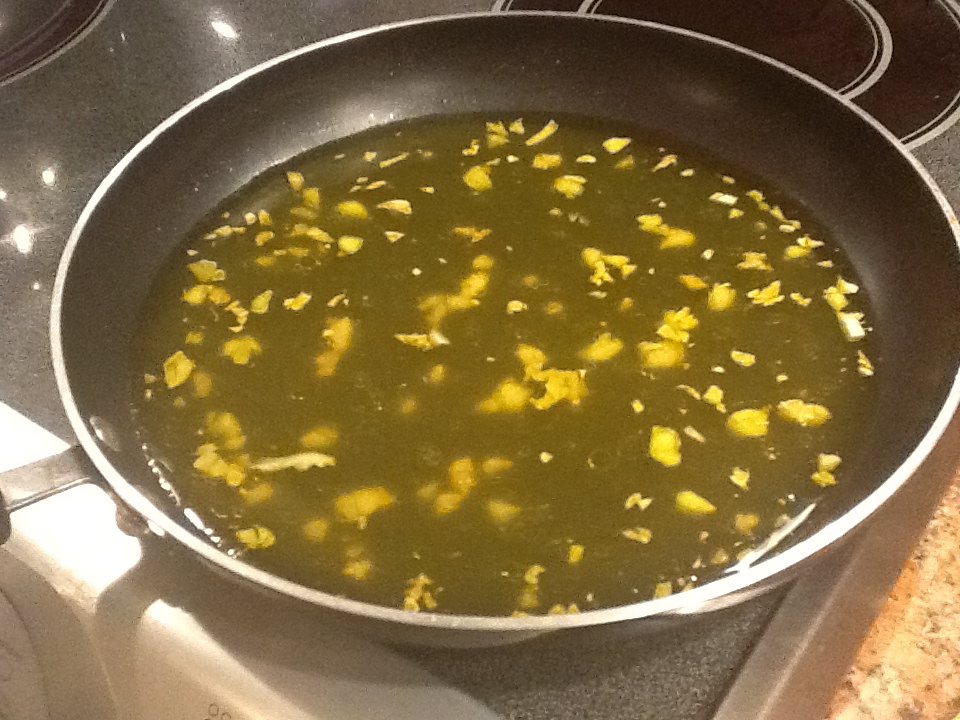
4.  Add salt and stock.  Bring to a boil and reduce by half.  Keep warm while cooking the spaghetti, saving 1/2 cup of pasta water.

5.  Drain pasta (al dente, please)  and put in the pan with the other ingredients.  Add the arugula and mix it all together, adding the reserved pasta water if need to moisten.

6.  Serve with grated Parmesan or Pecorino cheeses.


ImageImageImageImageImageImageImageImage


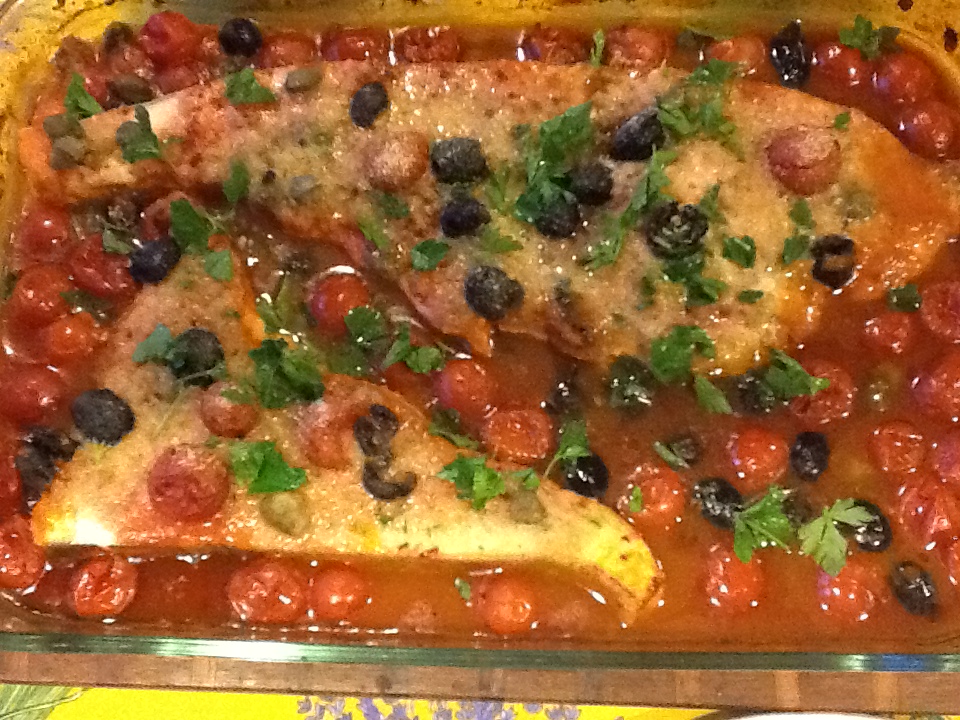
Swordfish Livornese (or is it Sicilian?) Style

Image


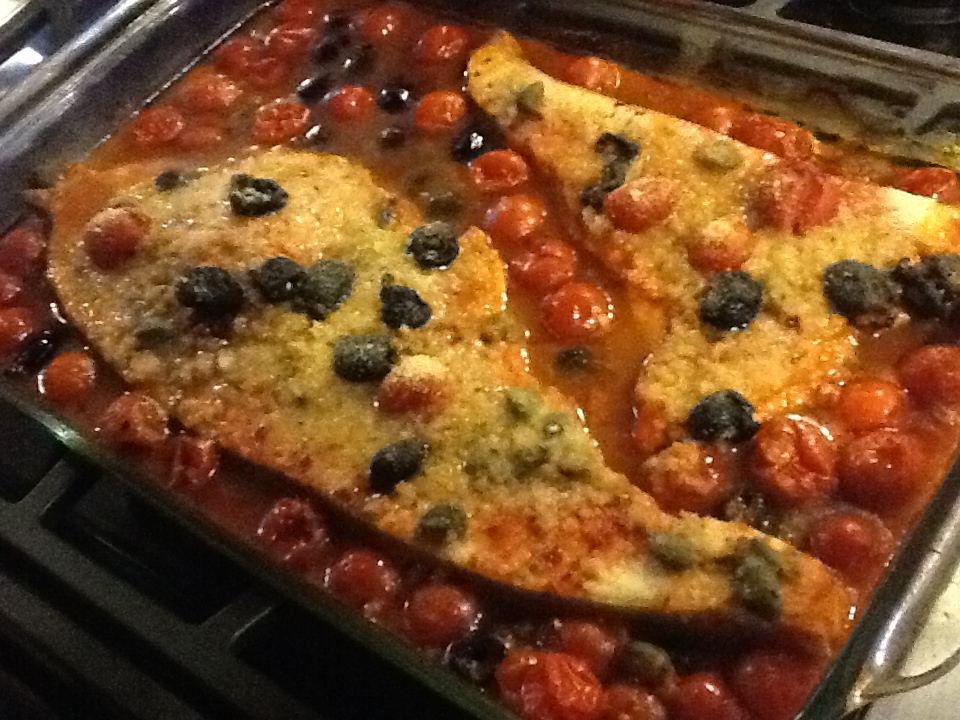
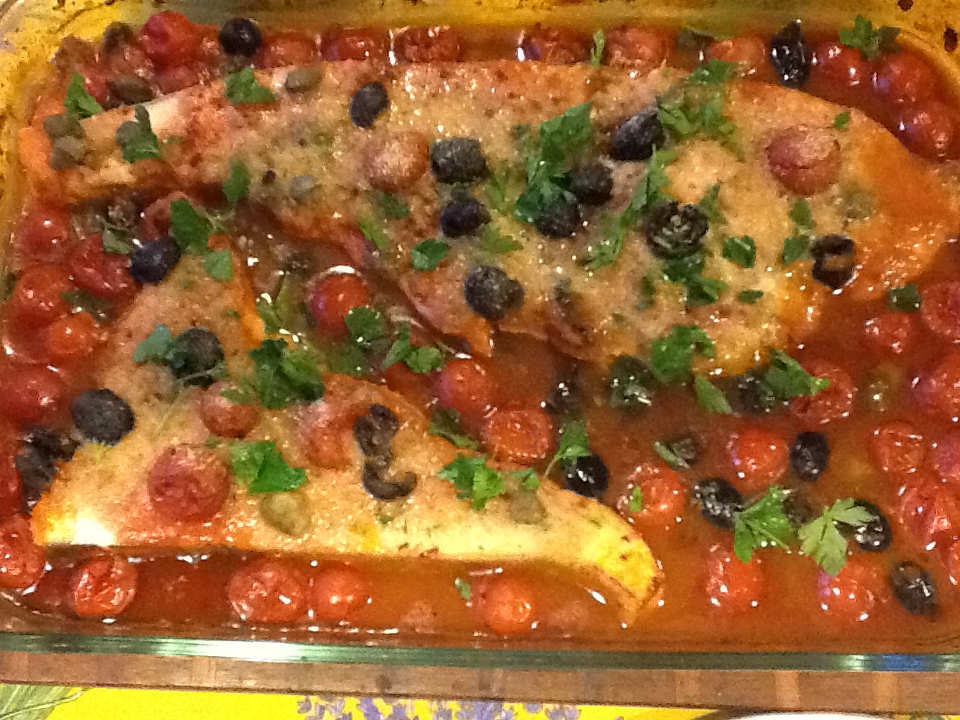
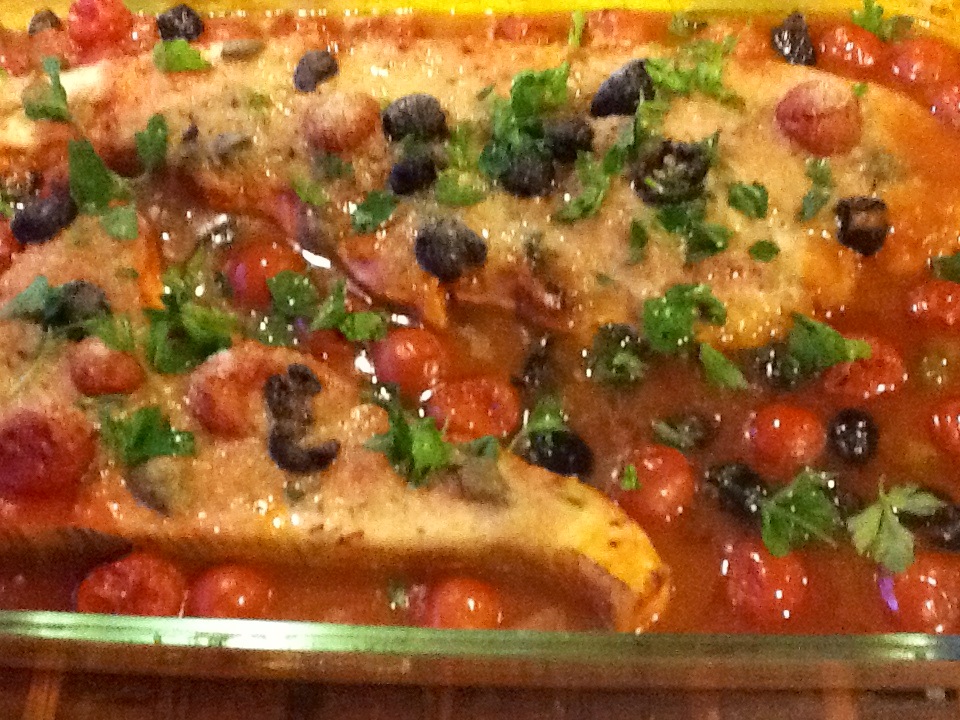
Italians not only love eating food, but they love arguing over food as well.  As you can see from several of my other posts, whether we’re  arguing about who makes the dish the correct way, or what region the dish comes, we love to challenge one another.  My motto is, “if it tastes good, who cares.”   I’ve had fish Livornese style in many restaurants, and have made it myself often.  It’s a family favorite.  However, when I went to Sicily, where swordfish is abundant, it was often prepared in this manner, but they didn’t call it Livornese.  As a matter of fact, don’t dare call it that when in Sicily!  I think swordfish may be the treasure of Sicily.  It’s caught daily by the local fishermen, and the taste is divine, even when simply grilled with a little lemon and olive oil.

This sauce, and variations of it, will taste wonderful on almost any fish.  So if swordfish is not your thing, try snapper fillets, fresh cod, halibut….even shrimp or scallops.  You can turn this into a tasty fisherman’s stew by just adding more liquid from the tomatoes, or more wine or some fish broth.  Throw some calamari into that, and you have a heavenly dish.  But back to this particular dish…
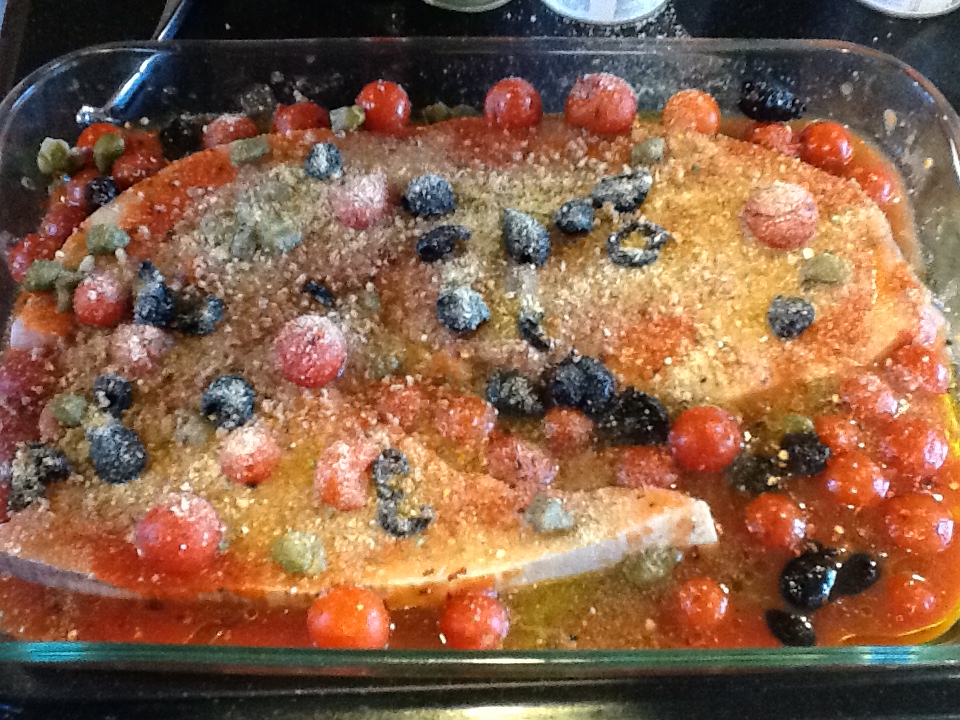
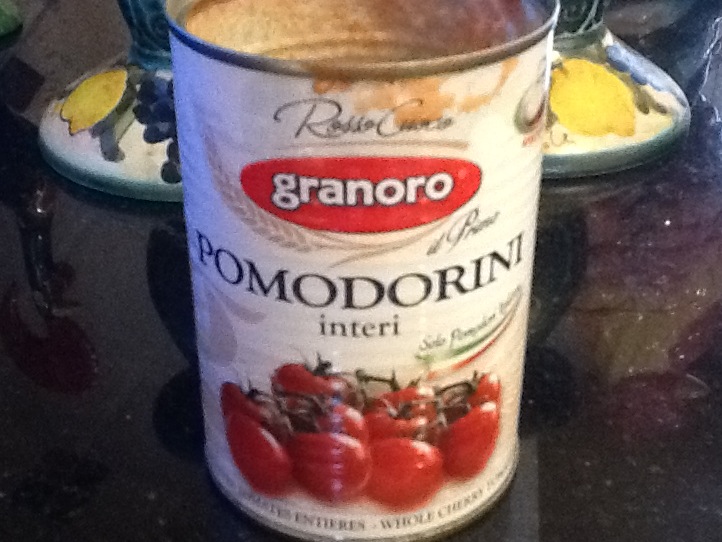
I used Italian canned cherry tomatoes here because I was delighted to find them in the supermarket and several of the little Italian markets I frequent.   I’ve used several brands recently (all from Italy, of course), and have been thrilled with the taste.  Our cherry tomatoes here are delicious, but in Italy, their taste is sublime.  This taste is captured very well in the cans.  Before last week, however, I always used canned Italian Peeled Plum tomatoes, squished in this recipe.  My critics (husband and son) preferred this over the cherry tomatoes, but I’m in disagreement here.  So you can decide for yourself.  The difference really is minimal.  It’s delicious either way.

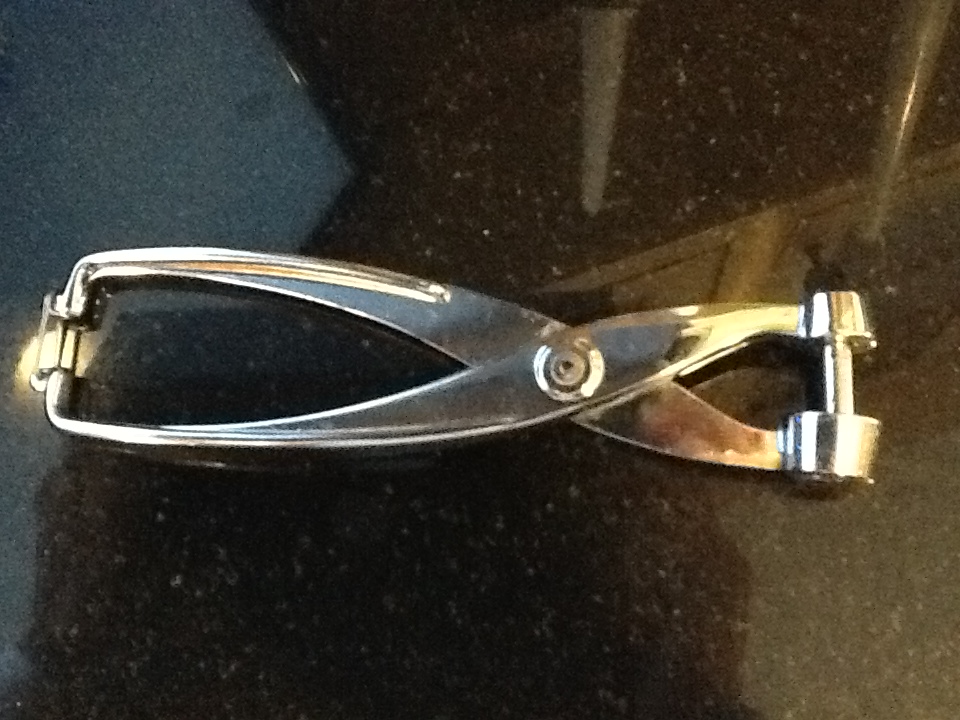
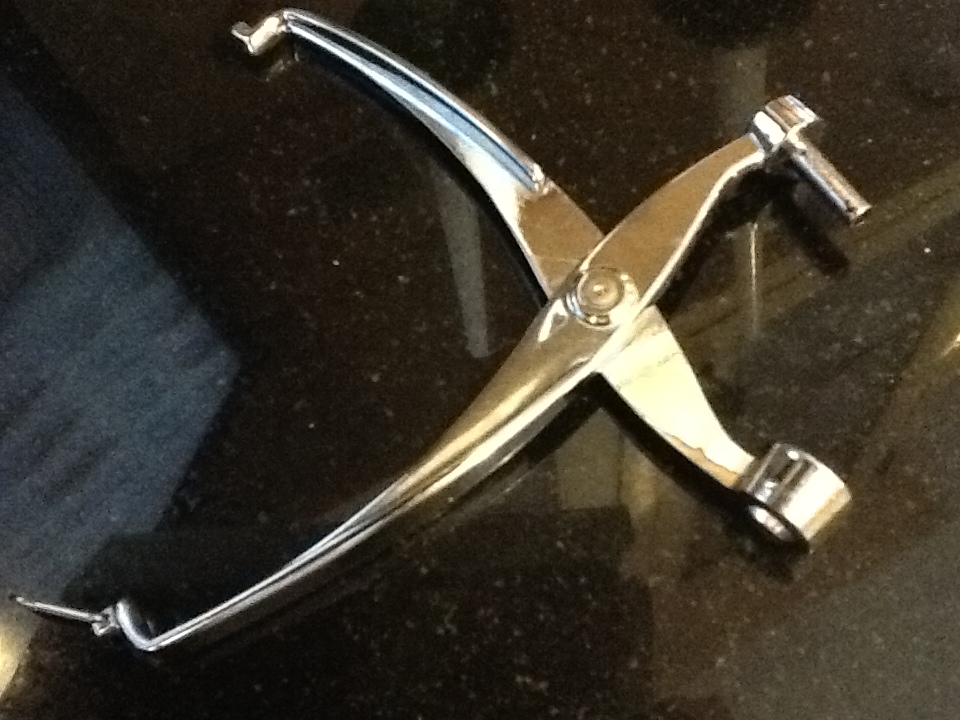
I don’t usually talk about kitchen utensils or tools, but here I must.  If you don’t already own an olive pitter, run right out and get one.  When I think of all the times I’ve omitted olives from a recipe, just because I didn’t have the time or inclination to pit them by hand, I wish I’d know about this invention sooner ( or invented it myself )!  Pitting black olives by hand, can really ruin a French manicure!


RECIPE:

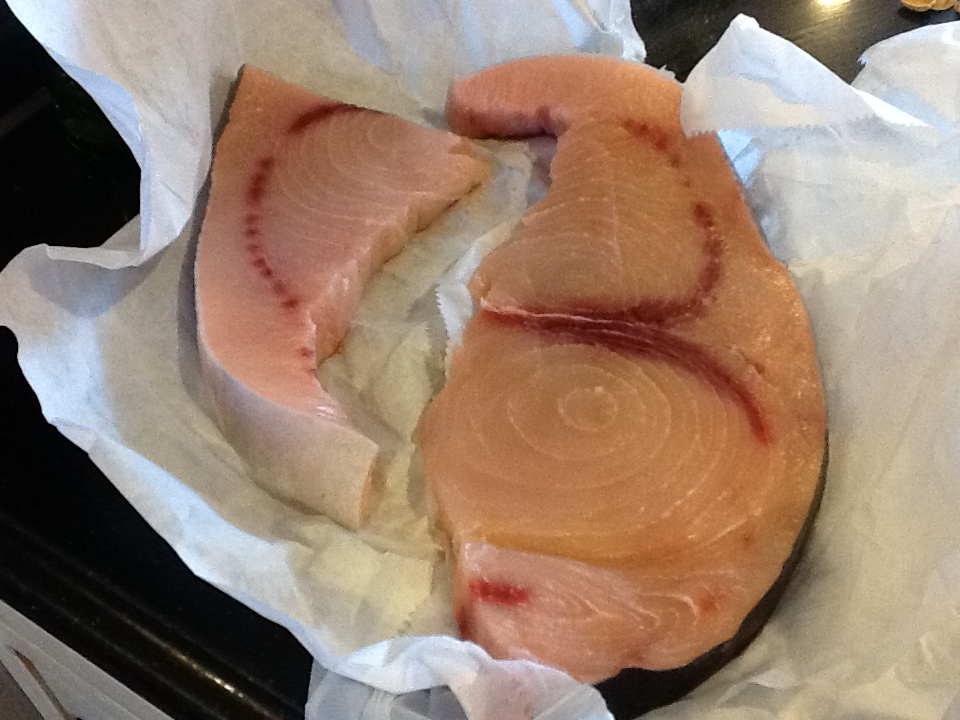
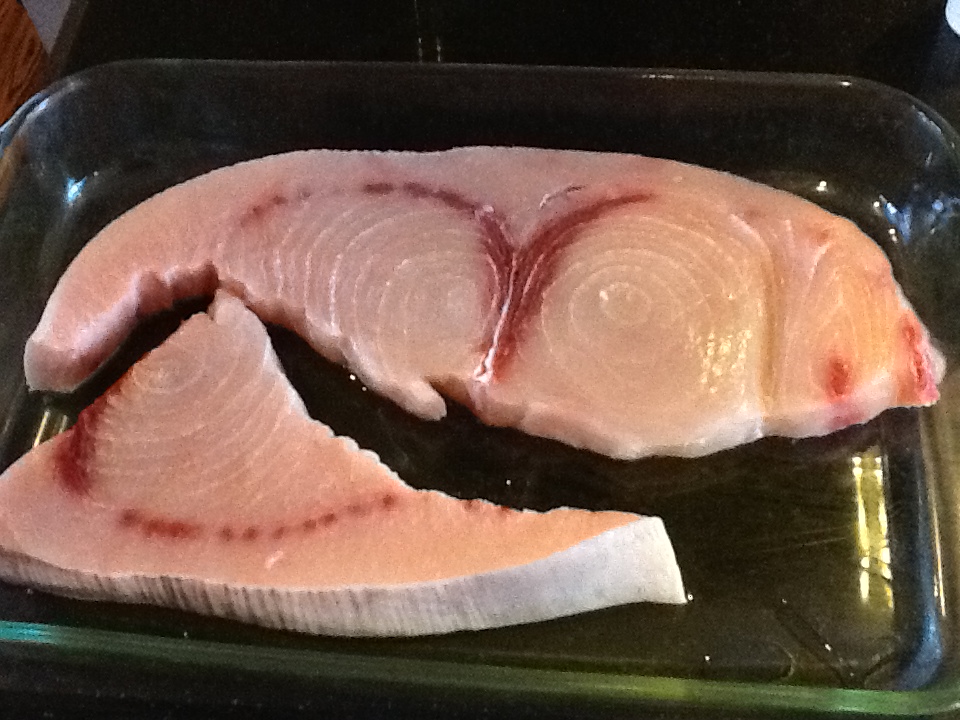
1 to 1 1/2 pounds of swordfish steaks

1 28 ounce can of Italian plum tomatoes, squished or cherry tomatoes (include liquid)

4 TBSP olive oil

2/3 cup of white wine

3 TBSP. vinegar packed capers

1/2 cup pitted Italian cured black olives  (get that pitter…you’ll thank me!)

3 cloves garlic, sliced thick

3 TBSP grated parmesan cheese

1/2 cup Italian seasoned bread crumbs

Freshly ground pepper

1/3 cup chopped fresh parsley

zest of one lemon ( optional)

1.  Coat bottom of baking pan with the olive oil. Pat the swordfish filets dry and put in pan.

2.  Cover with the tomatoes, wine, capers, olives, garlic.  Ground pepper to taste.

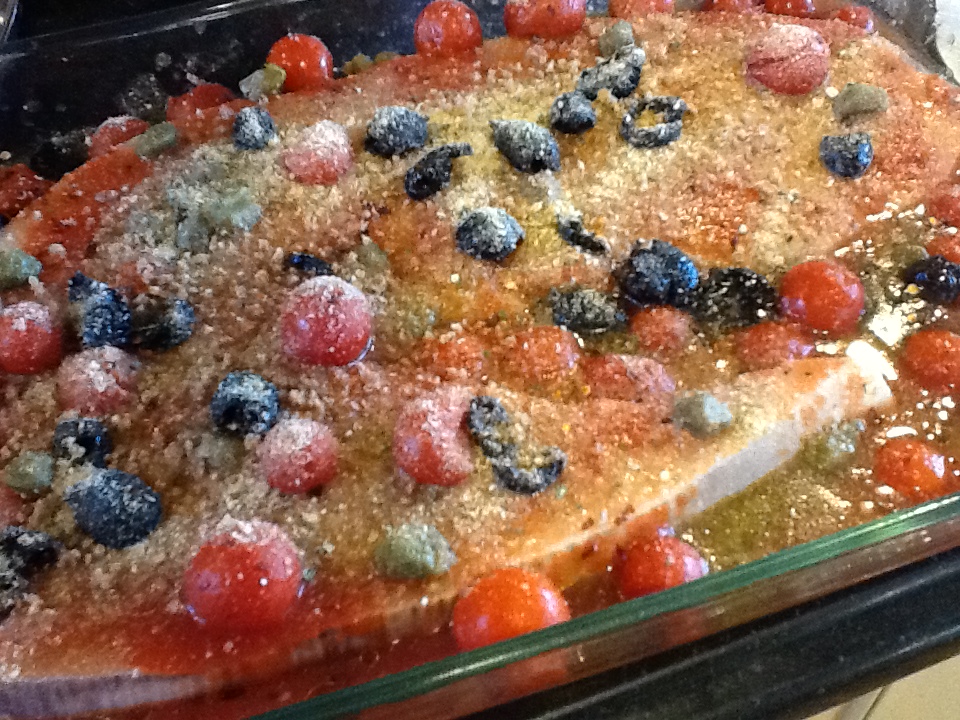
3.  Lightly sprinkle the tops of the filets with the cheese and then the bread crumbs.

4.  Cover with foil.  Put in a preheated 375 degree oven.

5. Cooking time depends on the thickness of your steaks (or other fish filets), but I leave it covered for half the cooking time, then take the foil off and continue to cook until cooked through, but still moist and flaky.  My 1 1/2 inch steaks here took 30 minutes to cook.  I then raise the oven to 450 degrees for 5 minutes, just to make the bread crumbs a bit crusty.

6.  Before serving, sprinkle with parsley and lemon zest, if desired.


ImageImageImageImageImageImageImageImageImageImage


Eggs in Gravy (Eggs In Purgatory)

Image

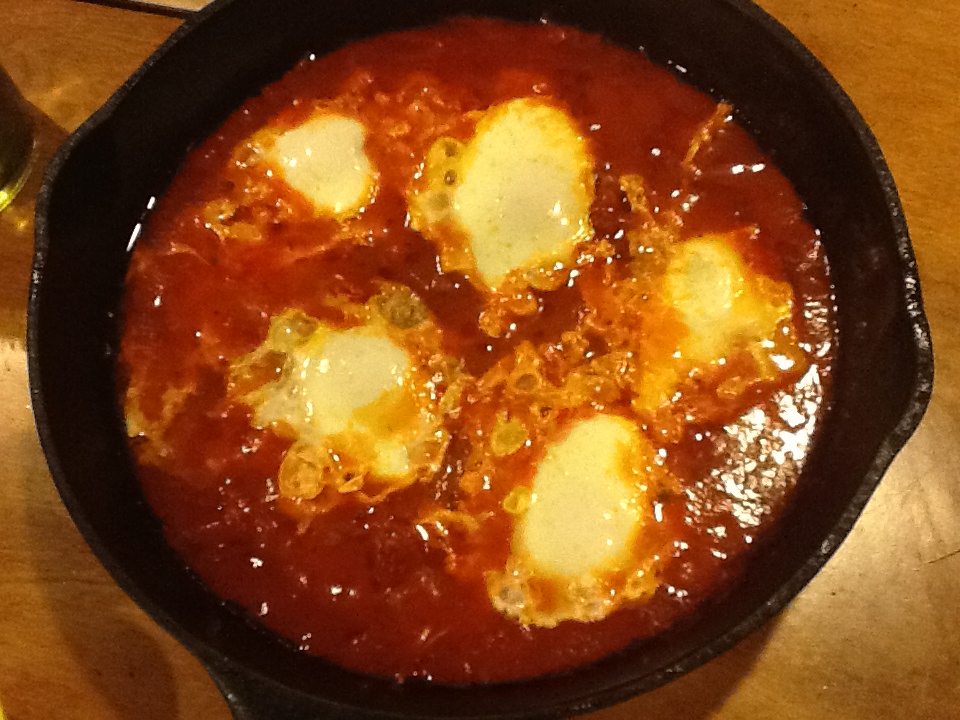
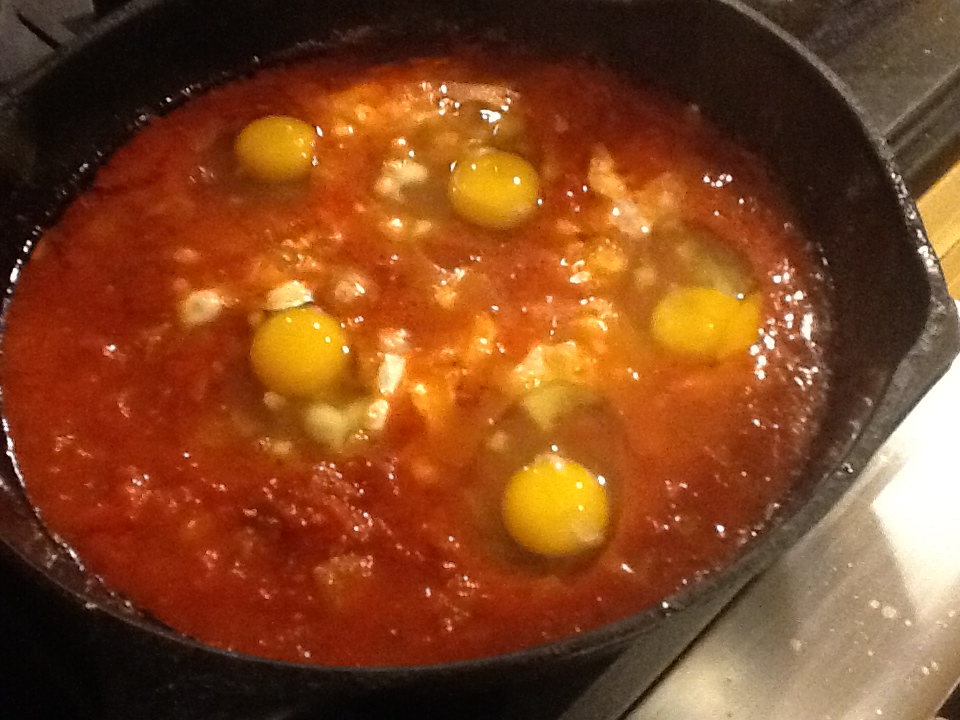
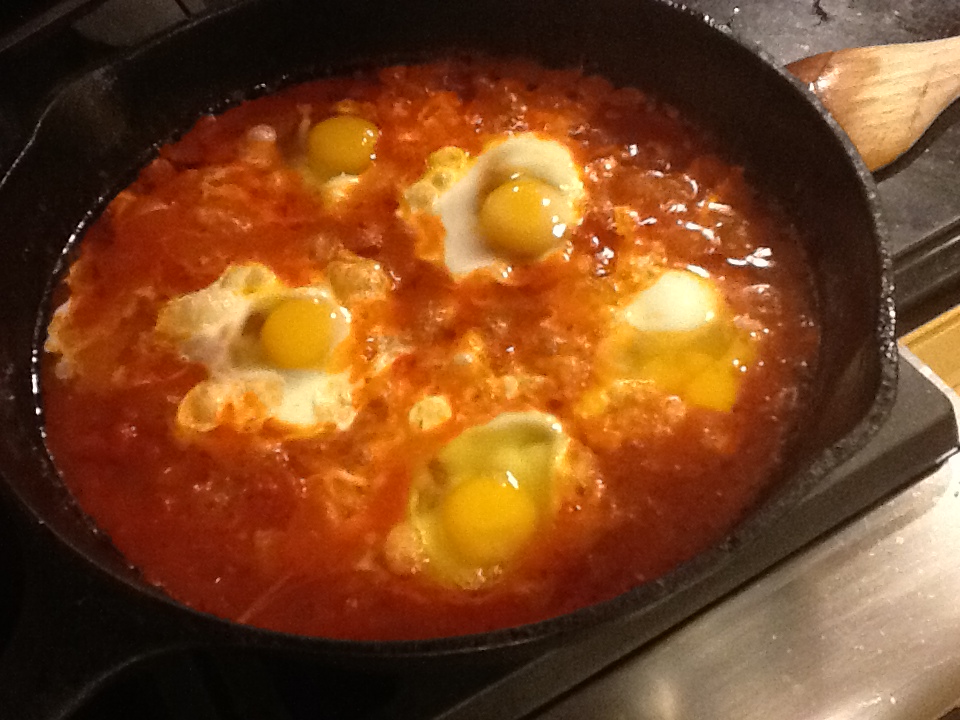
Eggs in Gravy, as we used to call it, was a usual Friday night meatless meal in our family growing up, especially during Lenten season.  I believe it is now commonly referred to as Eggs in Purgatory.  That definitely sounds more religious.  I forget about this dish all year long, but as soon as Lent begins, I can almost smell it in my mind, and can’t wait to make it on a Friday night.  It’s always received with great enthusiasm, and I say I should make this more often, but for some reason I have pegged it as a lenten dish only. I think of it as Italian poached eggs.  Instead of poaching eggs in water, we poach them in tomatoes and olive oil.  Of course we do!

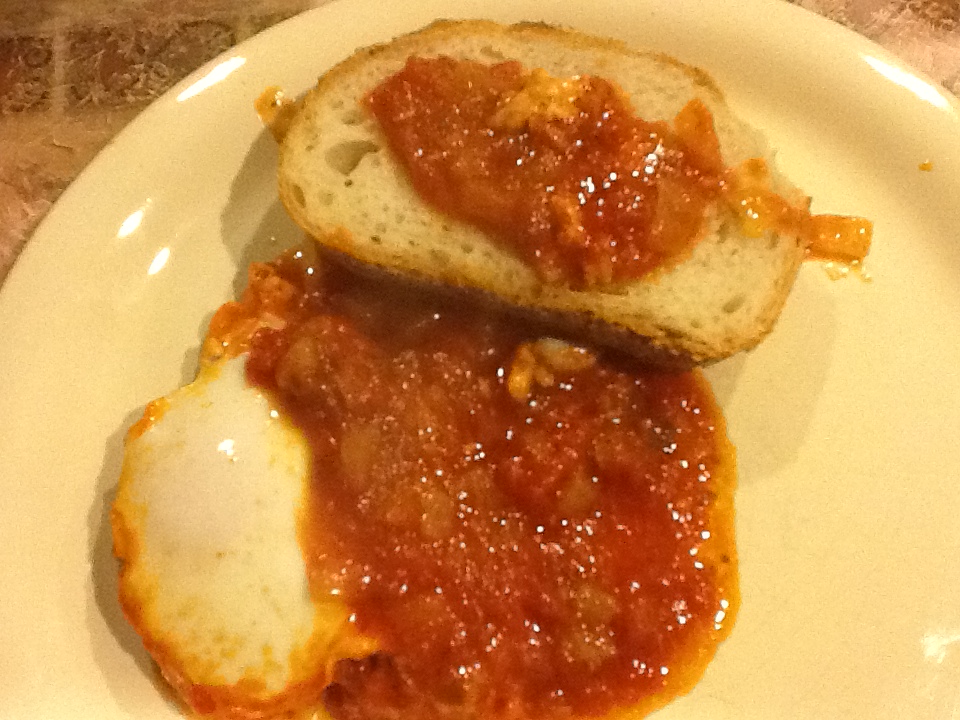
Now the real key to enjoying this meal, is having the best, crusty Italian bread you can find for “scarpetta.”  Literally translated, this means “little shoe.”  I don’t quite get the imagery, but the idea is that you take a hunk of bread (shoe) and let it submerge (into the sauce/ground), and then scoop it up.   Let’s translate it as “dunking” or “dipping with enthusiasm.”   Call it what you will, but you will definitely not want to leave any of this sauce on your plate.  The rich, earthy taste of the egg yolks running into the tomato sauce, will make you want to “fare la scarpetta” until the loaf of bread (and sauce ) are gone. You will barely need to wash the plate afterwards!

RECIPE:

1 medium onion, chopped

4 TBSP olive oil

1 28 ounce can of Italian peeled tomatoes, squished by hand

salt and pepper to taste

6 eggs

crusty Italian bread (essential)

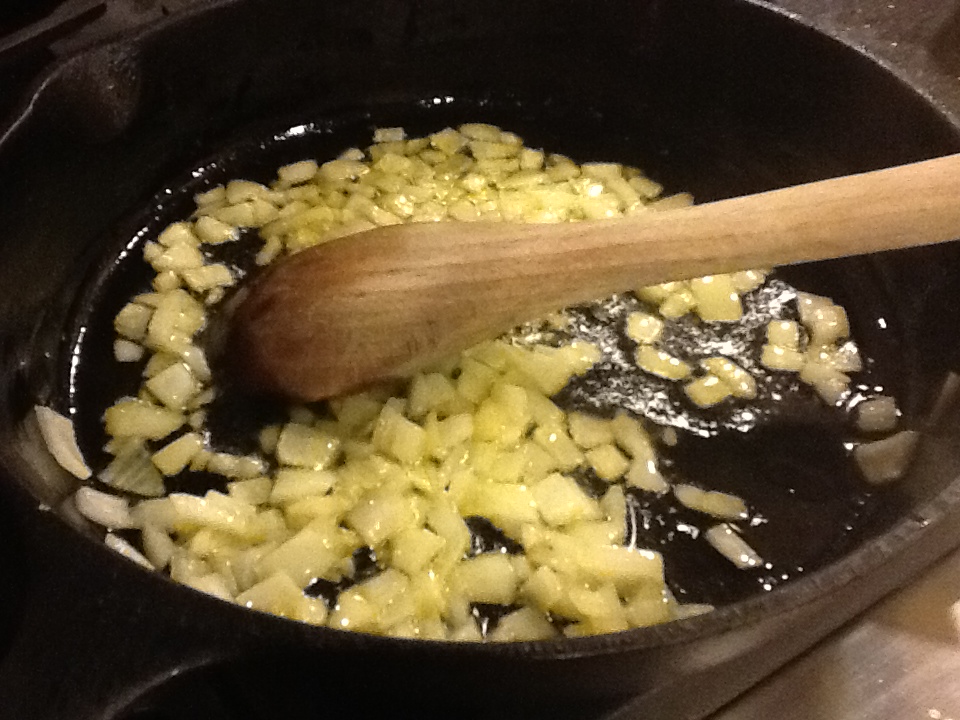
1.  In a heavy fry pan (I use my cast iron skillet, just as my grandmother and mother did), heat oil.  Add onion and sauté for 8 to 10 minutes or so, until soft.

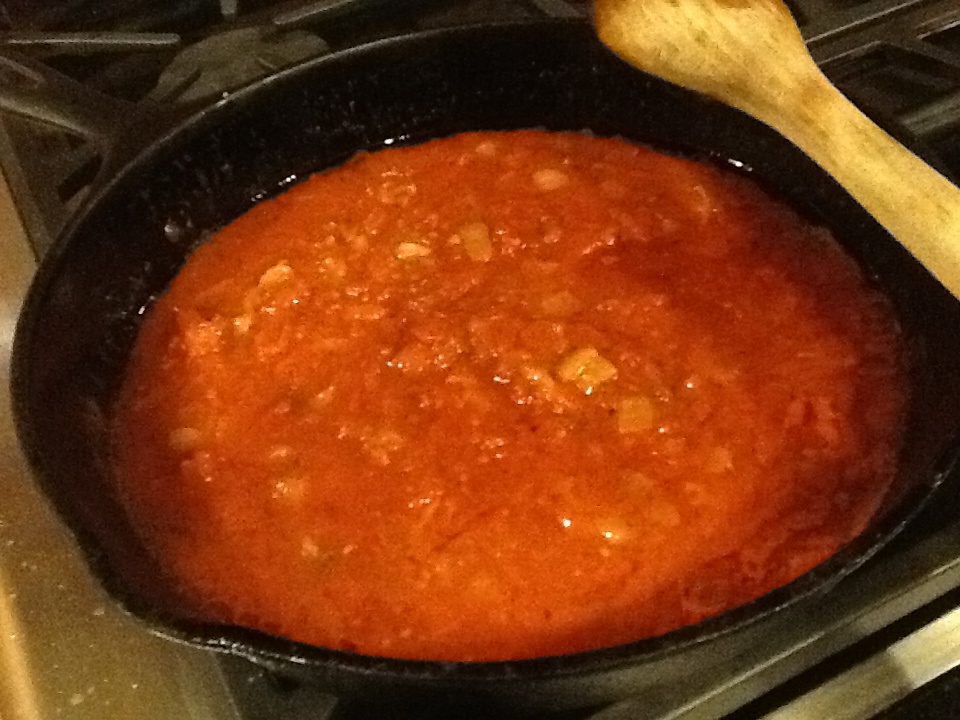
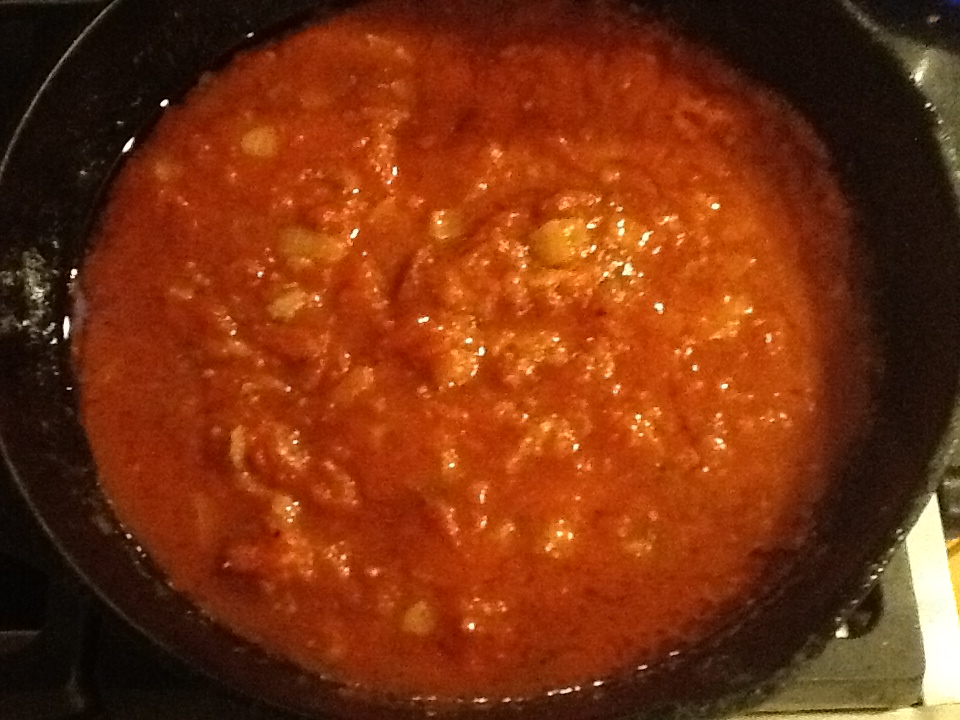
2.  Add squished tomatoes, salt and pepper to taste and stir.  Simmer on low heat for approximately 15 minutes, stirring often.

3.  Break eggs gently, and evenly throughout the pan.  Cover and simmer for about 2 to 3 minutes, until whites are firm, but make sure yolks are runny.  That’s key to the flavor.

4.  Serve in a bowl or plate, covered in the gravy, and let the “scarpetta” begin!

ImageImageImageImageImageImageImageImageImageImage

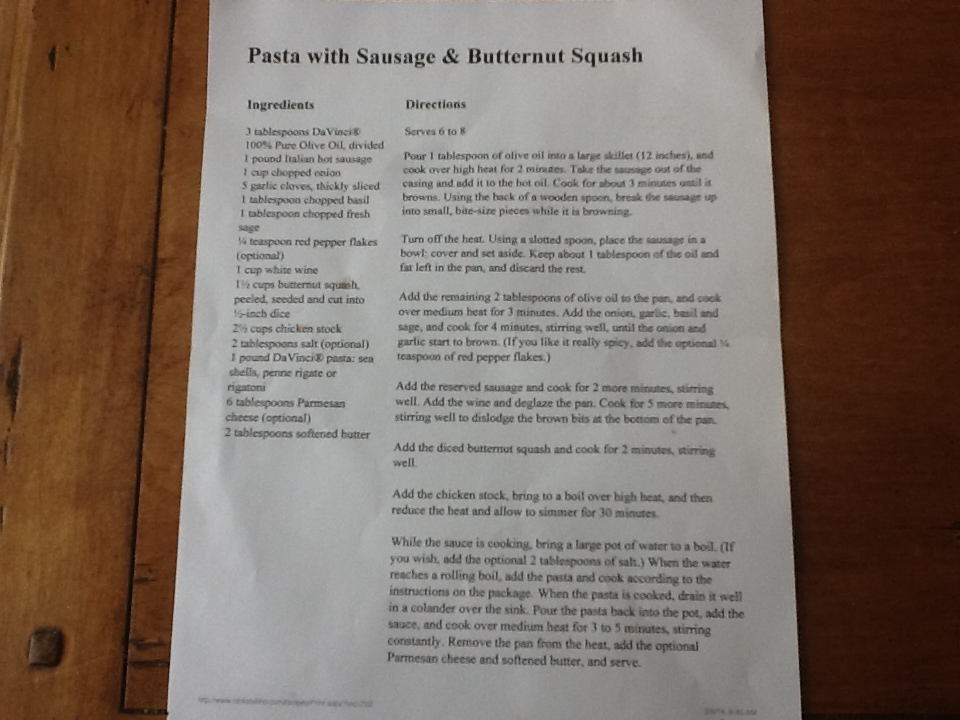
Pasta with Sausage & Butternut Squash

Image

How many recipes can there possibly be for pasta dishes?  It’s got to be in the thousands…tens of thousands.  It never ceases to amaze me.  My sister and I have probably shared hundreds, if not thousands, of pasta recipes over the years, and we continue to do so.  We’ve shared recipes from our family, other families, friends, cookbooks, magazines, the internet, and the past few years we have become somewhat obsessed with cooking shows on TV.  Yes, I’ll admit it…..while on my treadmill or elliptical machine, I’m watching The Barefoot Contessa, Giada, Nigella Lawson and/or others cooking up some scrumptious meals.  If they’re cooking a pasta dish that looks good, I stop everything and write it down.  Now these famous chefs are certainly on our radar, but we have grown to love some lesser renowned chefs whose shows you have to search for on public stations.  The options are endless.  My kitchen shelves and cabinets are overflowing with recipes, and most of these are for pasta.  Pasta is just so versatile.  Just when I think we can’t possibly find another recipe to share, another great ones comes along.

This recipe for pasta with sausage and butternut squash comes from TV cooking personality and chef, Nick Stelinno.  “Who the heck is that?” you might be asking.  Well, he has been cooking on public television for 18 years and has ten published cookbooks.  My sister saw him make this on his show, retrieved the recipe off his website, and then tried it out on our family one Sunday (Yes, a Sunday with no gravy!).  Everyone loved it (I wasn’t there), and so it was passed on to me as a “must try.”  I did indeed  give it a try, even though the ingredients did not seem to go well to me, but if my sister says it’s fantastic, then chances are that I will too. Everyone loved it and it’s now in the “must make again” pile.  So even if you’re not a big fan of sausage, which I am not, the other flavors in this dish meld together so well that you’ll welcome the use of it in this recipe.  

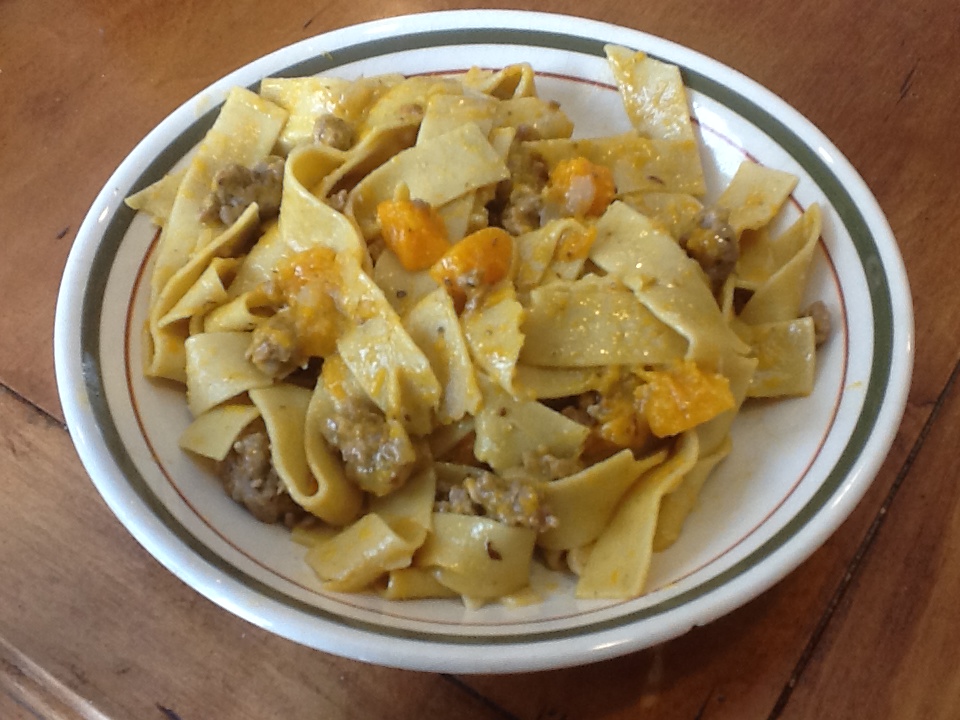
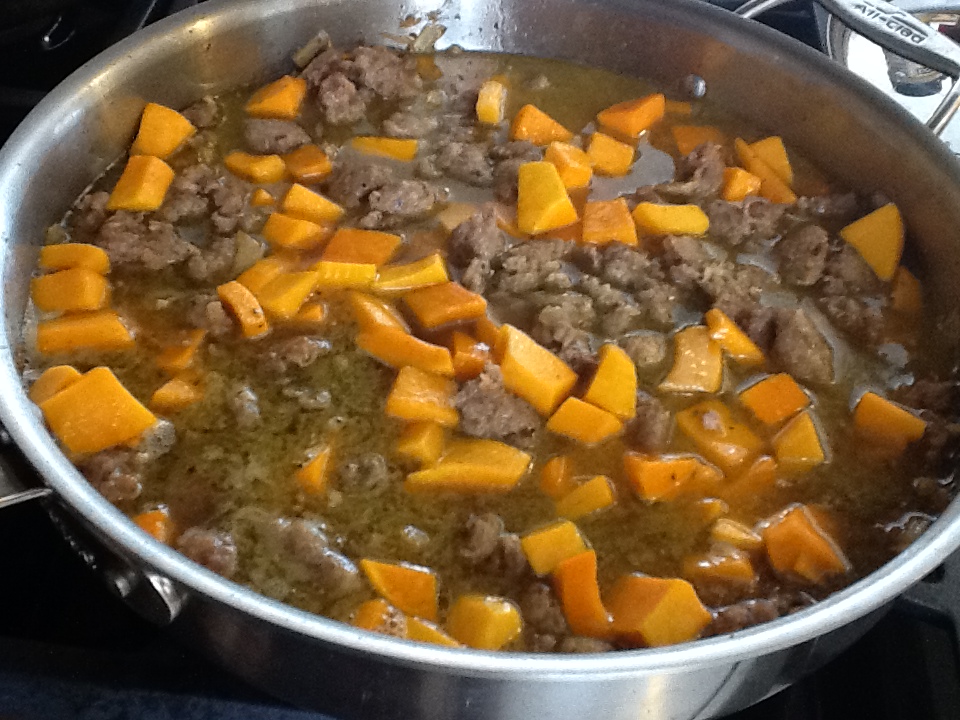
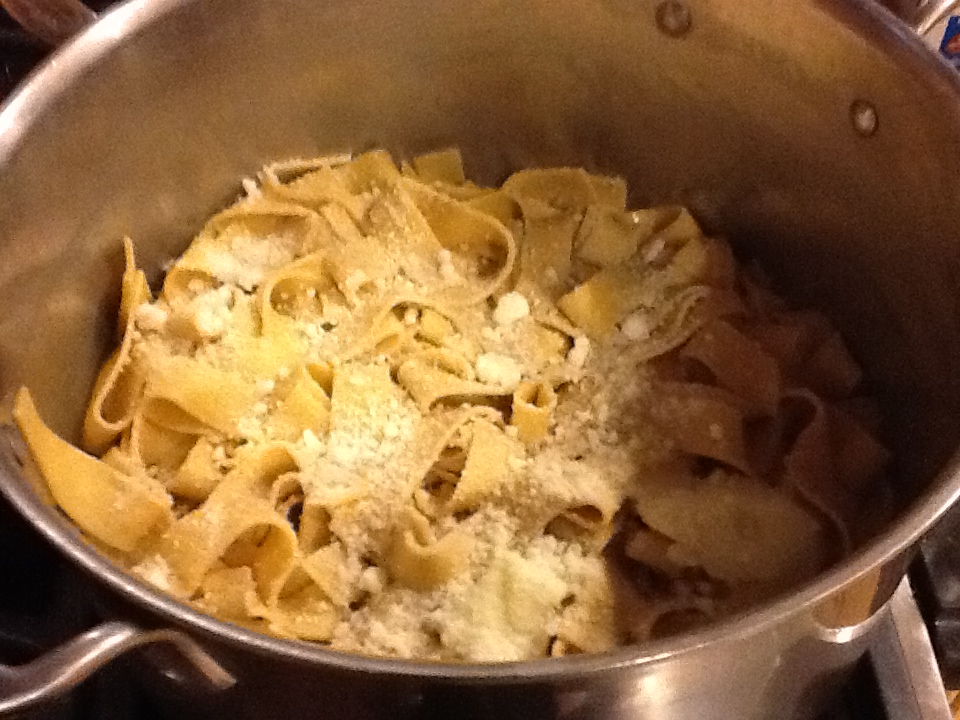
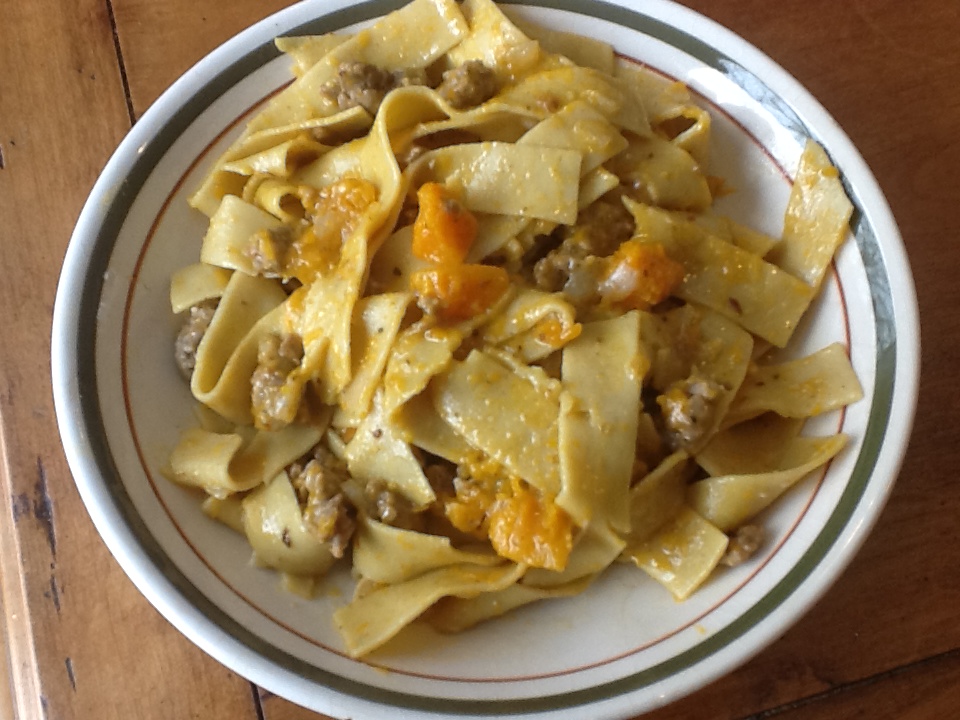
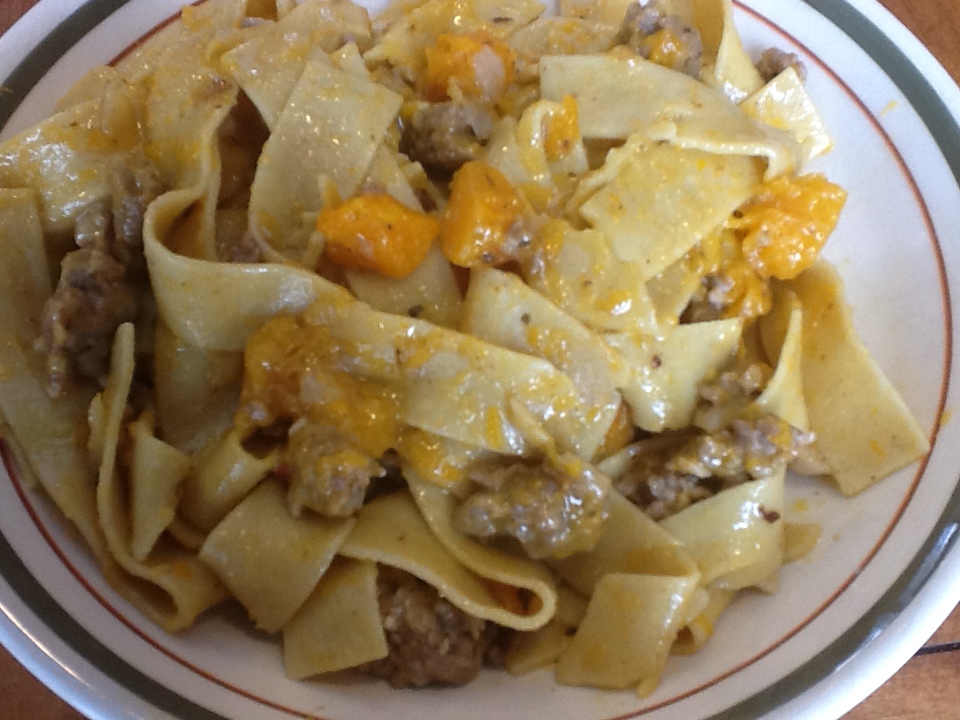
The recipe calls for penne rigate or rigatoni.  As you will see in my pictures, I used something different.  I had a pound of sweet potato pappardelle, which my sister had given me.  We share unique pastas too!!  It was fantastic, but the penne or rigatoni is spectacular as well.  I also did not use hot sausage, as the recipe suggests.  If you like spicy, we all agreed that the combination of hot from the meat and sweet from the squash, would be amazing.  However, it was wonderful with the sweet sausage as well.   Enjoy!

RECIPE:  serves 6 to 8 ( as a first course)

3 TBSP olive oil

1 pound Italian hot sausage (I used sweet)

1 cup chopped onion

5 cloves garlic, thickly sliced

1 TBSP chopped basil

! TBSP chopped fresh sage

1/4 tsp. red pepper flakes (optional…I did add this to mine)

1 cup white wine

1 1/2 cups butternut squash, peeled, seeded and cut into 1/2 inch pieces ( I cheat and buy it already cut up).

2 1/2 cups chicken stock

2 TBSP salt

1 pound pasta, penne rigate or rigatoni

6 TBSP Parmesan cheese

2 TBSp softened butter

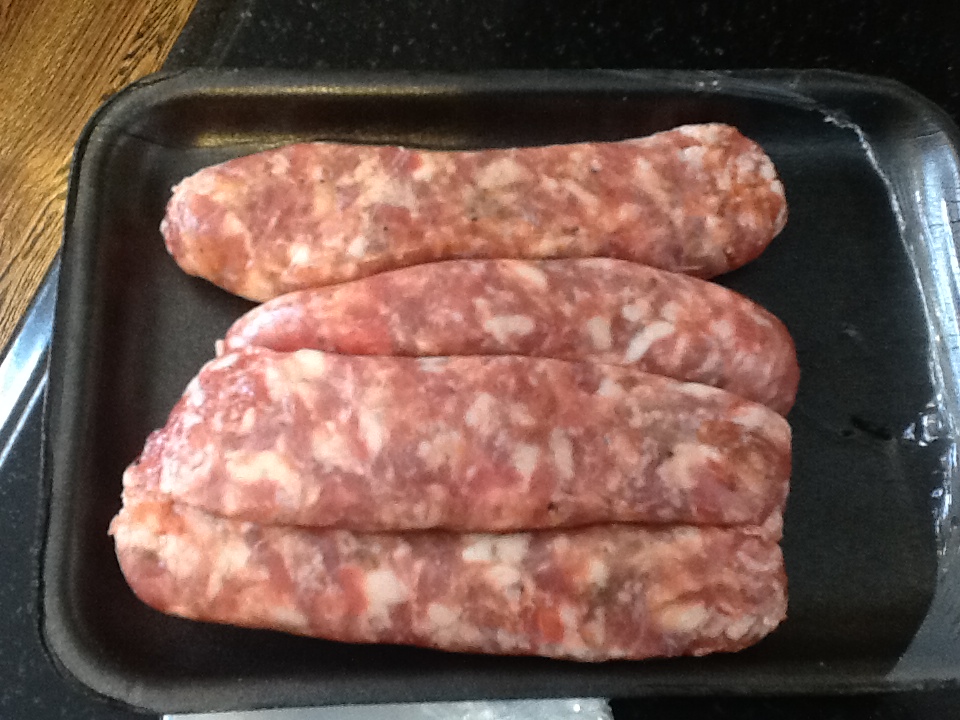
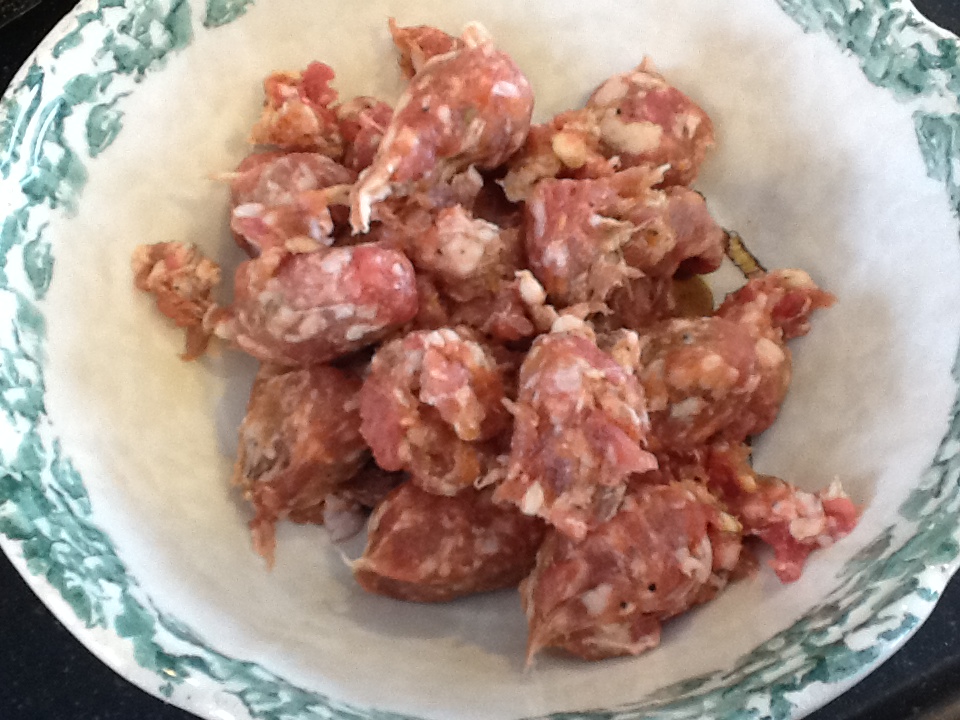
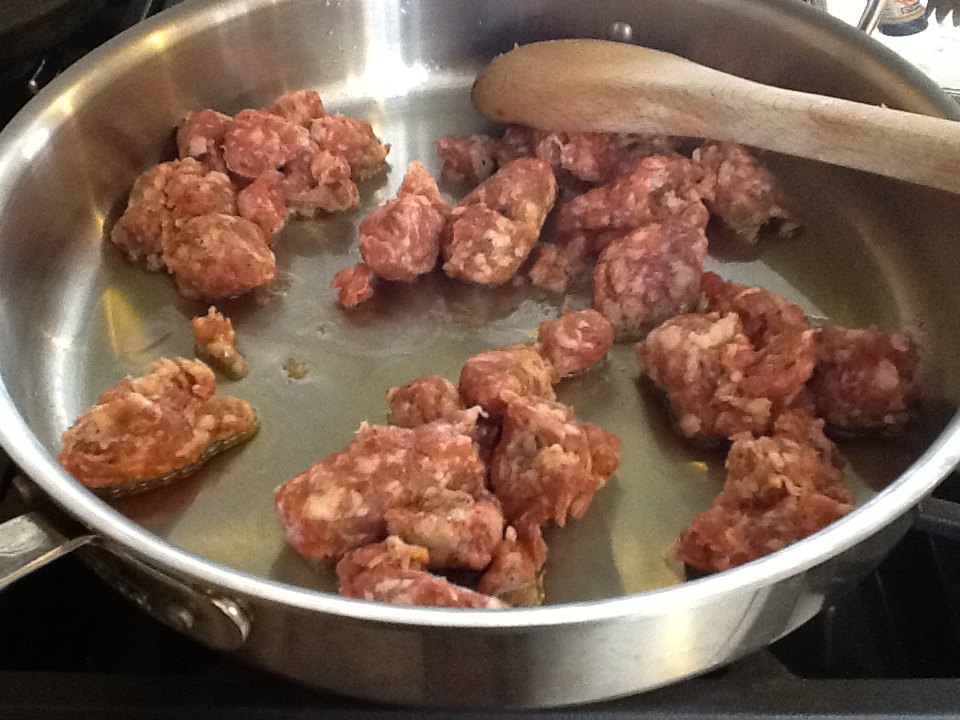
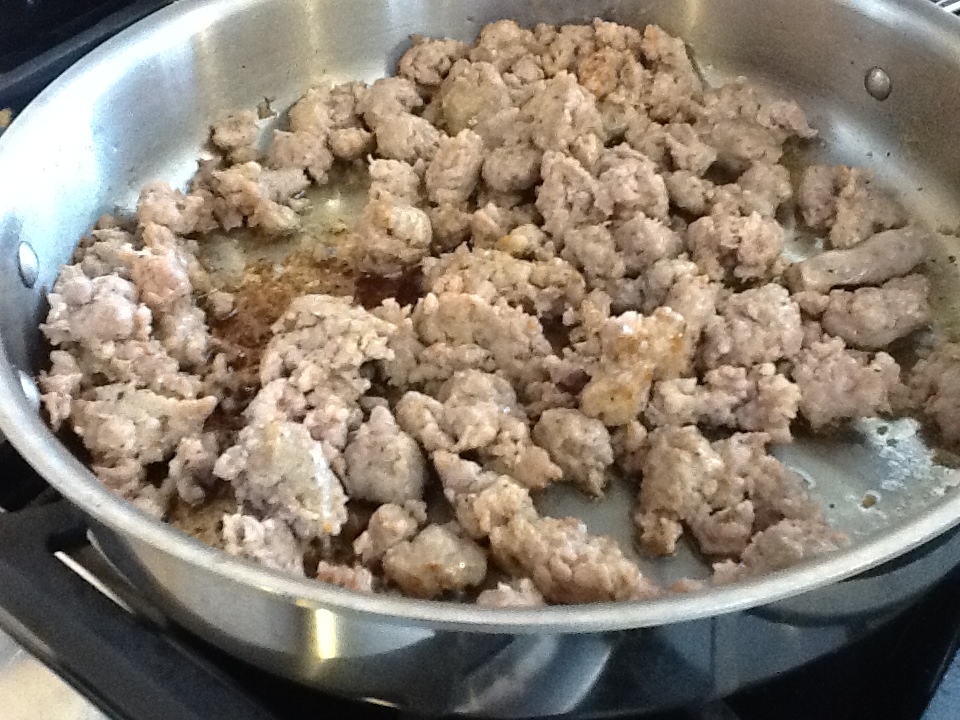
1.  Pour 1 TBSP of olive into a large, heavy skillet (12 inches), and cook over high heat for 2 minutes.  Take the sausage out of the casing and add it to the hot oil.  Cook for about 3 minutes until it browns.  Using the back of a wooden spoon, break the sausage up into small, bite-size pieces while it’s browning.  

2.  Turn off the heat.  Using a slotted spoon, place the sausage in a bowl; cover and set aside.  Keep about 1 TBSP of the oil and fat left in the pan.

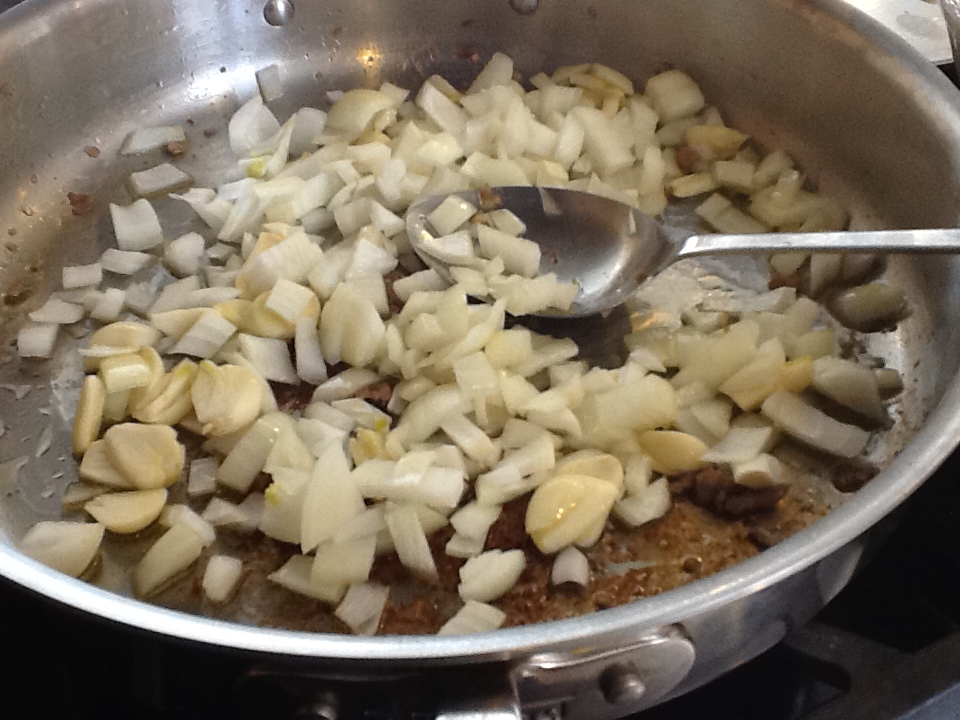
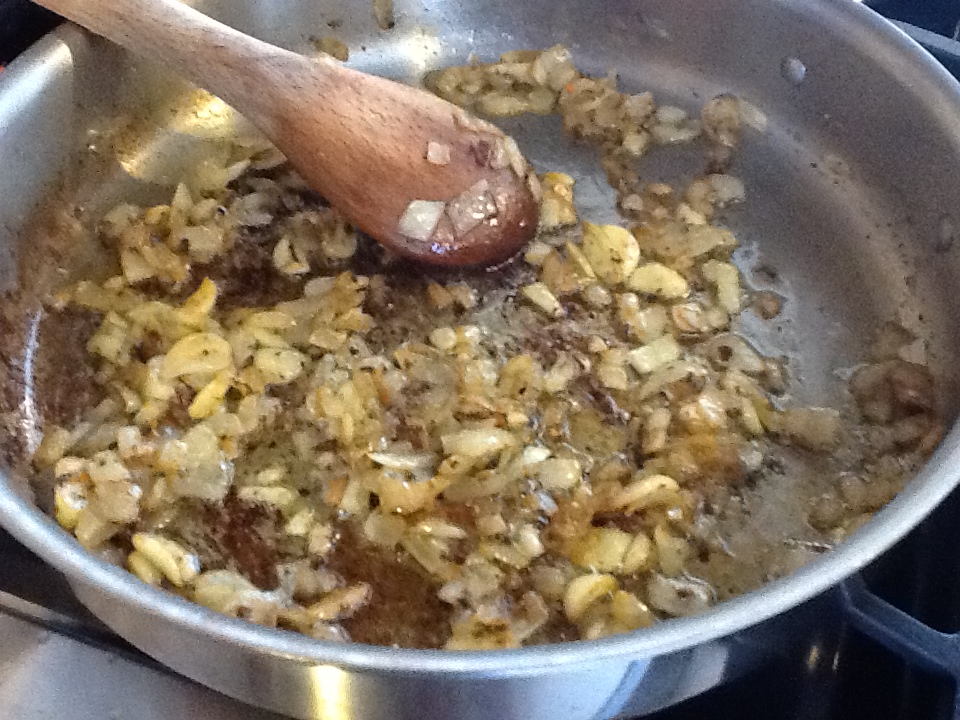
3.  Add the remaining 2 TBSP of olive oil to the pan, and cook over medium heat for 3 minutes.  Add the onion, garlic, basil and sage, and cook for 4 minutes, stirring well, until the onion and garlic start to to brown.  You can add the red pepper flakes here if you like.

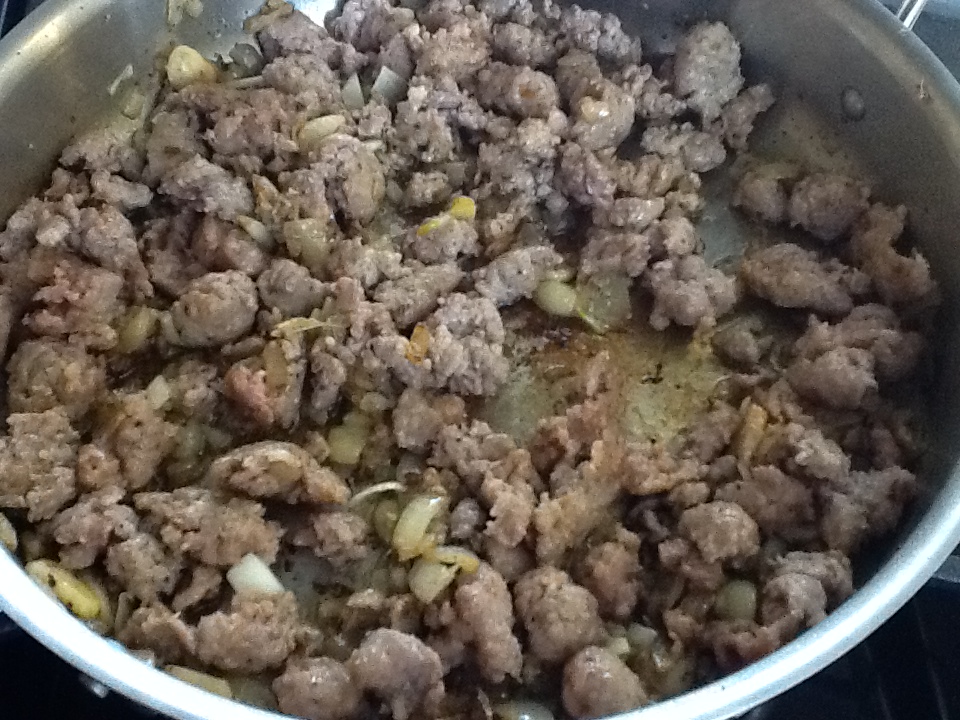
4.  Add the reserved sausage and cook for 2 minutes, stirring well.  Add the wine and deglaze the pan.  Cook for 5 more minutes, stirring well to dislodge the brown bits at the bottom of the pan.

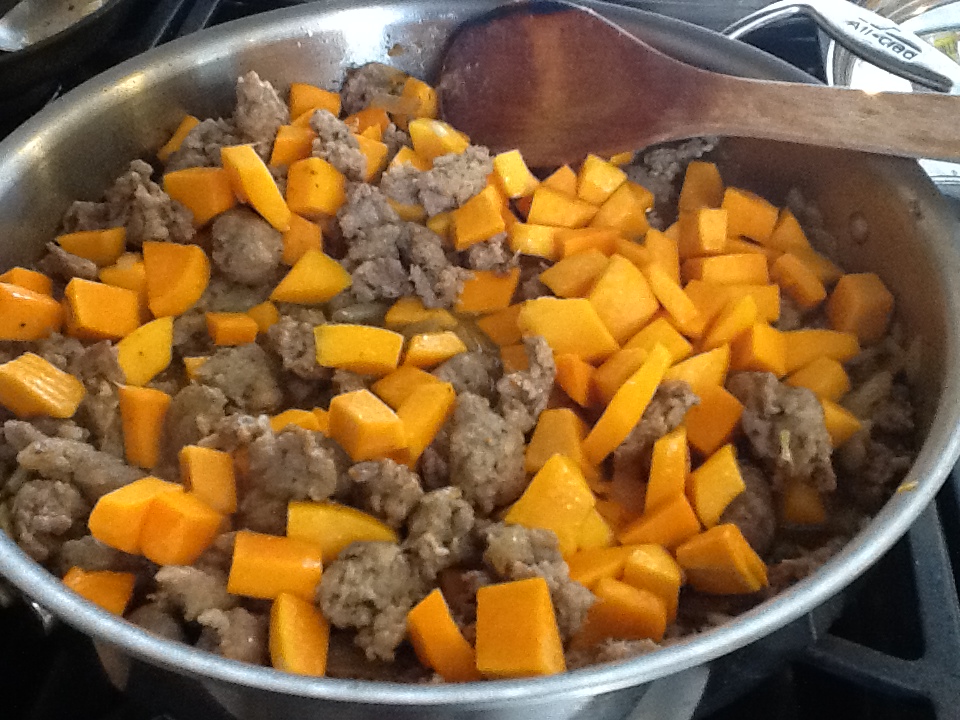
5.  Add the butternut squash and cook for 2 minutes, stirring well.

6.  Add the chicken stock, bring to a boil over high heat, and then reduce the heat and allow to simmer for 30 minutes.

7.  While the sauce is cooking, bring a large pot of salted water to a boil.  Add the pasta and cook according to directions.  When the pasta is cooked, drain it well in a colander.  Pour the pasta back into the pot, add the sauce, and cook over medium heat for 3 to 5 minutes, stirring constantly .  Remove the pan from the heat, add the parmesan cheese and butter and serve.

ImageImageImageImageImageImageImageImageImageImageImageImageImage

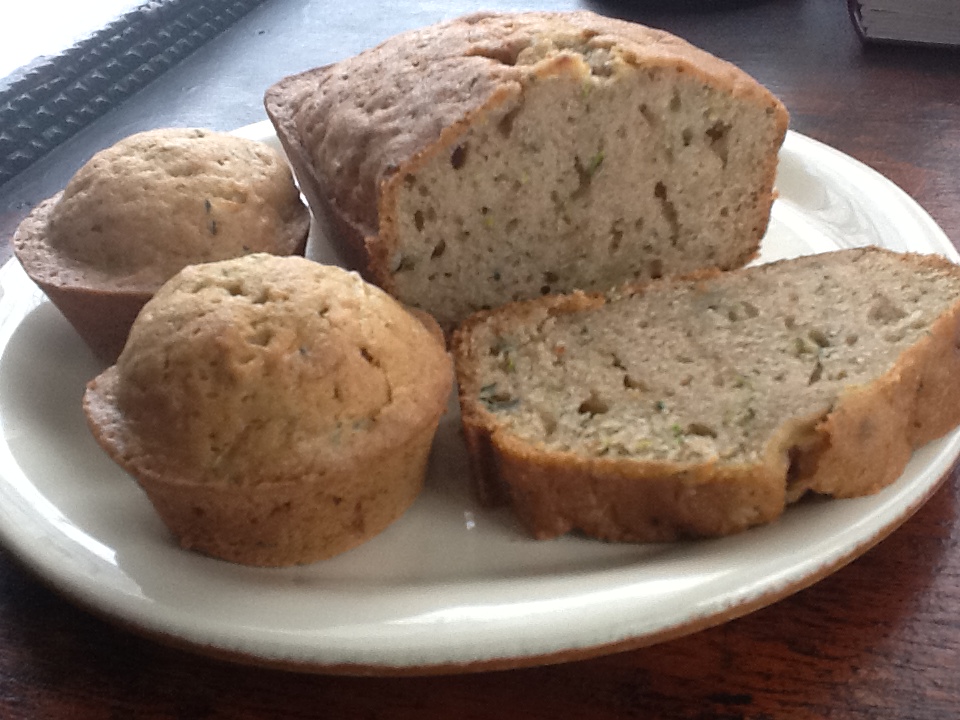
Zucchini Bread/Muffins

Image

I’m sure you’re all really sick of my stories about staying home and baking breads when my kids were young,….and sharing these recipes amongst girlfriends……blah, blah, blah.  Okay, so I won’t bore you again.  However, I did think it was comical that when I was looking through my files for this recipe for zucchini bread, from long ago, that I found so many of the same recipe, but all from different people.  I guess I didn’t realize at the time that everyone was giving me the same recipe!  I did remember that a friend of a friend used this recipe, but made it into large muffins.  I guess she was the creative one.  What was the fascination with this recipe?  Was it the fact that we were making something sweet, but yet we were using vegetables?   Did we think this made it healthy?  I think back then we did think this.  If there was a veggie involved, we figured it must have been good for us.   Around the same time that zucchini bread was all the rage, carrot cake appeared as well.  We certainly knew how to fool ourselves.
So now that I know that Dr. Oz wouldn’t recommend this as one of his foods for dieting, I can’t get much satisfaction out of the fact that there is zucchini in this bread, except that it tastes delicious.  I especially love this recipe when made into large muffins.  I use the tin that hold 6 large muffins.  I’m sure it would be wonderful as smaller muffins too, but then I’d have to eat two!   Since I can never decide which I prefer…bread or muffins, I make one loaf and the 6 large muffins.  

Thank you, Mom, Mrs. Tozzi, Bev, Judith and Bonnie for sharing these recipes with me.

If you have a different recipe for Zucchini Bread, I would love it if you would share, too.

RECIPE:   makes 2 loaves or 12 large muffins or 1 loaf and 6 large muffins, or any configuration of your choice

3 eggs

1 cup vegetable oil

2 cups sugar

2 cups grated, unpeeled zucchini

3 tsp. vanilla

3 cups flour

1 tsp baking soda

1/2 tsp. baking powder

1 tsp. salt

3 tsp. cinnamon

1 cup chopped nuts, if desired. I prefer not.

1.  Grease pans of choice, and preheat oven to 325 degrees.

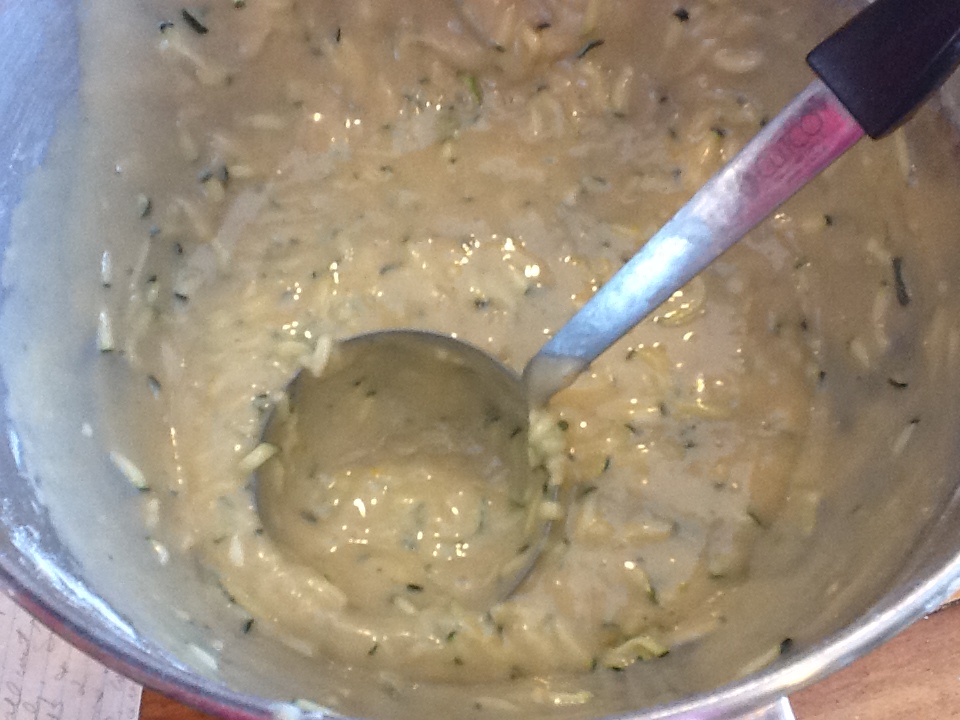
2.  Mix together the eggs, sugar, oil and vanilla.   Add grated zucchini.

3.  Sift all the dry ingredients together and then add.  (I think the sifting really does matter here.  Don’t cheat.)

4.  Combine dry ingredients with the wet, and mix well.

5.  Pour into prepared pans.  Cook approximately 1 hour and 15 minutes. Muffins will take less time. 

ImageImageImageImageImageImageImageImageImageImageImageImage

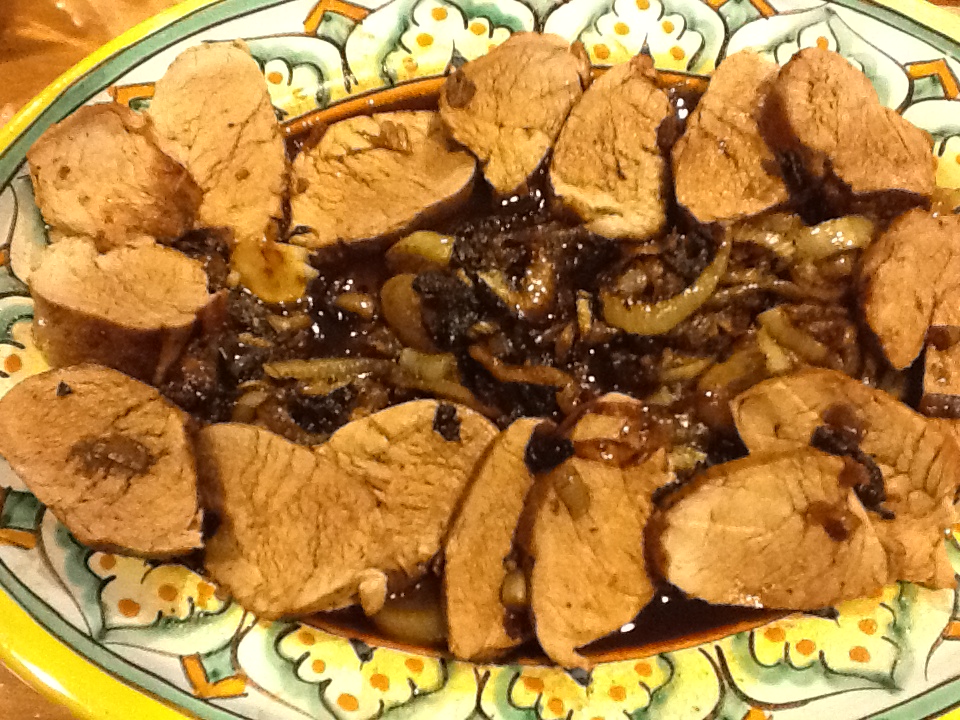
Pan Roasted Pork Tenderloins with Balsamic-Fennel Confit

Image

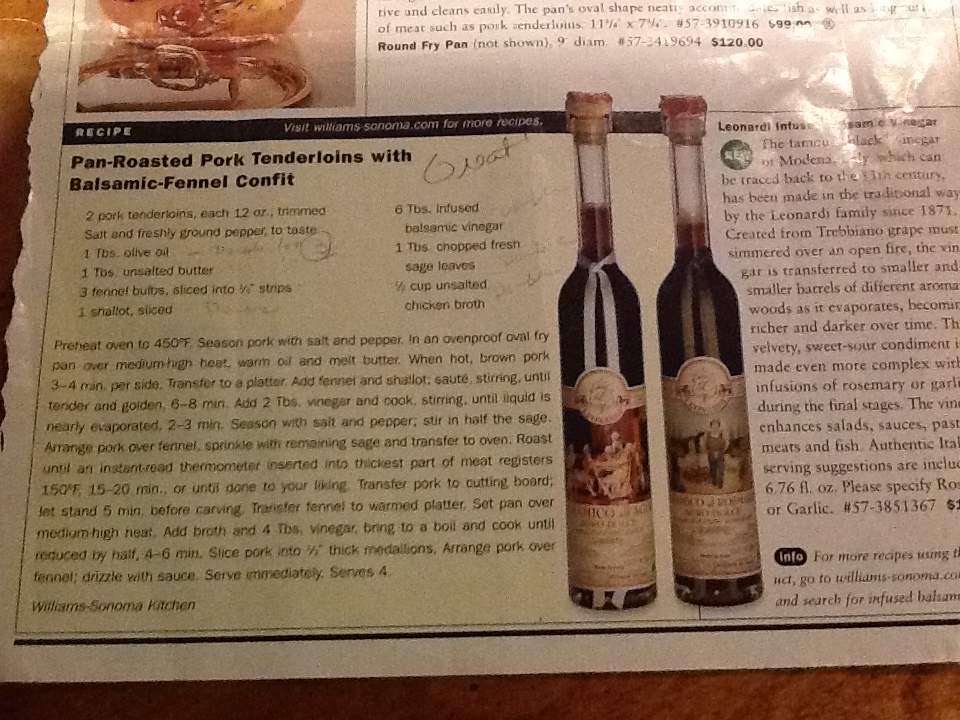
This recipe came into my life about 8 years ago in a very strange manner, but sometimes recipes just find you.  It was not passed down from relatives, or given to me by a friend, and I didn’t find it in a cookbook or magazine.  I was minding my own business in a William Sonoma store, looking at an oval copper sauté pan.  It was a beautiful pan, and I found myself unexplainably drawn to it.  I didn’t need it.  I certainly didn’t have room for any more pots or pans, and it was very expensive.  I found myself picking it up, gently stroking the copper sides, and then I would put it down and walk away, convincing myself that I didn’t need it. I did this several times, and then finally just bought the dish towels that I came in for, but went back for one last look.  There was a woman there now, conducting the same sort of ceremony.  She turned to me and said “isn’t this a gorgeous pan?”  “Gorgeous “was the right word.  I agreed with her, and told her that I was trying to convince myself I needed the pan, but really didn’t have any particular use in mind.  That’s when she pulled this recipe for pork tenderloin out of her purse, and shoved it under my nose.  “This is the recipe that their catalog suggests you make in this pan,” she told me.  I glanced at it quickly and that was all I needed now to justify my purchase.  “Thank you, ” I said, “I’m buying the pan!”  She grabbed me by the coat sleeve and whispered, “don’t!”  She then proceeded to tell me that she makes it in a cast iron skillet, and it comes out perfect.  “Why spend $250 on a pan you don’t need?”  She was correct, especially because I had a cast iron skillet and I didn’t have that recipe in my possession anyway.  I suppose I looked a little disappointed as I turned to walk out of the store.  She quickly came after me and handed me the recipe.  “Try it in a cast iron skillet,” she said.  “Your family will love it.”

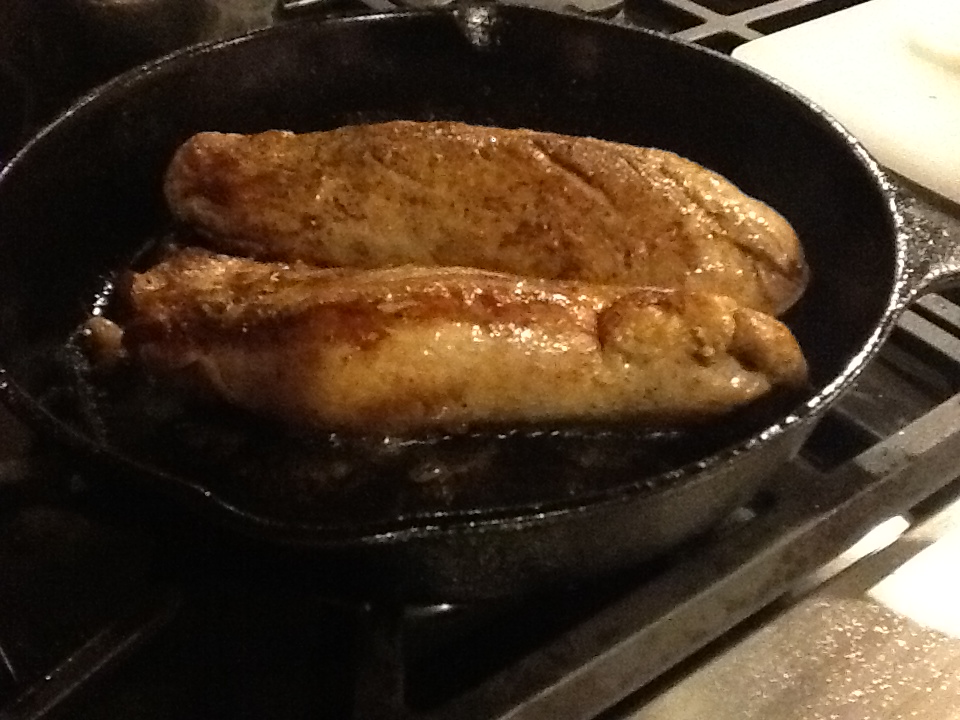
She was right.  I went directly to the food store, bought all the ingredients needed and made this dish for dinner that very night…..in my cast iron skillet.  It was a big hit, and I’ve been making it ever since….in my cast iron skillet.   I still glance longingly at that pan every time I browse through William Sonoma, and still can’t help but wonder if that woman, all those years ago, bought the pan once I had left the store.

RECIPE:   serves 6

2 pork tenderloins, 12 ounces, trimmed

salt and freshly ground pepper to taste

2 TBSP olive oil

2 TBSP unsalted butter

3 fennel bulbs, sliced into 1/4 inch strips

1 shallot sliced

8 TBSP balsamic vinegar

1 TBSP chopped fresh sage leaves (not totally necessary)

3/4 cup unsalted chicken broth

1.  Preheat oven to 450 degrees.

2.  Season pork with salt and pepper

3.  In an ovenproof fry pan, over medium heat, warm oil and melt butter.  When hot, brown pork 3 to 4 minutes per side.  Transfer to a platter.

4.  Add fennel and shallot to pan, and sauté, stirring until tender and golden, 6 to 8 minutes.

5.  Add 3 TBSP vinegar and cook, stirring until liquid is nearly evaporated, 2 to 3 minutes.  Season with salt and pepper.  Stir in half the sage.

6.  Arrange pork over fennel, sprinkle with remaining sage and transfer to oven.  Roast until an instant-read thermometer inserted into the thickest part of meat registers 150 degrees F, about 15 to 20 minutes, or done to your liking.

7.  Transfer pork to cutting board and let sit for 5 minutes before cutting. Transfer fennel to warm platter.

8.  Set pan over medium high heat and add the broth and the rest of the vinegar.  Bring to a boil and cook until reduced by half, 4 to 6 minutes.

9.  Slice pork into 1/2 inch thick medallions.  Arrange pork over fennel; drizzle with sauce.  Serve immediately.

ImageImageImageImageImageImageImageImageImageImage

pork tenderloin recipe