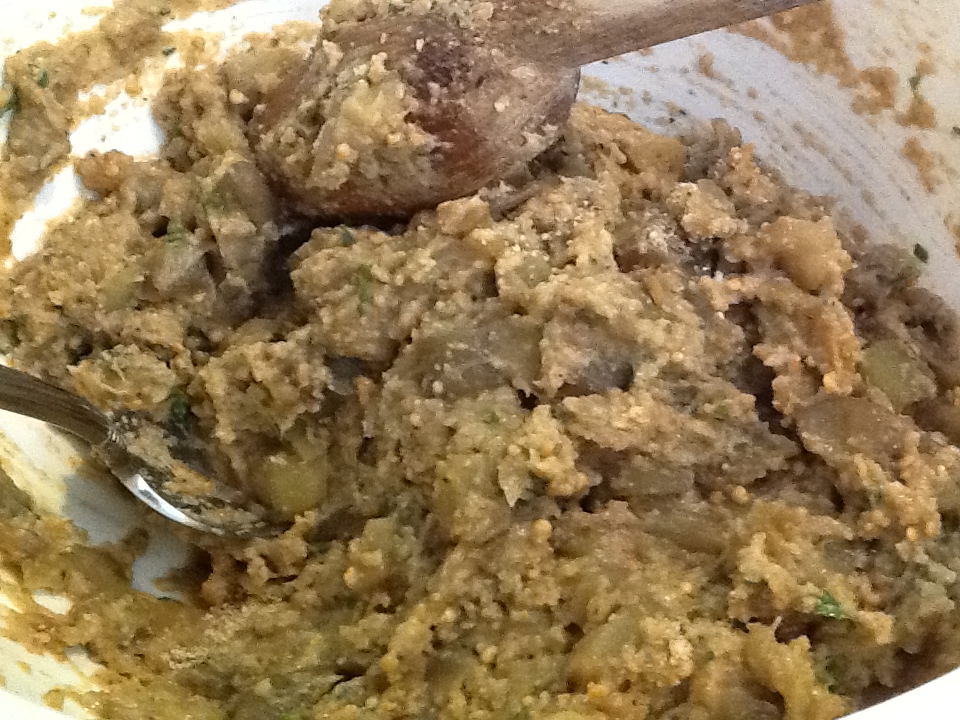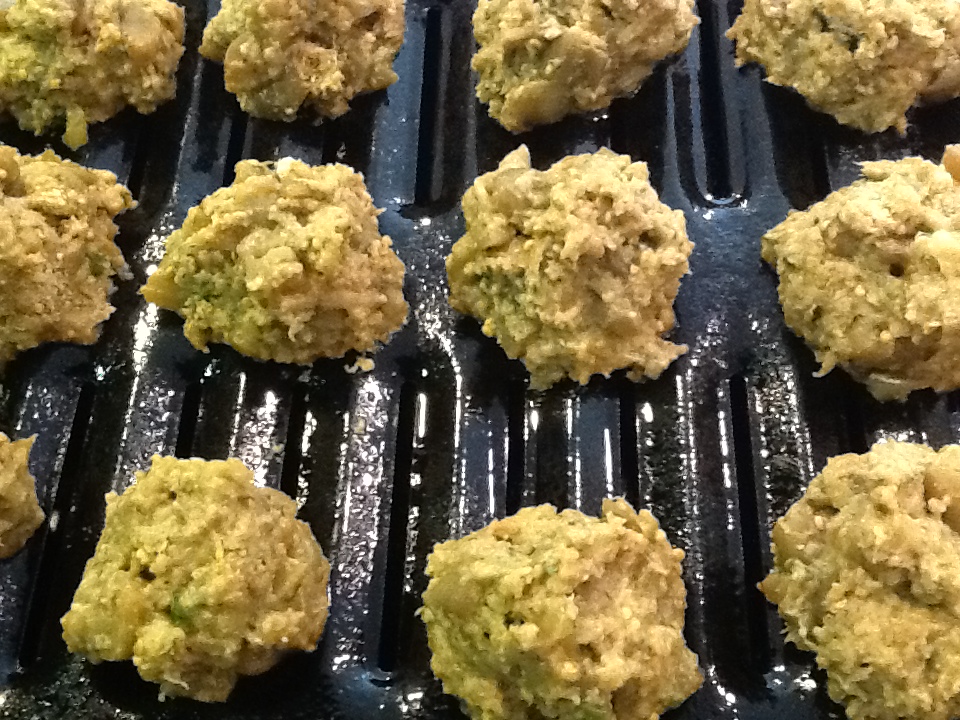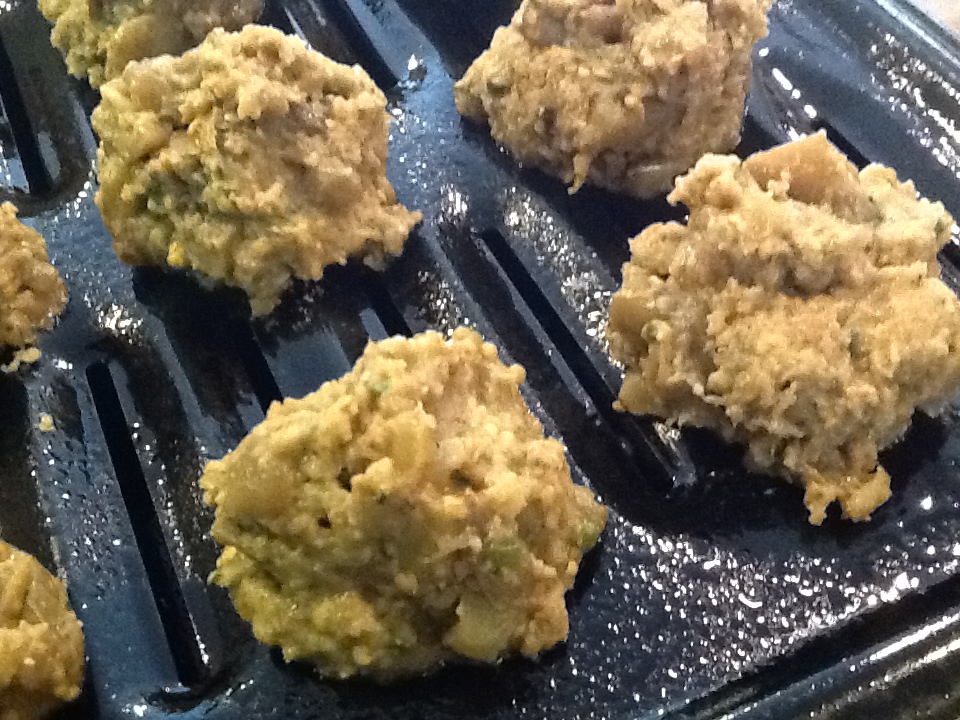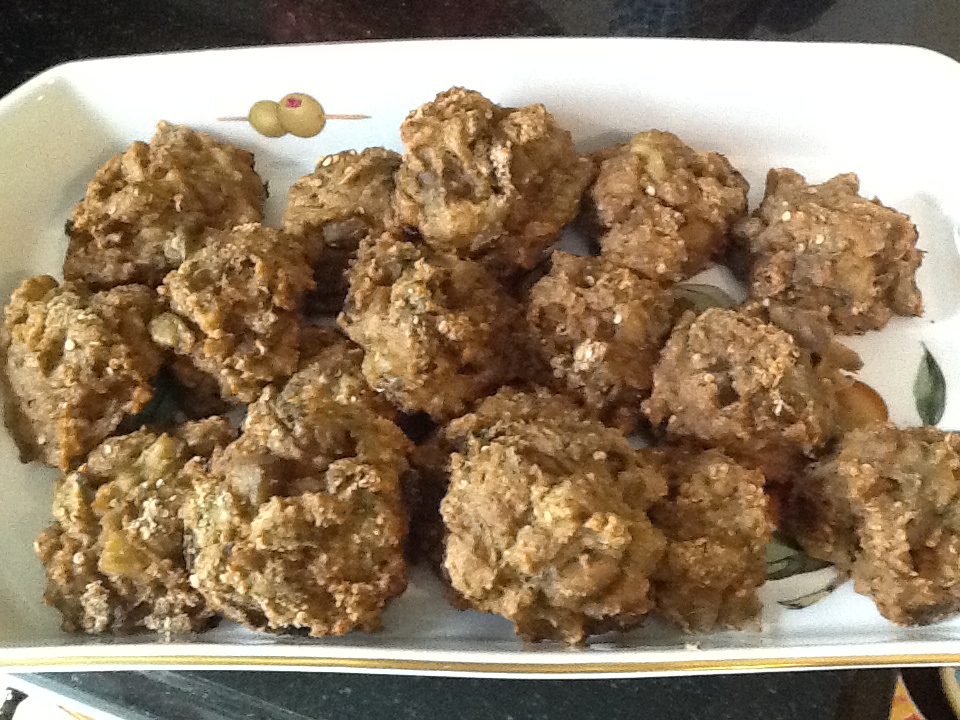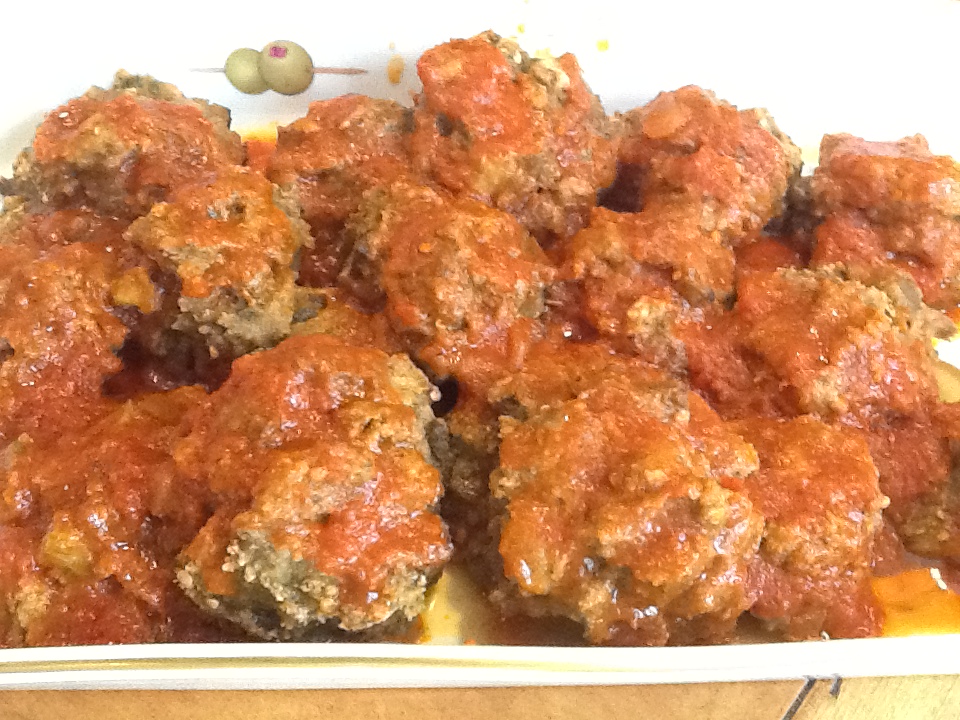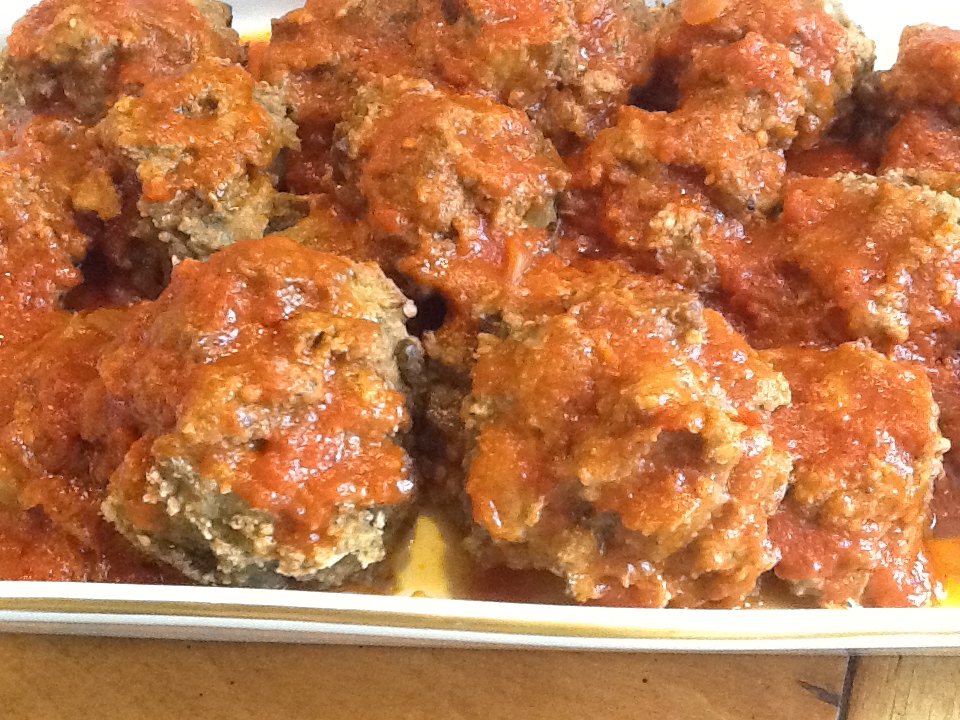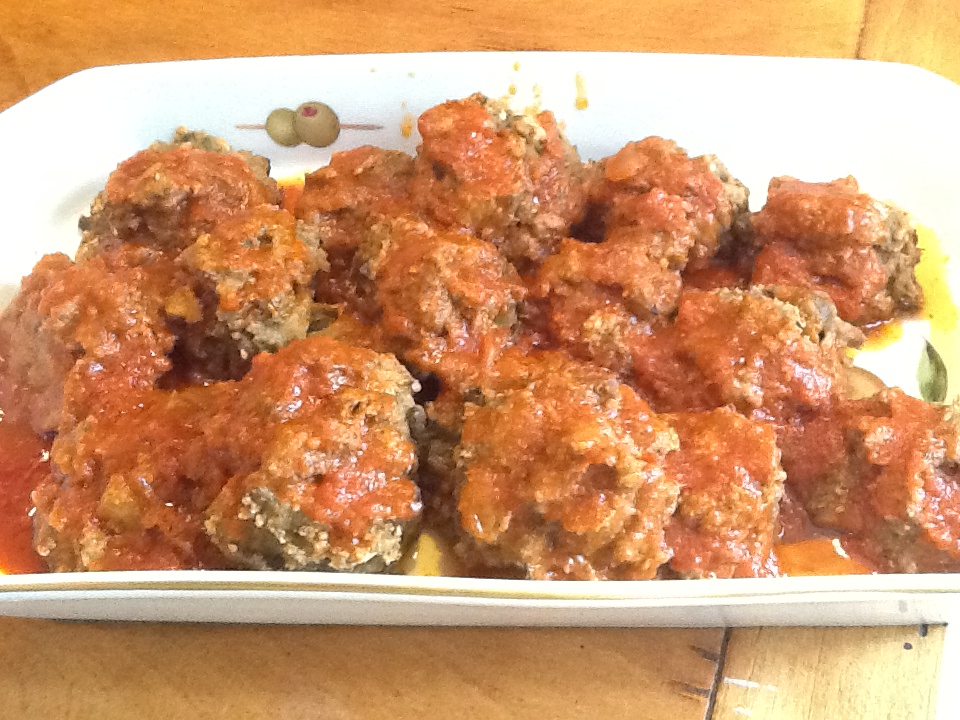
Eggplant Meatballs (Meatless)

Image

This past Sunday was the first day of Autumn, and I know what my family was thinking.  “Enough with the cherry tomatoes.  When are we going to have real gravy and meatballs again on Sundays ??”  Is summer really over?  Is it really time to start thinking about meals indoors?   As much as I hate to see summer end (and believe me, I do), I do get a “cozy” feeling when I think about cooking the hearty meals of autumn and winter.  So this past Sunday, the first day of Autumn, I decided to jump right in and make a Sunday sauce ( ragu or gravy to some of us) with meatballs and lots of gravy meat.

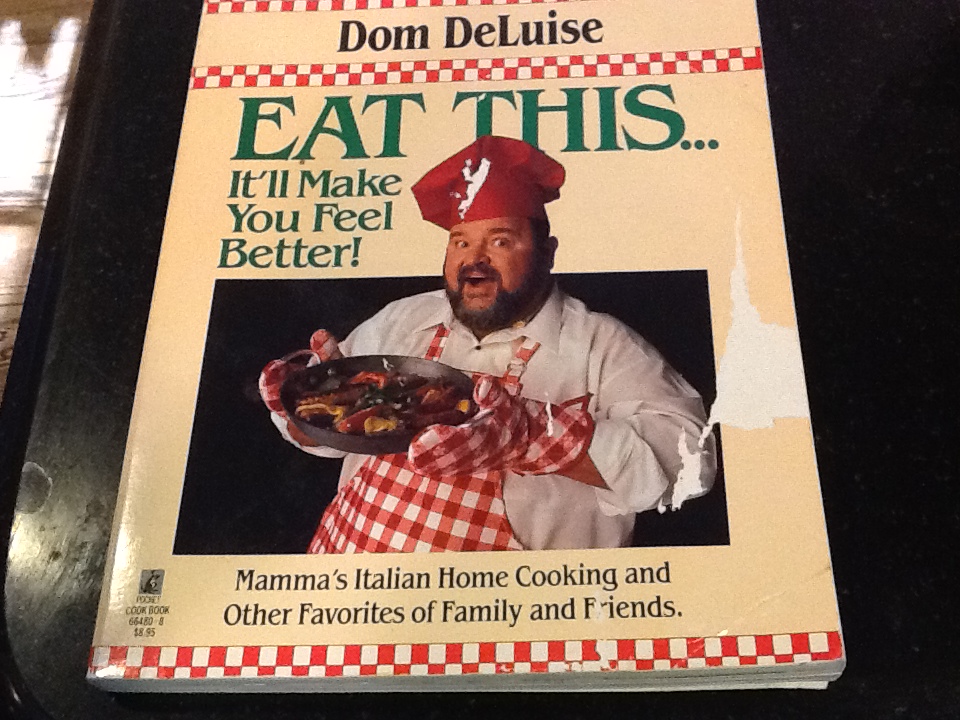
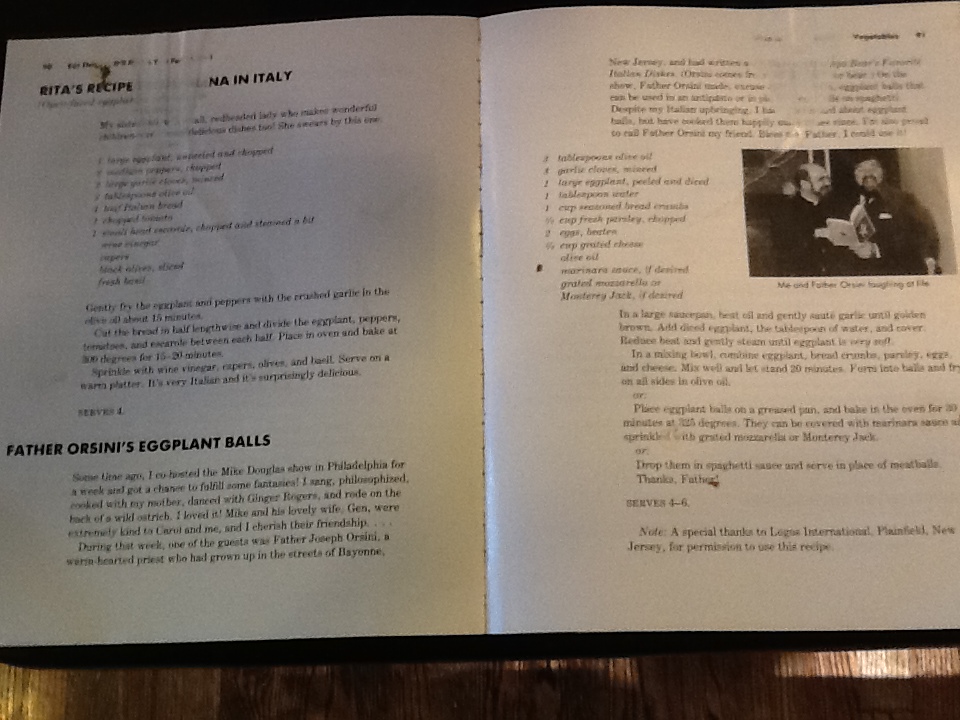
You already have my recipe for the sauce and meatballs, taken from my grandmother and mother.  You’ll find that recipe under the pasta category, entitled “Little Nonni’s Baked Spaghetti.”  But today I want to share with you a recipe for “eggplant meatballs.”   This recipe comes from a cookbook entitled “Eat This, It’ll Make You Feel Better,” by Dom DeLuise of all people.  My sister gave me this cookbook in 1988 since Dom DeLuise was a favorite comedian in our family, and the title was so funny and true to life, if you’re Italian.  Food always makes us feel better.  Just as she suspected, the book was hilarious to read, and the recipes were very good.  Most recipes are authentic to Italian home cooking.  One day, I spotted the recipe for “Father Orsini’s Eggplant Balls.”  While this wasn’t anything I’d ever heard of before, it definitely got my attention.   Sunday dinner was becoming a bit of a problem due to a houseful of young women (daughter and stepdaughters) who were concerned about the heaviness and calorie content of this meal.  We also had a vegetarian among us.  So Father Orsini saved the day.  I made these vegetarian meatballs one Sunday in 1989, and have been making them ever since. Everyone loves them!  Of course, for vegetarians, you’ll want to use marinara sauce.

The basic gist of this recipe is that you cook down the eggplant until soft, and then treat it the way you would when making meatballs.  The eggplant replaces the chopped meat.  I never fry these however, as they will break apart, so I always bake them.  Less calories and fat, too!  Did I really say that?  I hope my grandmothers in heaven didn’t hear me.

RECIPE:

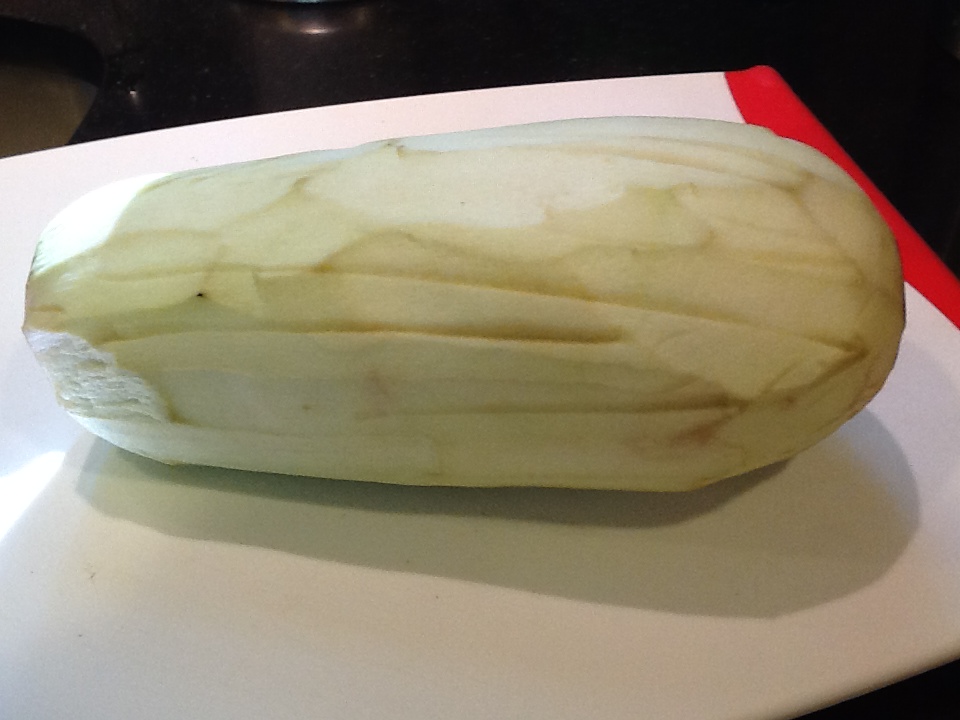
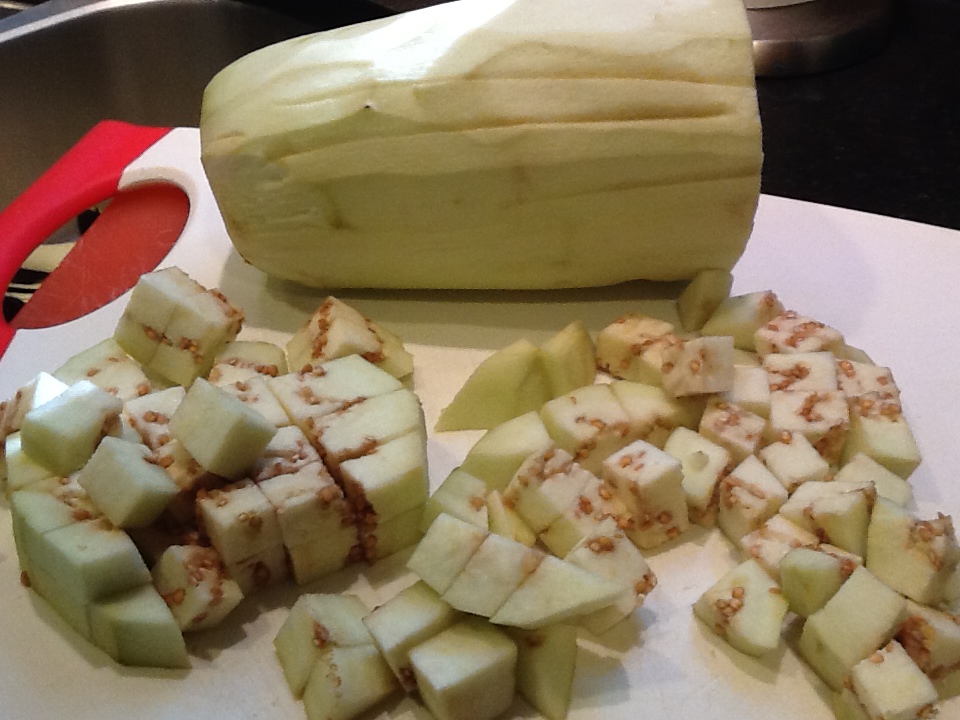
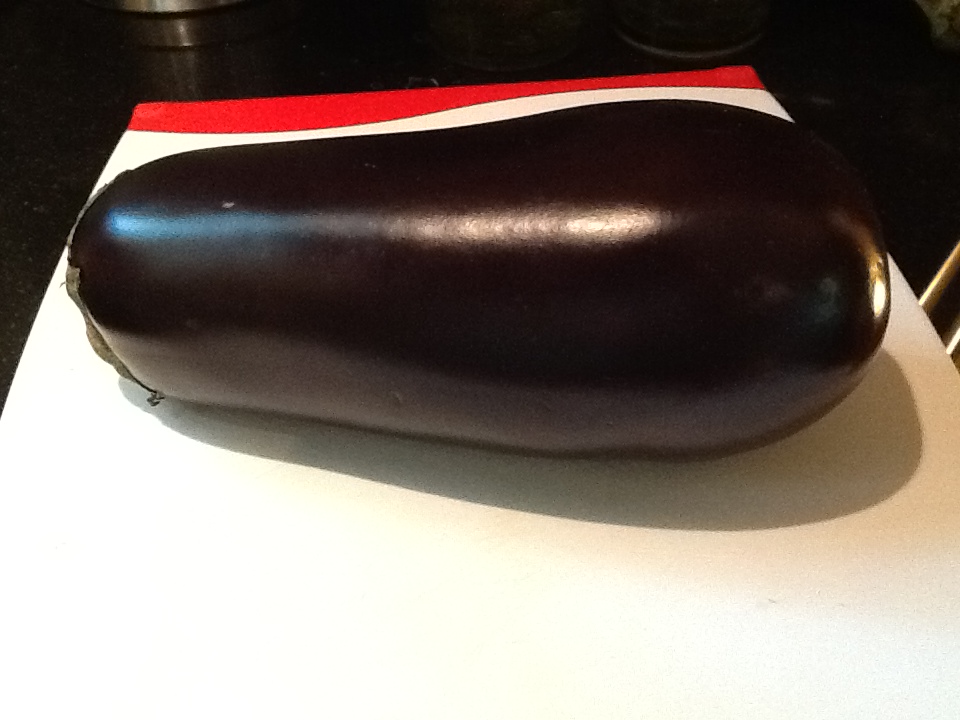
1 large eggplant, peeled and diced

3 TBSP olive oil

3 garlic cloves, minced

1 TBSP water (you made need a little more)

1 cup Italian seasoned bread crumbs (you may need a little more)

1/2 cup fresh parsley

2 eggs, beaten

1/2 cups grated cheese

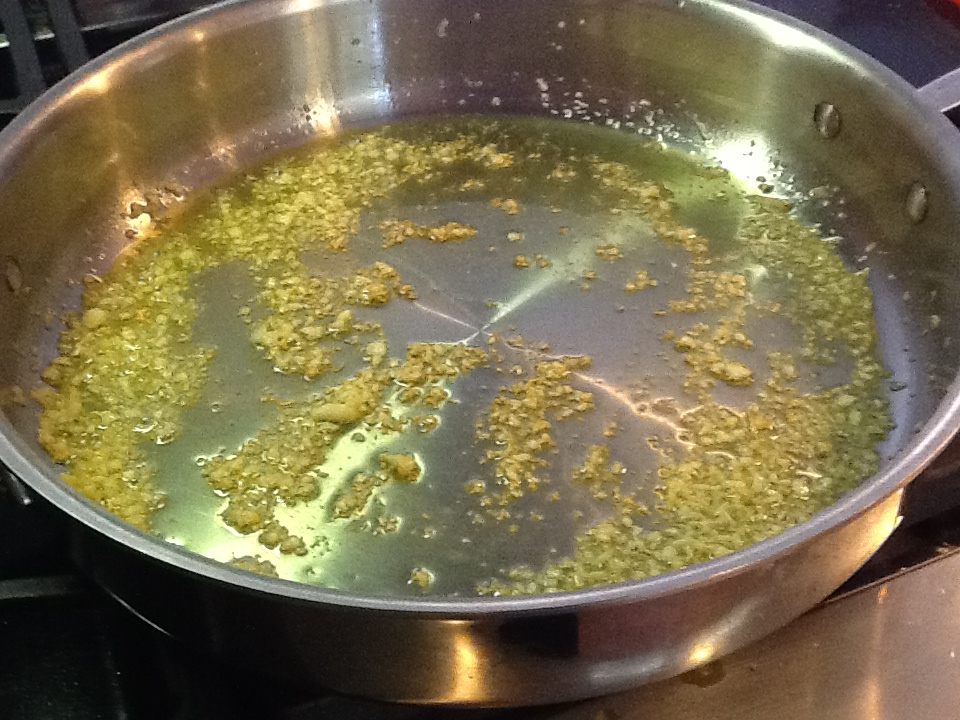
1.  In a large saucepan or frypan, heat oil and gently sauté garlic until golden brown.

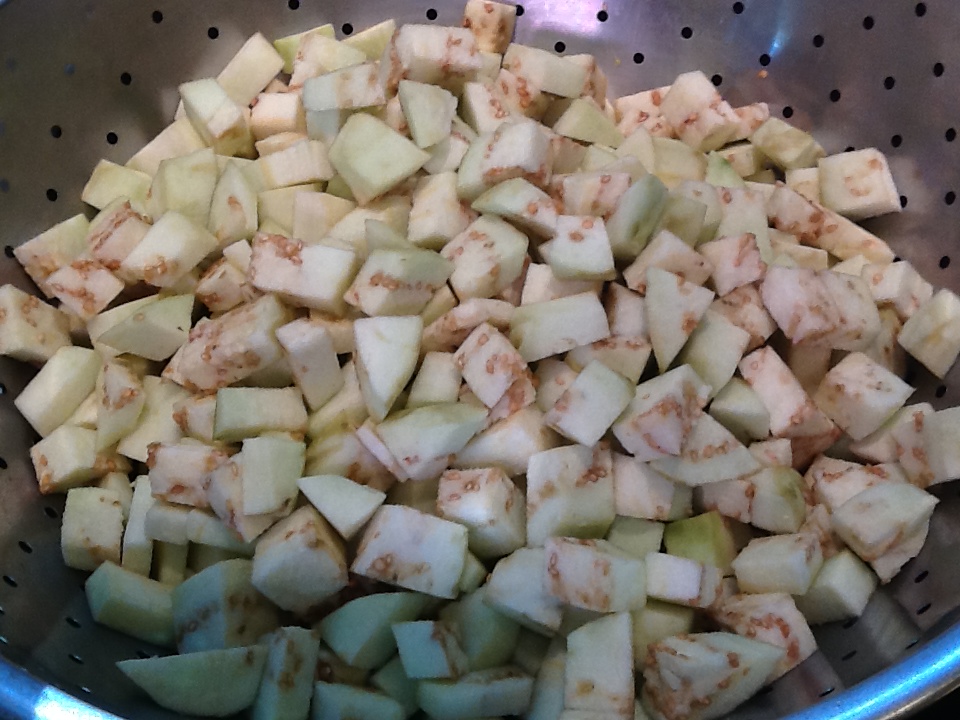
2.  Add diced eggplant, the TBSP of water and cover.  Reduce heat and gently steam until eggplant if very soft.

3.  in mixing bowl, combine eggplant, bread crumbs, parsley, eggs and cheese.  Mix well and let stand for 20 minutes.

4.  Form into balls (if they will not hold shape, you need to add more bread crumbs) and place on a greased baking pan.  I like to use my broiler pan.

5.  Bake in a 325 degree oven for 30 minutes.

6.  Serve covered in your sauce of choice.
Image

Image

Image

Image

ImageImage

Image

Image

Image

Image

ImageImage

Image

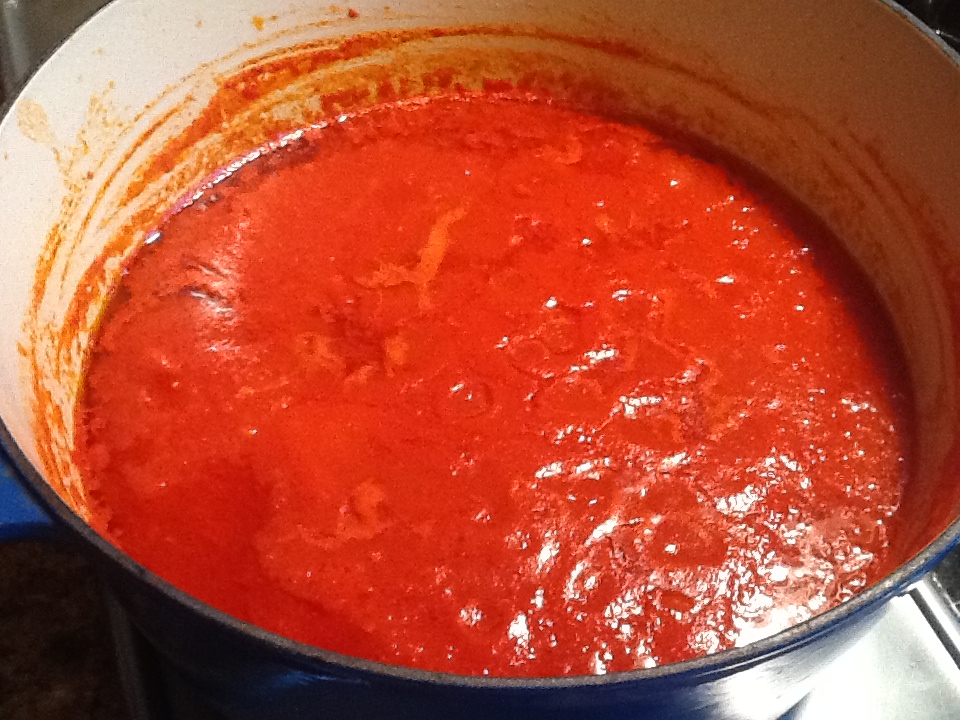
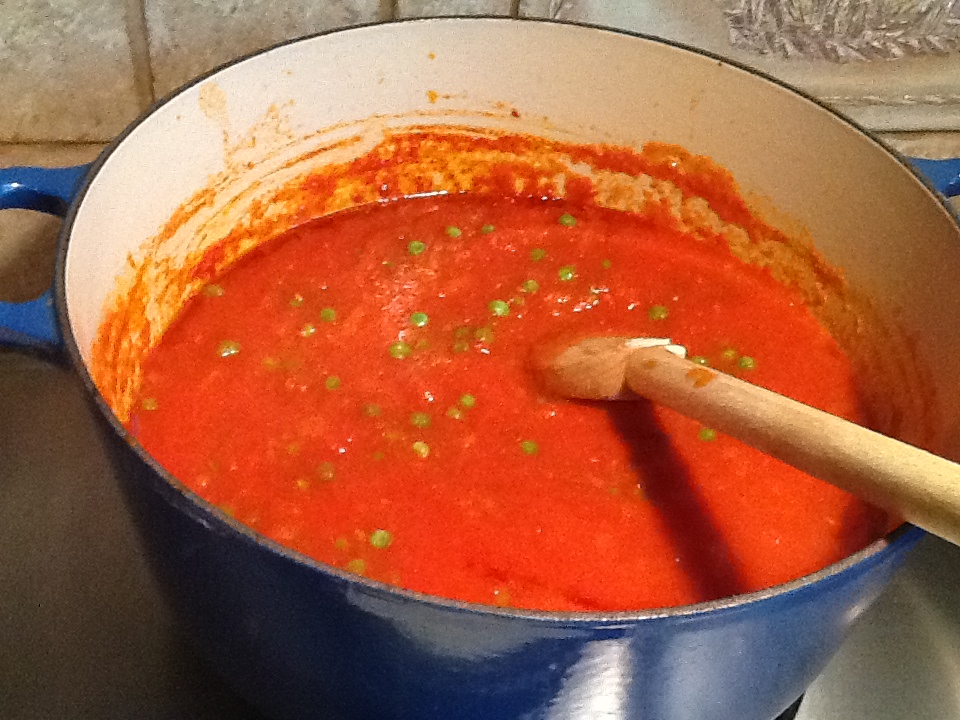
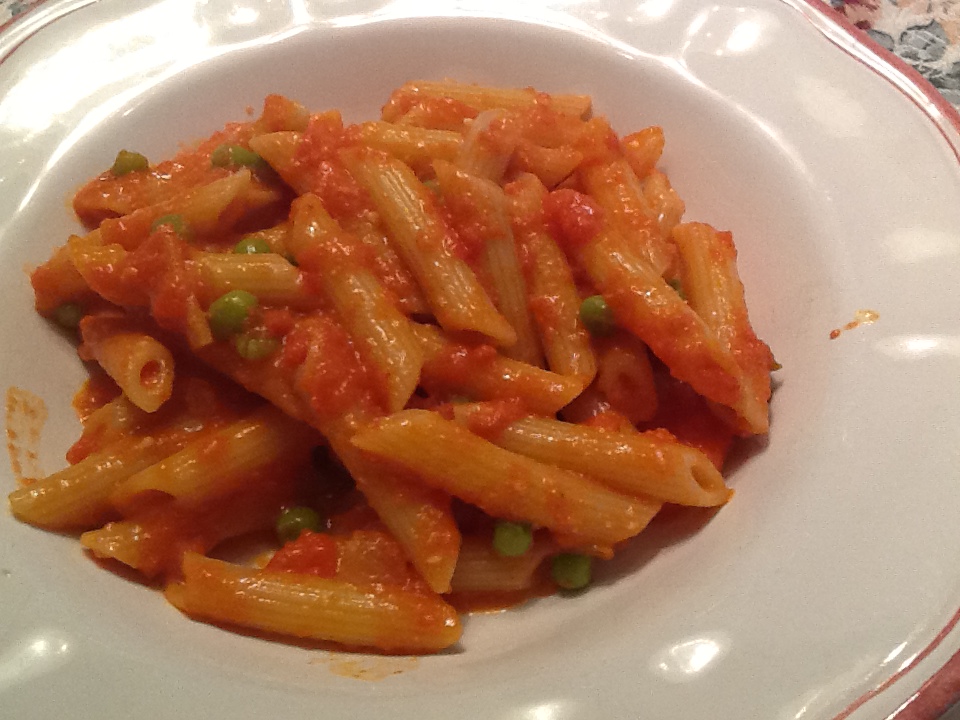
Uncle Dick’s Penne alla Vodka

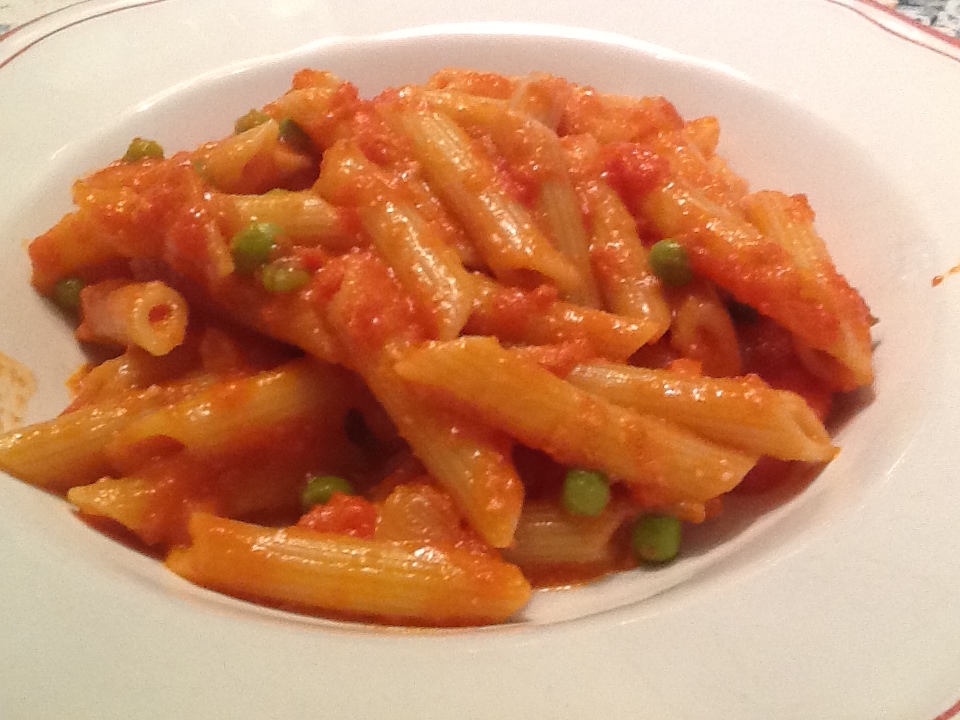
ImageVodka sauce is not anything you’ll ever see me order in a restaurant or take on a buffet line (why is it always there??).  It can be too heavy, too creamy, too garlicky, or just plain too boring at times.  You really don’t know what you’re going to get.  So why am I sharing my uncle’s recipe for this sauce?  Well, because it is absolutely delicious.

It used to be a rare thing to see an Italian man in the kitchen way back when.  Women didn’t want them there, disrupting the one spot in the house where they had control.  But this was my youngest uncle and his wife,  and they seemed somewhat modern to me at the time.  Every once in a while, he got a kitchen pass from his wife, and he did have a few master recipes.  He was the mastermind behind my carbonara recipe (check it out if you haven’t ), and his vodka sauce recipe is the only vodka sauce I will eat. He loved to eat in the best of restaurants, and due to his kind and magnanimous personality, was able to get the chefs to give away some of their favorite recipes.  I recall this recipe coming from one of the top Italian restaurants in New York City that he frequented in the 1970s.  This is when vodka sauce “hit the fan,” pardon the expression. But literally, from this point on, vodka sauce was everywhere!

When I look at the two recipes I have, which I got from my mother, who wrote down what he told her, I can see that he changed this recipe several times, maybe according to different restaurants.  However, the version I’m giving you here, I  watched him make myself.  I don’t know if he made the changes himself, or if they came from another restaurant’s chef, but it is delicious.  He lit the vodka in the pan on fire, used mascarpone cheese instead of heavy cream, and added peas.  I don’t set the vodka on fire, but my heart warms with memories of him every time I make this sauce.

If you’re not a big fan of vodka sauce, this just may change your mind.  I hope so.  And by the way, this sauce can definitely pass for a “Sunday red sauce!”

RECIPE:

1 pound penne rigate

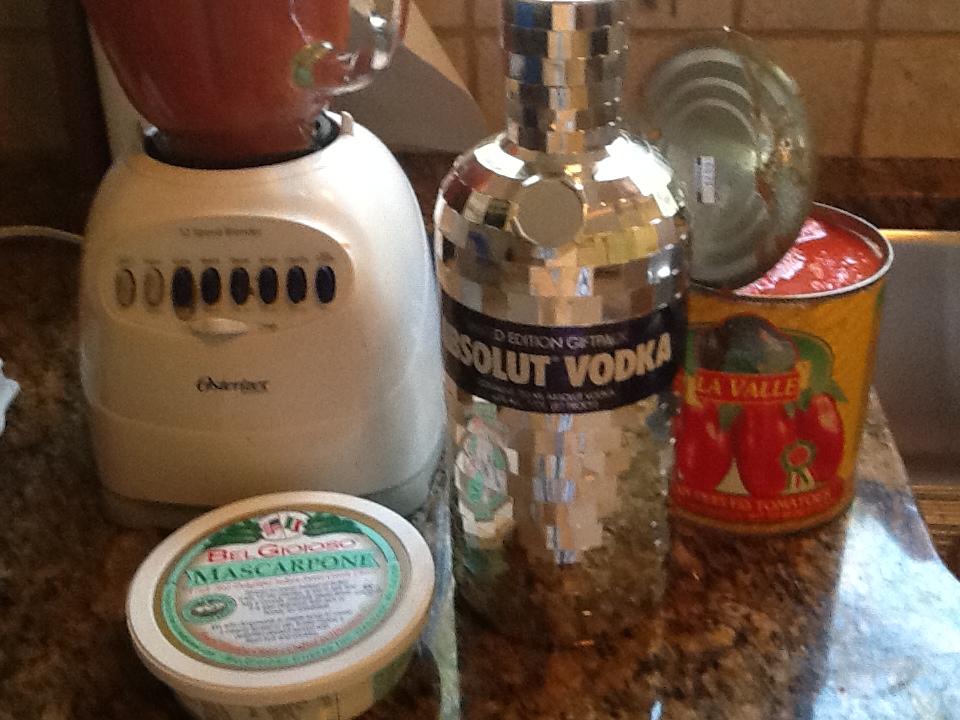
1  36 ounce can Italian plum tomatoes

1 medium

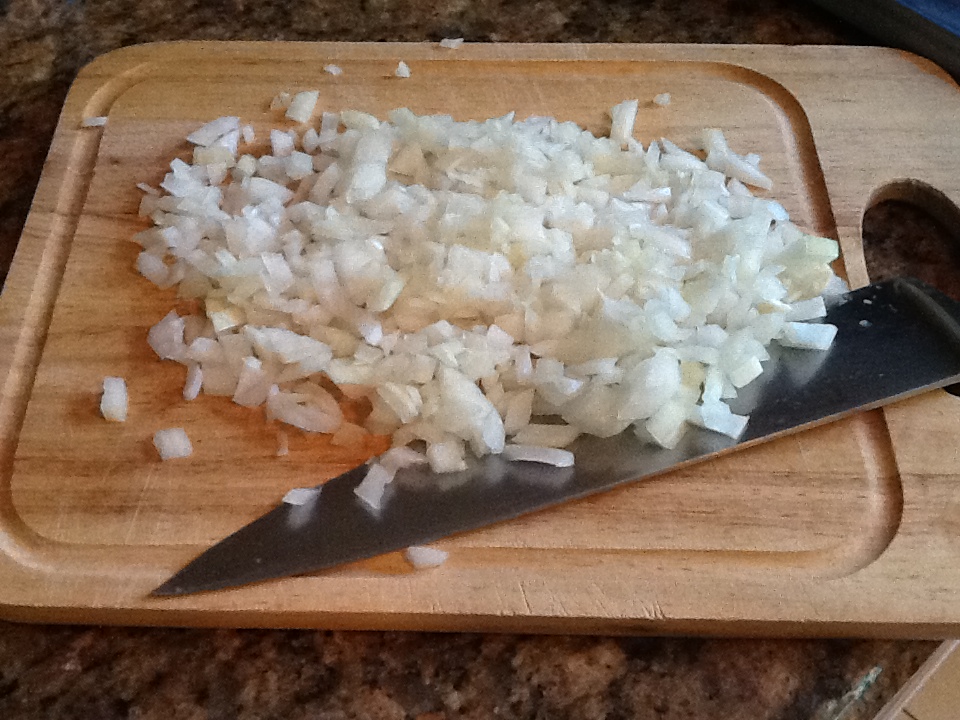
1 onion chopped

4 ounces mascarpone cheese

2 TBSP butter

2 TBSP olive oil

1 cup frozen peas

1/4 cup vodka

salt and pepper to taste

freshly grated Pecorino Romano cheese

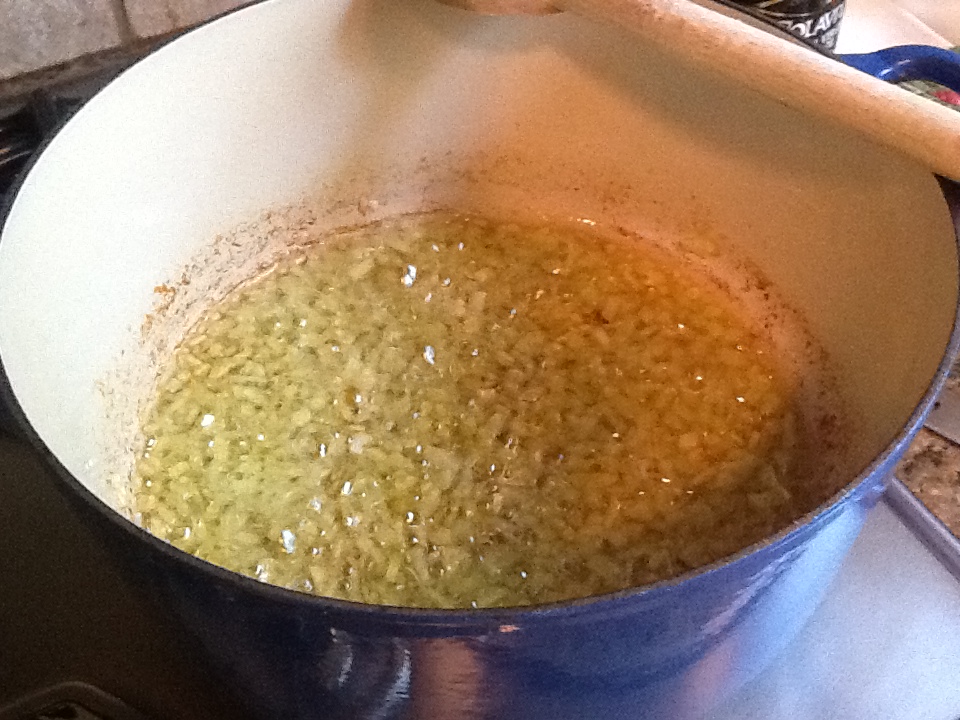
1.  Heat the olive oil and melt the the butter in a large sauce pan.

2.  Saute the onions in the oil and butter and  cook until just starting to brown a bit.

3.  Puree tomatoes in a blender by pulsing a few times.

4.  Add tomatoes to the pan with the onions,  and add some salt and pepper to taste.

5.  Cook over low heat for 30 minutes, stirring occasionally.

6.  Meanwhile, bring a large pot of salted water to boil.

7.  In a small fry pan, heat the vodka and melt the mascarpone cheese in the vodka.

8.  When the sauce is just about done, and pasta is cooking in the water, add the peas and heat through.  Then add the vodka and mascarpone and heat through, stirring well.

9.  Drain pasta, put in serving bowl and top with the sauce.  Serve with grated Pecorino cheese.

Image

ImageImageImageImageImageImageImageImageImageImageImageImageImage

Pesto Sauce with Potatoes and String Beans

Image

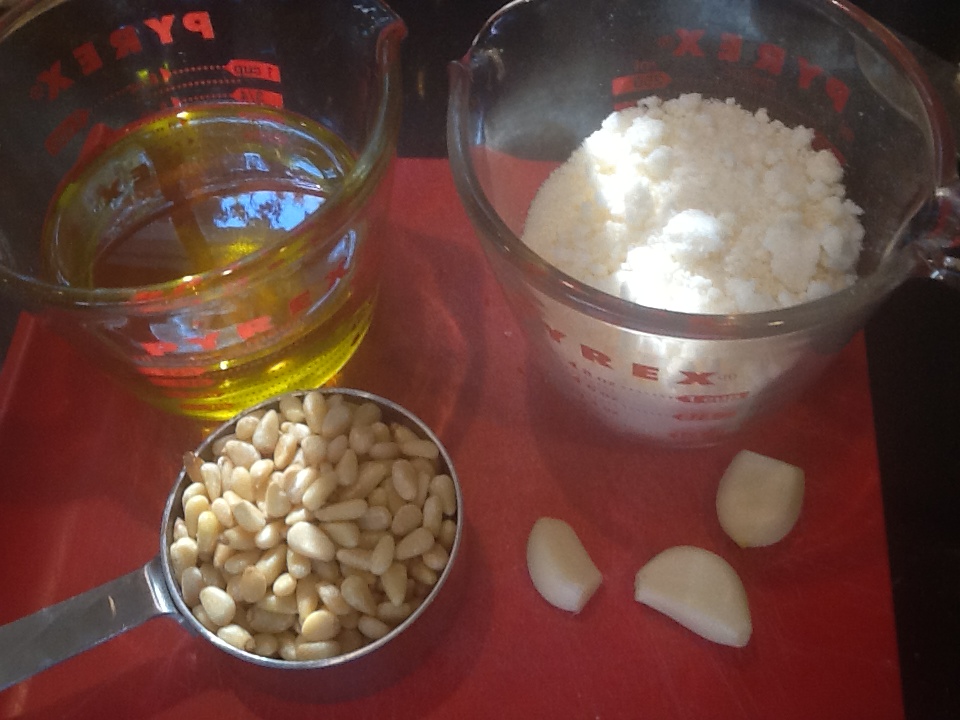
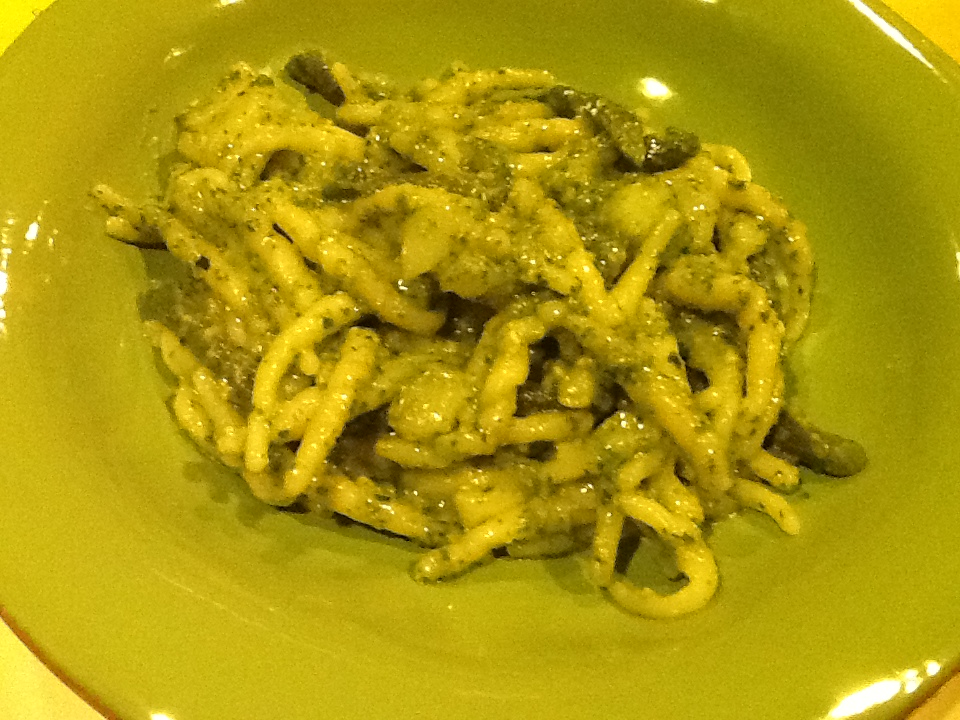
Do we really need another recipe for pesto sauce?  By this time of year, I’ve had it up to here with pesto.  During the summer months, I always have large pots of basil growing on my deck, and I can’t resist whipping up some variation of a pesto sauce in a moment’s notice.  Doesn’t everyone have a recipe for this by now?  It’s been popular for the last three decades!  But every summer, I have at least one dinner guest leave my house with my recipe for pesto sauce.  Honestly, it’s hardly a recipe at all.  I throw some basil, garlic, pine nuts, grated parmesan and pecorino cheeses in a Cuisinart ( food processor) with a slow drizzle of olive oil.  I never pay attention to the amount of each ingredient, and sometimes, out of boredom towards the end of the summer, I may add walnuts or use mint, arugula or parsley in addition to basil.  It always tastes fresh and wonderful.  Another way I change it up a bit, is to add potatoes and string beans, or as it is called “Genoa Style.”  This summer, I seem to be stuck in a Genoa style mode.  I’ve even been lucky enough to find homemade trofie, a delicate pasta shape, which is marvelous with this sauce. However,  tagliarini or trenette are wonderful with this, as is almost any short, delicate pasta, such as a farfalle (bow ties) or penne rigate (penne with ridges).  You need a pasta shape that will hold the sauce.  I wish I could put a halt on this summertime, pesto mania of mine.  I do know that you can buy basil all year long in most supermarkets now, and sometimes (usually by around January I need a fix) I do.  But there is something about walking past a pot of sweet smelling, beautiful green basil that makes me want to pinch off some leaves, inhale the wonderful scent and then run for the kitchen.  I just can’t control myself!
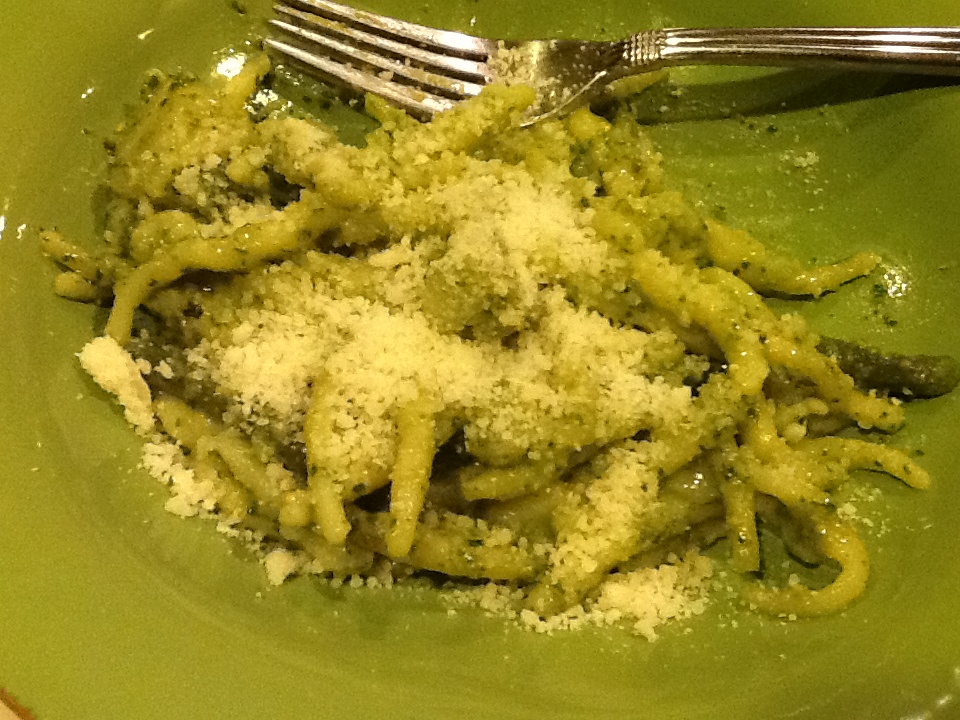
So if you’re in need of a recipe for pesto sauce or have never made it Genoa style, I have measured out everything for you.  I remember, many years ago, measuring each ingredient with great precision, and I am a great believer in following recipes.  But after you have made this 100 times or more,  you too will start just throwing these ingredients into your food processor in reckless abandon, and turning out one wonderful dish of pasta with pesto sauce after another.

I would love to hear if anyone has a tip for growing basil indoors during the winter months.  I have never been successful doing this.  If you do have some advice, please just leave it in the comment box.

RECIPE:

Pesto Sauce:  will make enough for two pounds of pasta, but will keep in refrigerator were several weeks.  Put a thin layer of olive oil on top before storing.

2 cups basil leaves, firmly packed.

1/3 cups pine nuts

1/2 cup Parmigiano-Reggiano cheese, grated

1/2 cup Pecorino Romano cheese, grated

2 large garlic cloves, peeled

3/4 cups olive oil

Genoa Style additions:

1 pound of pasta

3 medium potatoes, peeled and thinly sliced

1 cup thin string beans, tipped and cut into 1 or 2 inch pieces

2 TBSP unsalted butter

1.  Put the basil and garlic into the bowl of a food processor.  Pulse several times, until finely chopped.

2.  Add the pine nuts and cheeses to the processor, and repeat.

3.  Once all the above ingredients are finely chopped, turn on processor and add the olive oil in a slow steady stream.  Blen until nearly smooth, and then transfer to a bowl.

4.  Bring a large pot of salted water to a boil.  Add the pasta, string beans and potatoes.  Cook until pasta is al dente and the string beans and potatoes are tender.

5.  Drain, reserving 1 cup of cooking water.  Add the pasta, pesto and butter to a serving bowl.  Toss very well, making sure to melt the butter.  Add a little of the reserved pasta water if it seems dry.  Serve immediately.

6.  You need not serve this with grated cheese, as there is so much cheese in the sauce, but I always do, as I am a cheese lover.  It is totally up to you.

*** A wonderful variation of this is to use arugula instead of basil, and walnuts instead of pine nuts.

Image

Image

Image

Image

ImageImageImage

Ciambotta (Vegetable Stew)

Image

Don’t know what to do with all the summer vegetables at the market right now?  Are you staring at all the zucchini, peppers, eggplant and tomatoes that you bought at the  farmer’s market and wondering what the heck you are going to do with it all?  Well let me tell you a little bit about “Ciambotta”, sometimes spelled Giambotta, and often pronounced “Jambot,” which is southern Italian dialect. I’ve always called it the “Italian Ratatouille.”  No matter how you spell it or pronounce it, it is a surefire and delicious way to use up any vegetables that are sitting around in need of a recipe.  If you grew up in an Italian household, you absolutely have eaten a version of this dish.  Of course I make it the way my grandmother and mother made it, but I have seen it made countless ways, using different ingredients.  Traditionally, potatoes are used, as this gives it a hearty “stew like” quality.  But in my household growing up, we didn’t know from potatoes.  I’m surprised that my mother didn’t put this on top of pasta, as it would really be delicious that way.  I’m joking a bit here, but it was rare to see potatoes in my mother’s kitchen.  She did sometimes put them into her ciambotta, but never to stretch it into a one dish meal.  This was always a side dish, accompanying a meat, chicken or fish.  I rarely include potatoes myself just because of my personal preference, and also you have to cook it longer since potatoes take much longer to cook than the other vegetables.  I will tell you later how to add potatoes, should you desire.  String beans are another great addition to this.  According to my mother, ciambotta (she calls it jambot) means a “mixed up mess.”  You won’t find that on Rosetta Stone!

RECIPE: Makes 4 to 6 servings, as a generous side dish

1 medium yellow onion

1 medium eggplant

3 medium zucchini, green or yellow

2 yellow peppers

2 tomatoes, any type will do *(see note below

1/4 cup olive oil

salt and freshly ground pepper

2 potatoes, peeled, if using

*NOTE:  You may use fresh Italian plum or any garden vareital tomato.  However, if you don’t have tomatoes in the house, you can use a TBSP of tomato paste, when sautéing the onion and pepper, or a handful of canned Italian peeled tomatoes, chopped.

1.  Cut all the vegetables into bite size pieces.  In a large skillet or Dutch oven, sauté the onion in the oil over medium low heat until tender, about 5 minutes.

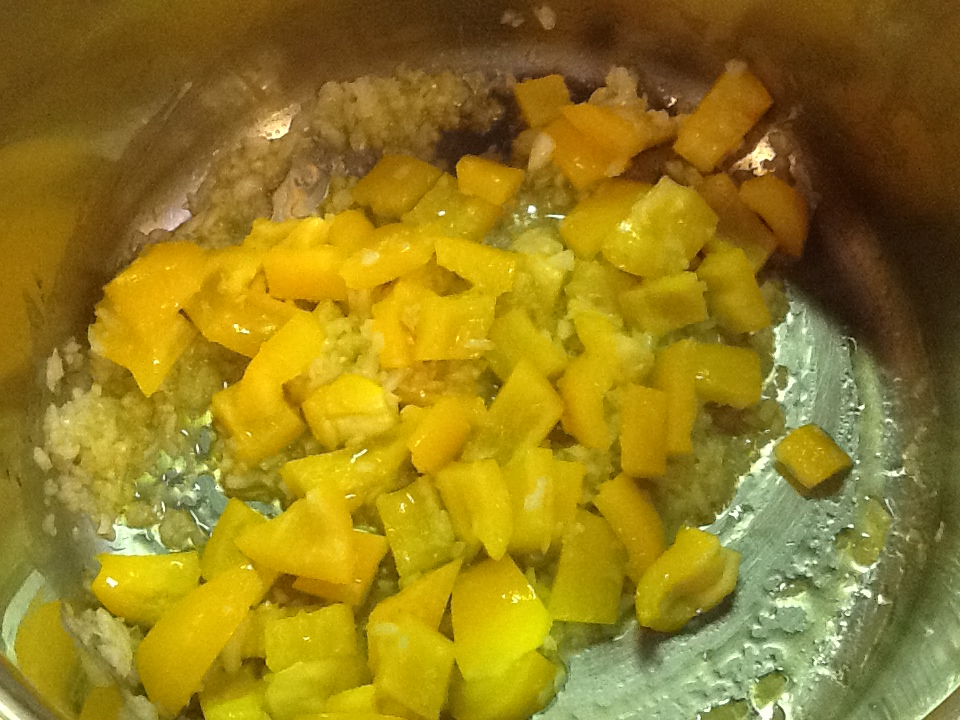
2.  Add the peppers and sauté for another minute or two.

3.  Add the tomatoes or paste next and stir for 2 minutes, to coat the onion and peppers.

4.  Add the rest of the vegetables (include potatoes or string beans here as well, if using).  Add salt and pepper to taste.  Stir well to combine.  Cover and cook, stirring occasionally, until all the vegetables are tender, about 30 minutes, but you must keep checking.  You don’t want the vegetables to be too mushy.

5.  If you need to add some water, do.  If there is too much liquid, uncover and cook for a few minutes more.

Whether you serve this as a meal or a side dish, you’ll want some nice crusty bread to sop up all the juices.

Image

Image

Image

Image

Image

Image

Image

Image

Pasta Alla Norma (A Variation)

Image

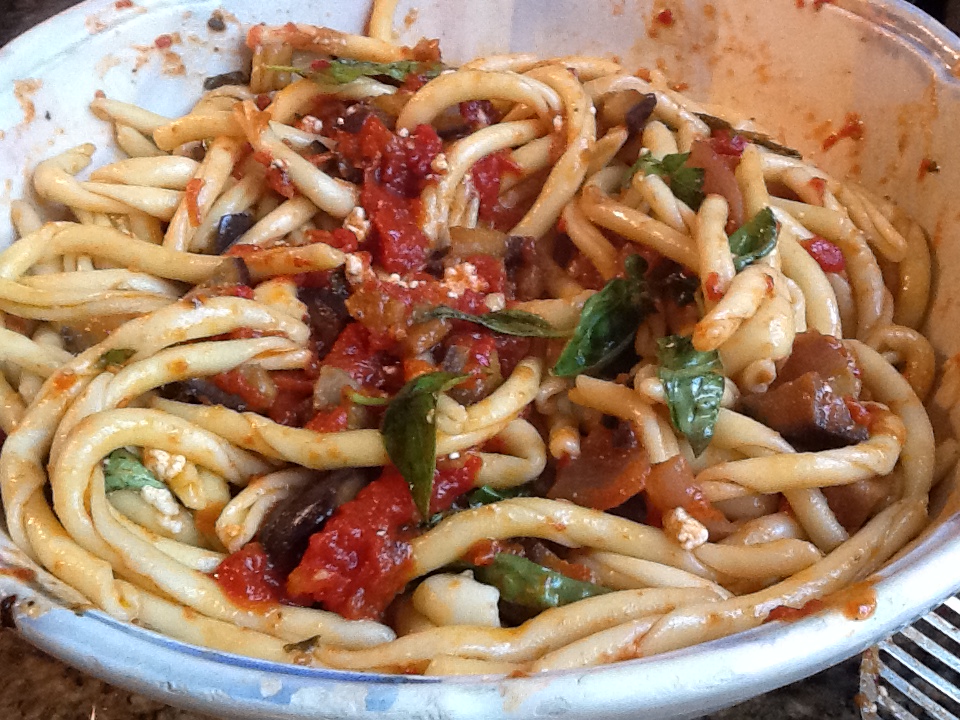
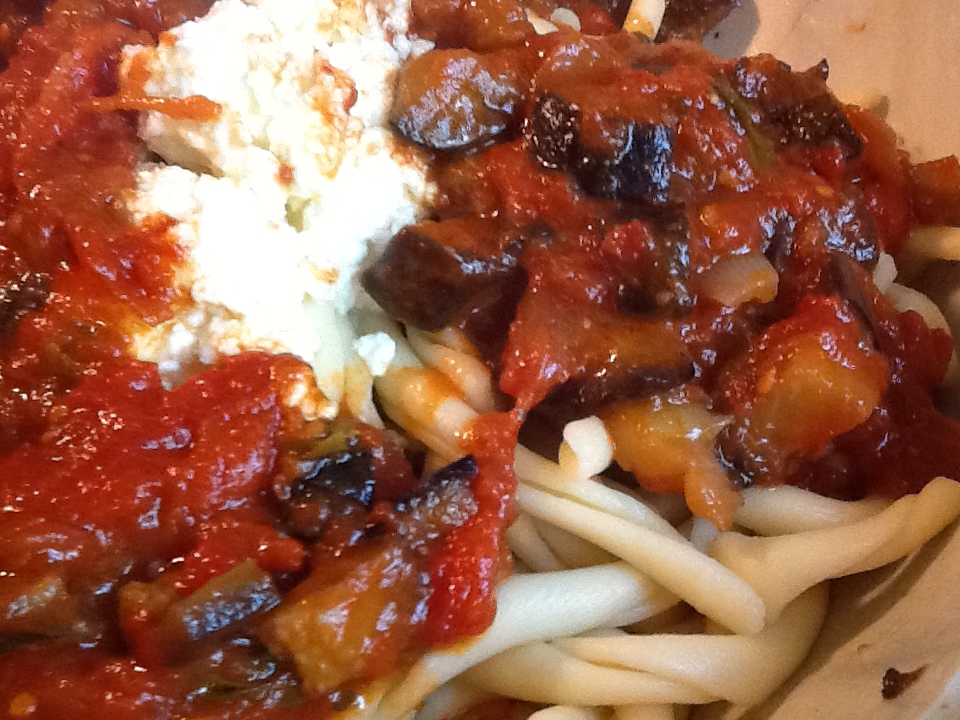
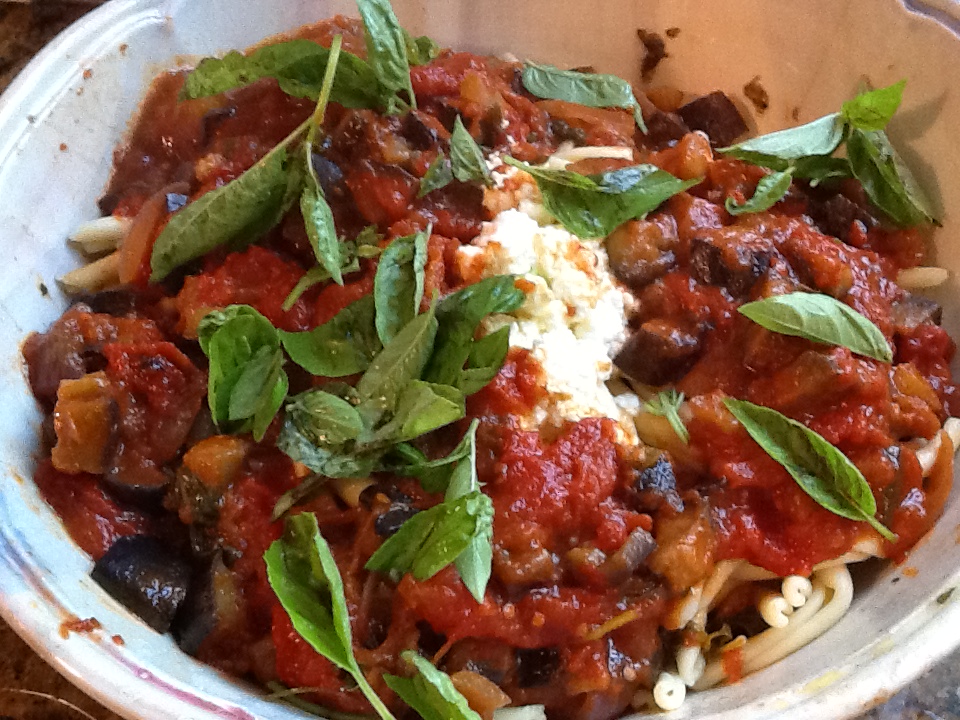
Since we’re on the topic of eggplant these days, I’m hoping that by now, you’ve conquered your fears and realize that it’s an easy and delicious vegetable to cook.  So let me introduce to you “Pasta Alla Norma.”  Pasta Alla Norma is a traditional dish in Sicilian cuisine.  When I first was introduced to this dish many years ago, it was made simply with tomatoes, eggplant, olive oil and grated ricotta salada cheese (which is just hardened ricotta cheese), and basil.  It certainly did not need improvement, but as the “food craze” took over the airwaves and book shelves, different versions of this classic dish started to emerge.  I’m guilty myself.  But honestly, the ingredients alone just can’t miss, so why not mix it up a bit now and then.  So that’s what I’m giving you here…..the variation on Pasta Alla Norma that my family loves the most.

When I visited Sicily, I ate only the traditional version, as we tend to dine mostly in local trattorias that Italians frequent (you can never go wrong doing this).  They never tried to make this dish fancier, but it was always beyond delicious.  As I always say, it is very difficult to get the exact, same taste as in Italy when you’re back home.  I still salivate at the thought of this dish in it’s native surroundings.  But that being said, we can get pretty darn close.

So as far as my variation on this recipe goes ( I suppose I’d better give my husband some credit here, as he really is the mastermind behind this particular version), to begin with, I didn’t use ziti, which is the traditional macaroni shape used.  I used long cavatelli.  My next break in tradition was the use of sautéd red onion.  And lastly, instead of ricotta salada, I used fresh ricotta (that was totally my idea).  So if you want to try the classical preparation, you now know how to change my version.  And please note, there is no garlic used in either, but if you like spicy, do add some red pepper flakes.   I realize that long cavatelli are difficult to find.  I’m fortunate to live in an area where you can get almost any ethnic ingredient you desire, especially Italian.  It’s almost as good as living in Italy.  So, certainly substitute with ziti or any long tubular macaroni like this.  I even love it with bucatini, perciatelli or spaghetti, even though Sicilians would flinch at the thought!   Also, supermarket ricotta is just fine….no need for fresh if it’s not available to you.

And lastly, any variation of Pasta Alla Norma is delicious baked in a 375 degree oven for approximately 45 minutes.  Just remember to cook the ziti al dente, and line the bottom of the baking dish with the sauce. You can even throw a little bit of seasoned bread crumbs on top for some crunch.

And so now for my version (oops, “our” version) of Pasta Alla Norma…..

RECIPE:

1 pound of pasta

2 medium eggplants, cut into 1 inch cubes

1 medium size red onion

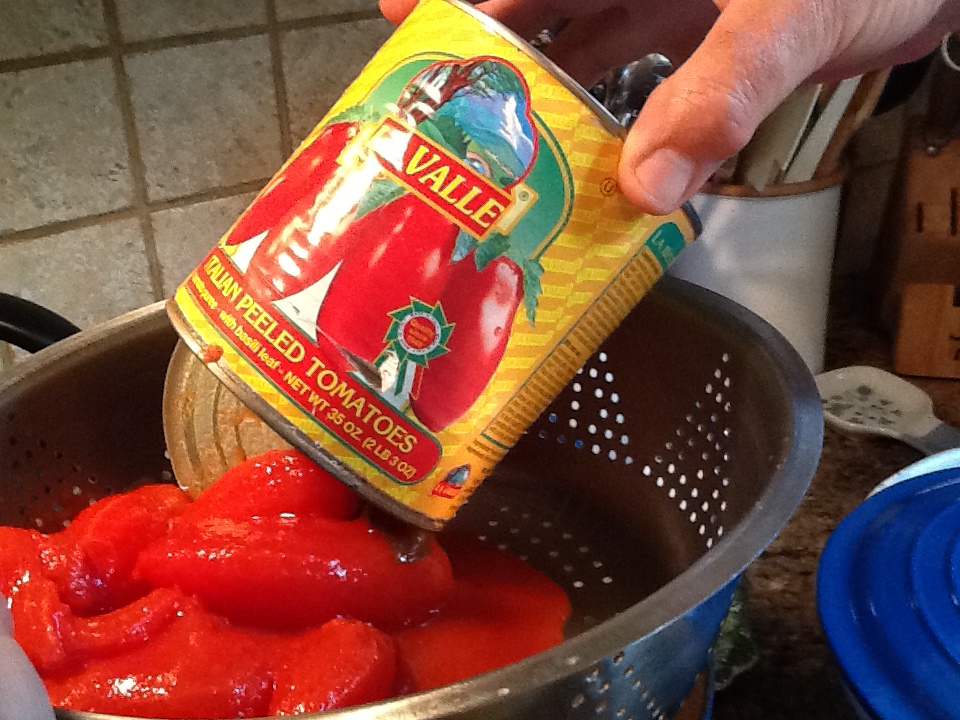
1 36 ounce can of whole peeled imported San Marzano tomatoes, squished in hands.

1/3  cup olive oil, plus extra for cooking the eggplant and onion.

20 basil leaves

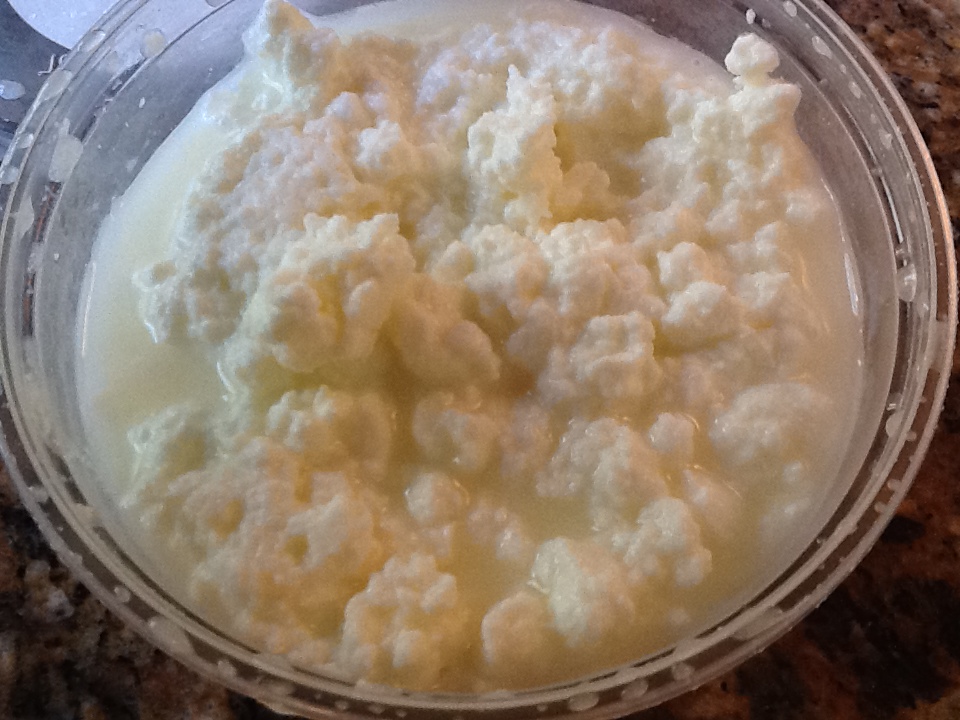
1 cup ricotta cheese

salt and pepper to taste

Grated Pecorino Romano cheese, if desired

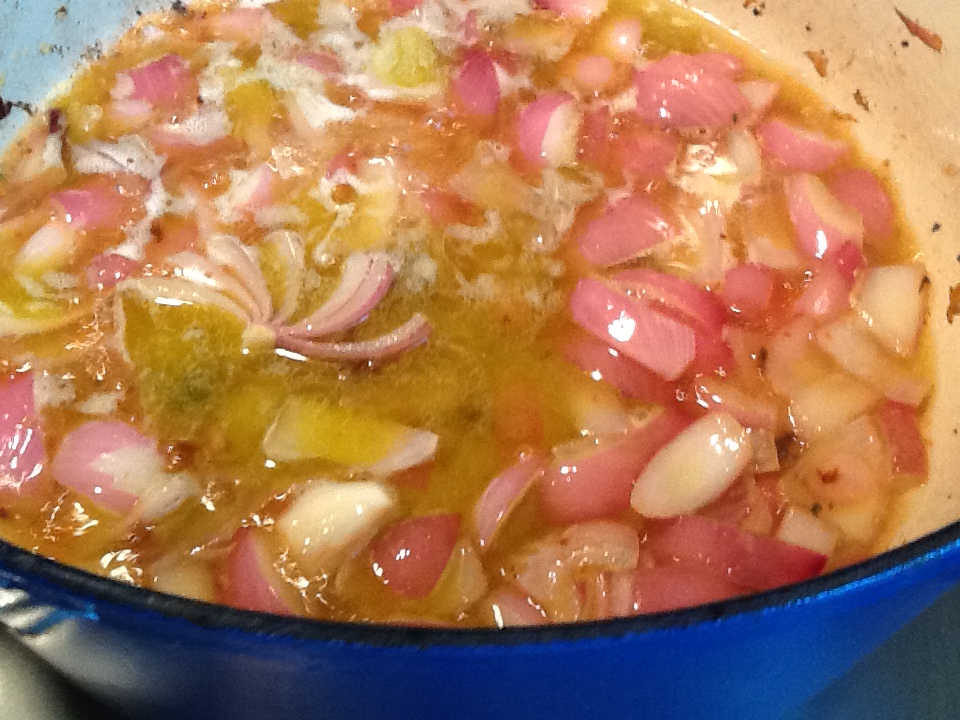
1.  Heat some of the olive oil in whatever pan you like for making sauce (I’m hoping you have a favorite).  Here I used a modern day Dutch oven, and I coat the bottom with olive oil for sautéing.

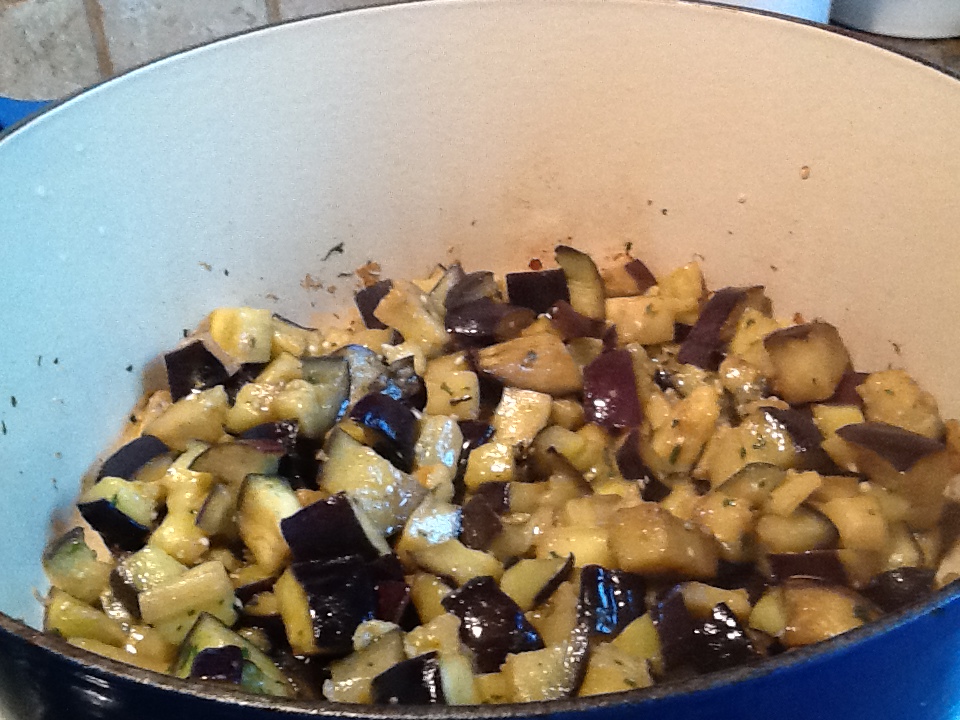
2.  Add the eggplant, and stir well to coat it with oil.  Cook for approximately 10 minutes, stirring often until eggplant is soft.  Add some salt (a pinch or two) while cooking and more olive oil if needed.

3.  Once the eggplant is cooked, remove it to a plate with paper towel to drain it of some oil.

4.  Now add more oil if needed, heat and sauté the onion until soft.

5.  Add the remaining olive oil and heat.

6.  Add the squished tomatoes and their juice.

7.  Simmer for 20 minutes.  Taste for seasonings and add half the basil leaves, torn in half.

8.  Add the eggplant back to the sauce and heat through for 5 minutes or so.

9.  Drain the pasta and put in a serving bowl.  Drizzle with just a little olive oil and toss.

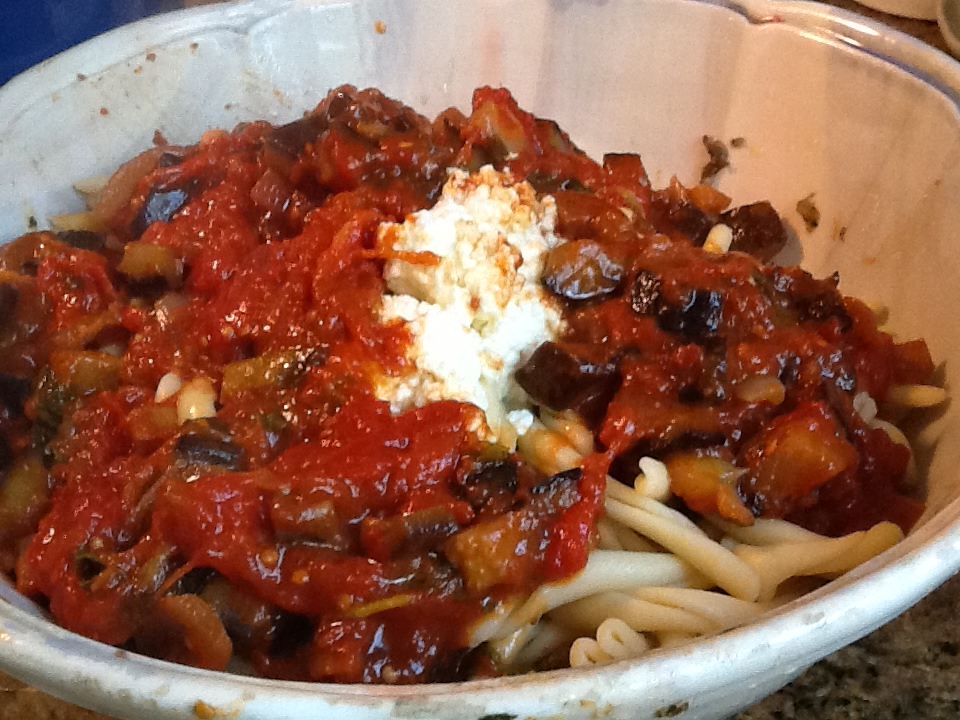
10.  Add the ricotta cheese, sauce, remainder of the basil leaves and toss gently.

11.  Serve with freshly grated Pecorino Romano cheese, if desired.

eggplant sauce:saute

eggplant sauce:onion saute

eggplant sauce:onion cookedeggplant sauce canned tomatoes eggplant sauce cookingeggplant sauce cookedeggplant sauce ricottaeggplant sauce cavatell:ricottaeggplant sauce in bowleggplant sauce in bowl closeupeggplant sauce in bowl:basileggplant sauce in bowl mixed*eggplant sauce in bowl mixed closeupeggplant sauce platedeggplant sauce plated closeup

Eggplant Caponata ( a la Silvia)

Image

If you are “afraid of eggplant,” which has been the lament of my very dear friend for the past 27 years, then be “afraid” no more!  I have a simple and absolutely delicious recipe for you to try.   I suppose eggplant can be an intimidating vegetable, especially if you’re not Italian.  Heck, the British don’t even call it eggplant. They call this vegetable aubergine.  Who wouldn’t be afraid?

I absolutely love eggplant, and feel that I must have one hundred different ways to prepare it.   Perhaps that’s a slight exaggeration, but I even make eggplant “meatballs” (I’ll share that recipe soon as well).  Eggplant Caponata was never a favorite of mine,  and I just couldn’t understand why not, even though I tried countless different ways to make it.  It seems that different regions of Italy make it differently, but this was not something my grandmothers or mother made, so I was at a loss.  People told me to bake the eggplant, whole, in the oven and then scoop out the middle.  Others told me to cut it in chunks and sauté it slowly.   Some recipes call for fresh or canned tomatoes, and some just use tomato paste.  Some recipes include capers and olives.  I’ve even seen anchovies in some of the recipes.  Peel the eggplant or leave the skin on?    I’ve tried it all, but it wasn’t until I came upon this particular recipe for “roasted eggplant spread”  in the Barefoot Contessa’s Cookbook, that I was finally happy.   I made a few modifications, and can now say that I am 100% happy with my caponata.

I made Eggplant Caponata for this “eggplant anxious” friend the other night and she loved it. She timidly asked for the recipe, and I convinced her to conquer this fear once and for all and give this recipe a try.   There’s nothing to be afraid of.  It couldn’t be simpler, and everyone ( even those scared of eggplant) always leave my house wanting the recipe.

RECIPE: 

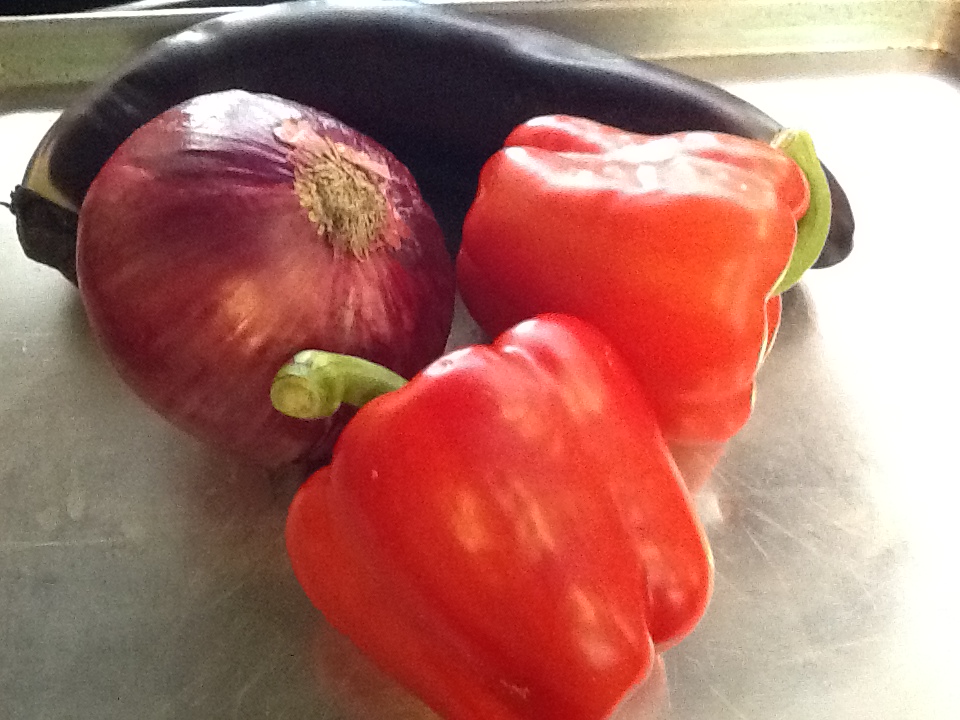
1 large eggplant, NOT peeled.  The skin gives a great texture and color.

2 red bell peppers

1 red onion , peeled

3 cloves garlic, minced

4 TBSP good olive oil (who uses bad??)

2 tsp. Kosher salt

1/2 tsp. freshly ground pepper

2 TBSP tomato paste

1.  Preheat oven to 400 degrees.

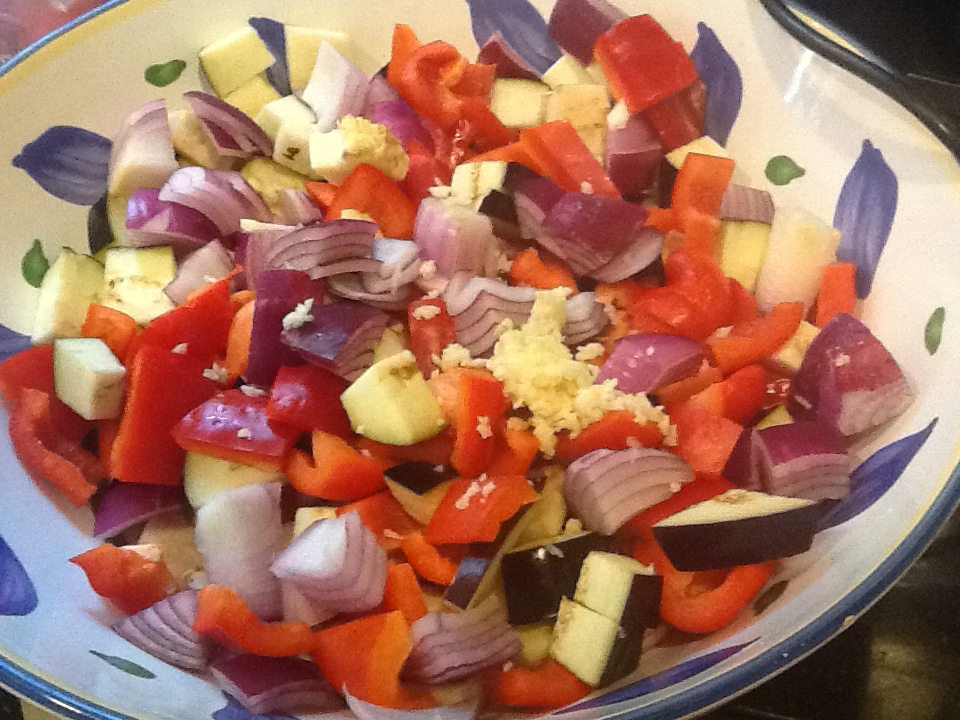
2.  Cut the eggplant, bell peppers and onion into 1 1/2 inch cubes (roughly).

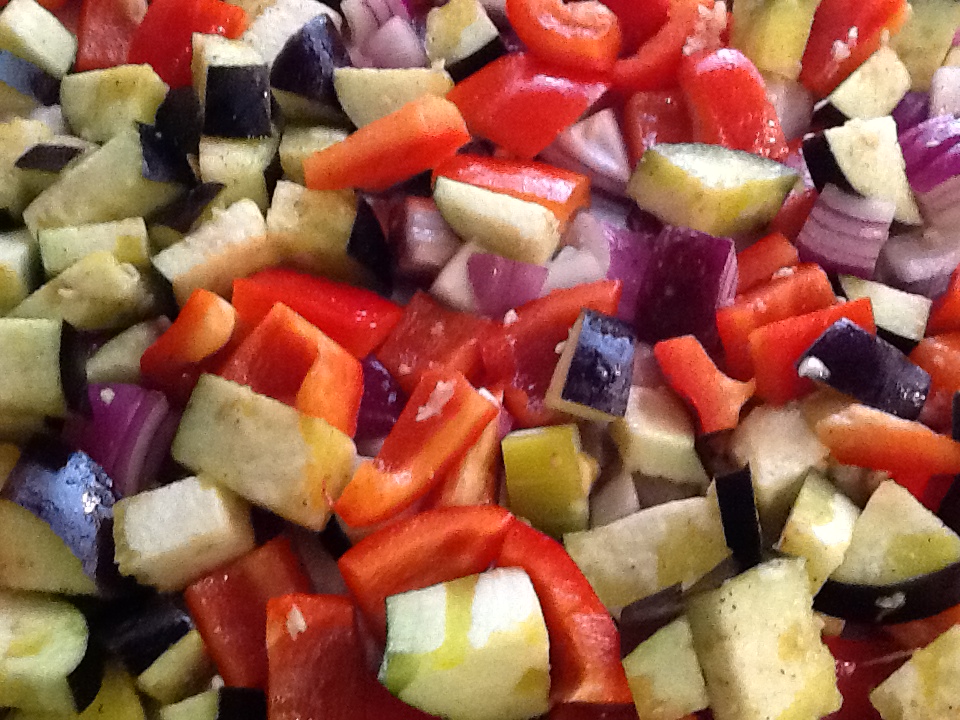
3.  Toss them in a large bowl with the garlic, olive oil, salt and pepper.

4.  Spread them on a baking sheet (I usually spray the baking sheet with olive oil spray first).

5.  Roast for approximately 45 minutes until vegetables are lightly browned and soft, tossing once or twice during cooking.  Cool slightly.

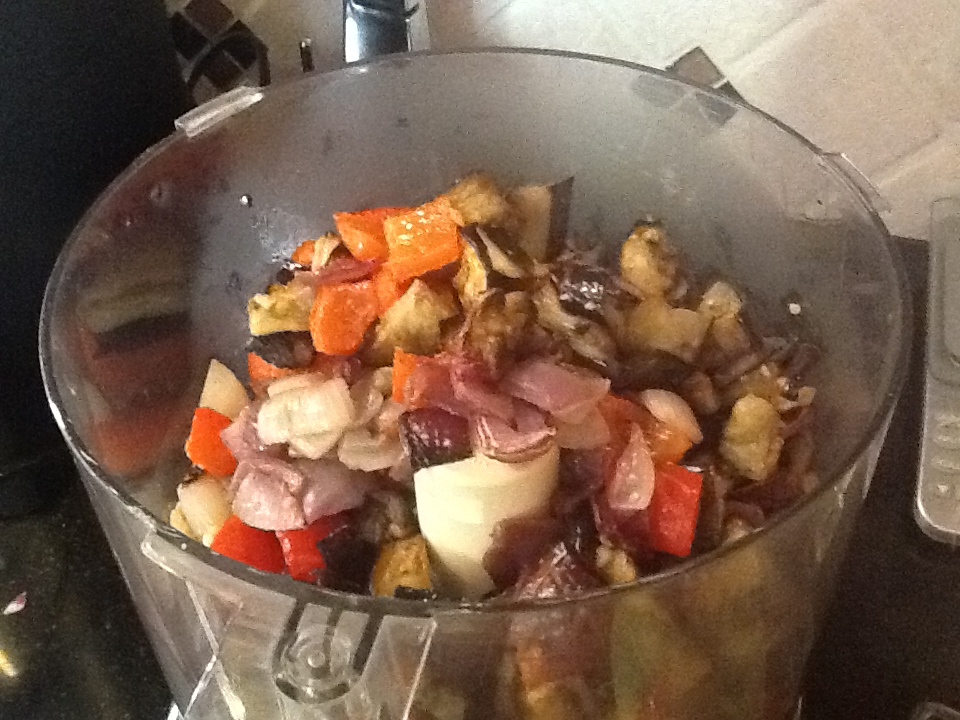
6.  Place the vegetables in a food processor fitted with a steel blade.  Add the tomato paste and pulse 3 or 4 times to blend.  Taste for Salt and pepper.

Image

Image

Image

Image

Image

Image

Image

Image

String (Green) Beans and Tomatoes

Image

While I continually waited for my mom to make the famous “French’s Green Bean Casserole” that was so popular in the 60s and 70s, I knew that string beans ( we never called them “green beans” in my household, growing up) with tomatoes and garlic, was about as good as it was ever going to get for me.   I longed for the creaminess of that Cream of Mushroom Soup and the crunchiness of  the French’s Fried Onion Rings in the can. But I knew this casserole was never coming to the dinner table as long as my mom was cooking, and my dad was sitting at the head of the table.

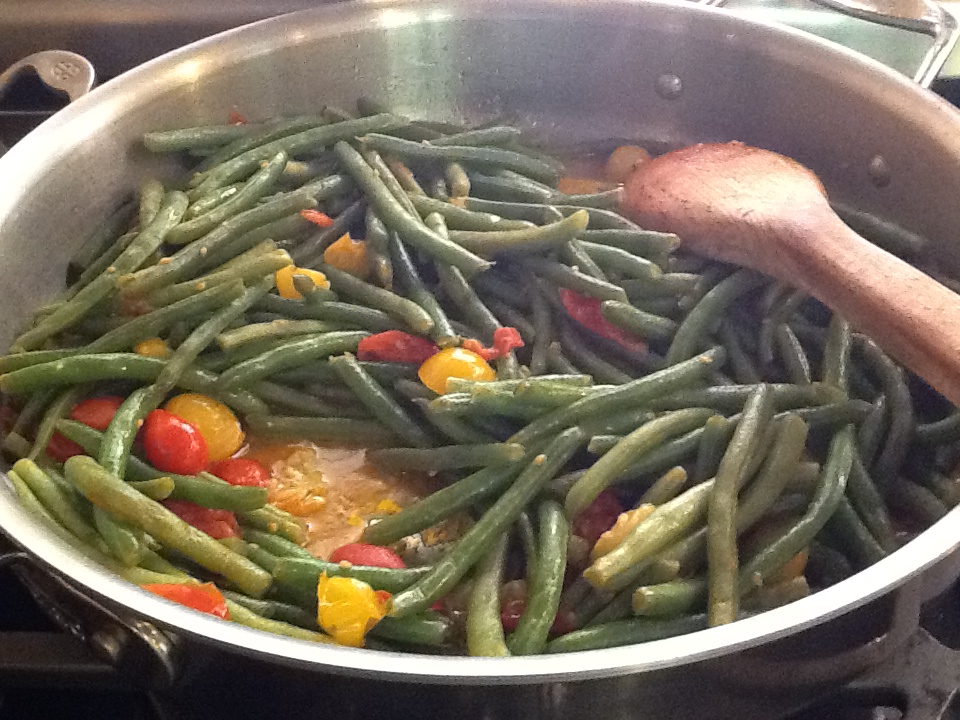
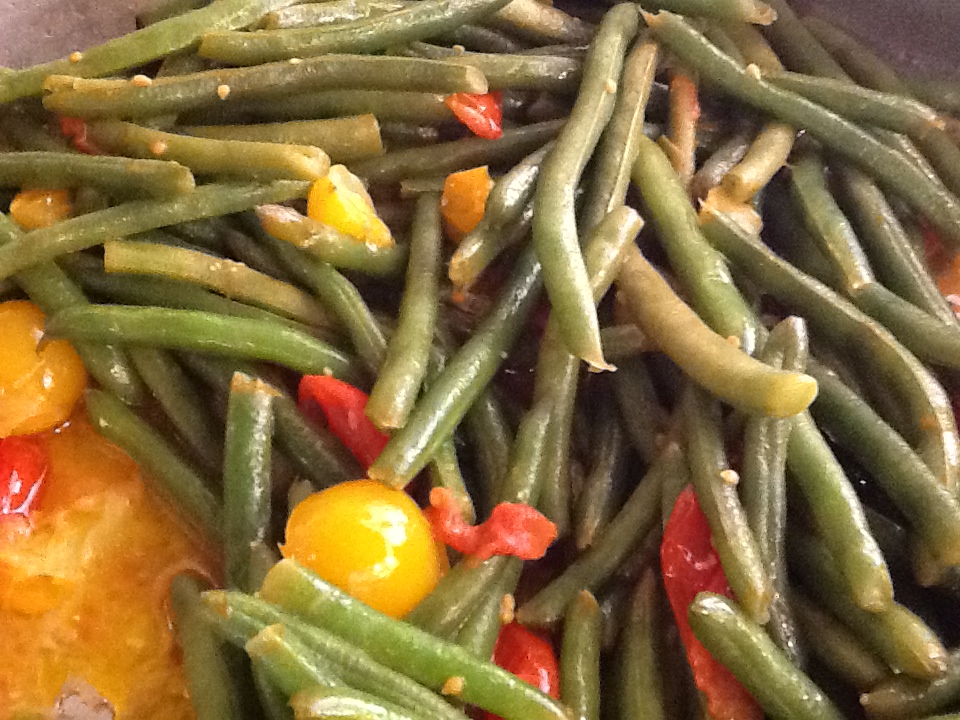
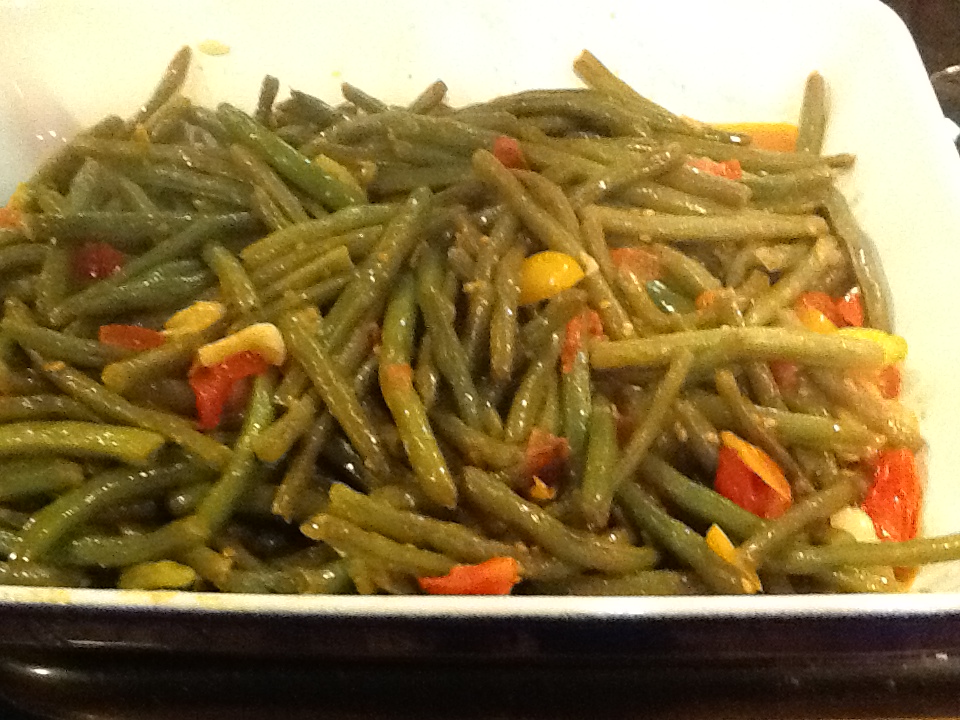
All this being said, my mom did make string beans a heck of a lot better than some of my friends’ moms did.  There was nothing less appealing than these basically tasteless green morsels, dotted with butter. Thank goodness for the butter, but honestly, how boring can you get?  This is the reason why kids hate vegetables…..boring!   I must say that these “string” beans that my mom made had lots of flavor, and I have been able to tempt my children and grandchildren to eat their vegetables without having to add the extra trans fats and sodium from a canned soup or fried onions.  My mom used to make her string beans using canned, peeled Italian tomatoes, of course, squished in her hands and sautéd in olive oil and sliced garlic.  I do this in winter, but in summer, I love to use fresh, ripe cherry tomatoes.  By now you know my addiction to these tomatoes, especially in the summertime, when they are locally farm grown.  So this is just another way to use up the many pounds of cherry tomatoes that are in my kitchen all summer long.  In the winter, I revert back to the canned Italian tomatoes, and it’s also just delicious, so I will give you the recipe for both styles.  I hope you and your family enjoy them both.

RECIPE:

2 pounds green beans

1/4 cup olive oil

3 garlic cloves, sliced

2 cups cherry tomatoes, halved …...or

2 cups Italian peeled plum tomatoes (San Marzano, please), drained and squished

Salt

Pepper

6 fresh basil leaves, torn into pieces……..if you have it on hand.

1.  Trim ends of green beans and blanch in a large stock pot of well salted boiling water  until bright green in color, but still crisp, about 2 minutes.  Drain and shock in a bowl of ice water to stop them from continuing to cook.

2.  Meanwhile heat the olive oil in a large heavy skillet.  Add the garlic and sauté for about one minute.  Add the tomatoes and about 1/4 teaspoon of salt.  Stir well.  Cover and cook for approximately 10 minutes.

3.  Add the green beans to the cooked tomatoes.  Stir well and cook until heated through, about 5 minutes.  Adjust for seasonings.  Add basil if you like.

Image

Image

Image

Image

Image

Barbecued Veal Chops

Image

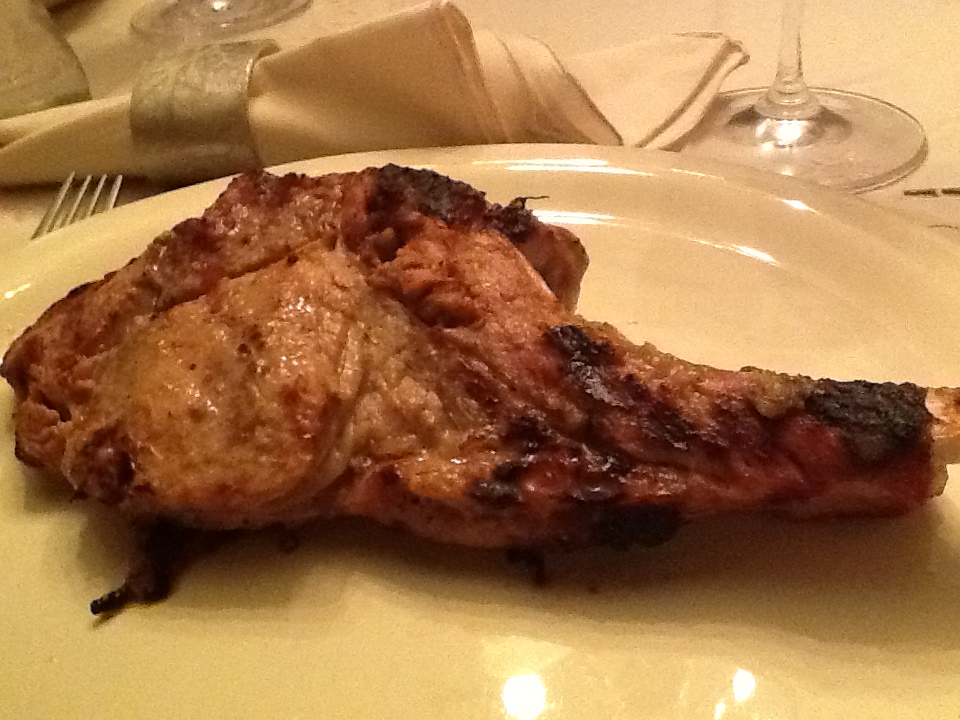
Vegetarians beware.  This post may contain disturbing pictures.  I’m sensitive to the beliefs of vegetarians and always honor their requests when cooking for them.  While I generally follow a Mediterranean diet of mostly vegetables, grains, legumes and fish,  I do desire a piece of meat now and then.  So when given the opportunity to cook for a bunch of meat loving carnivores, I go to town.  I tend to like my meat cooked on the grill when possible.  However, grilling can be challenging, especially in my household.  For some reason, I have always thought of grilling as “the man’s job.”  So I continually pass this job off to my husband, which is a big mistake.  Yet I continue to do so and am always upset when he ruins a beautiful, expensive piece of meat.  He has literally charred thousands of dollars of meat to ruins over the years.  We have fondly nicknamed him “the killa on the grilla.”  And yes indeed, he can kill a nice cut of meat, if you let him.  Where is my feminist self?  Why can’t I be the griller in the family?

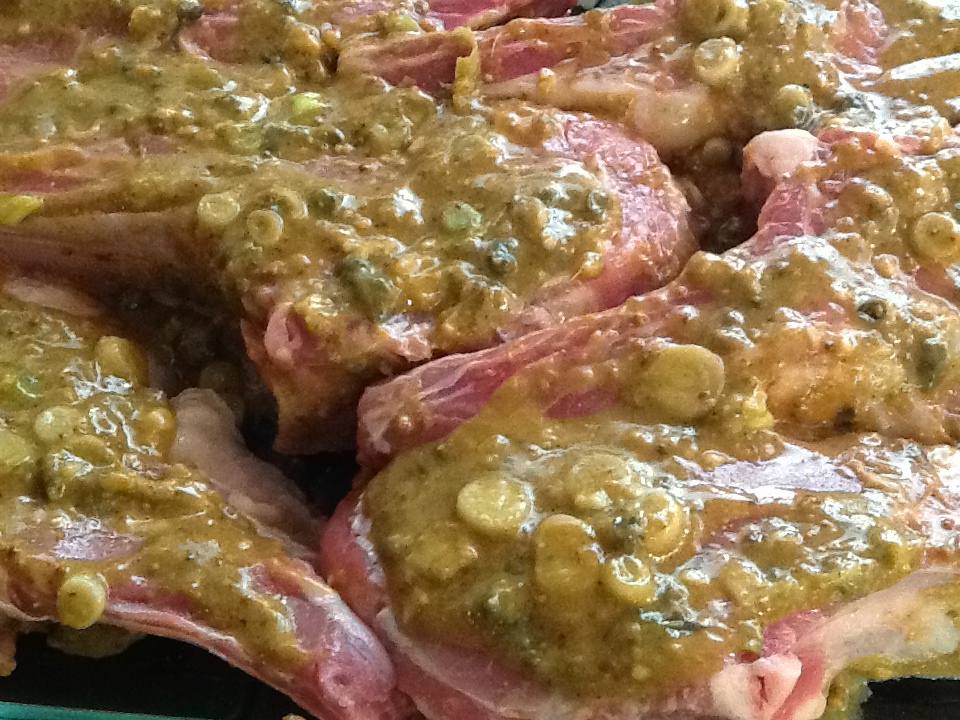
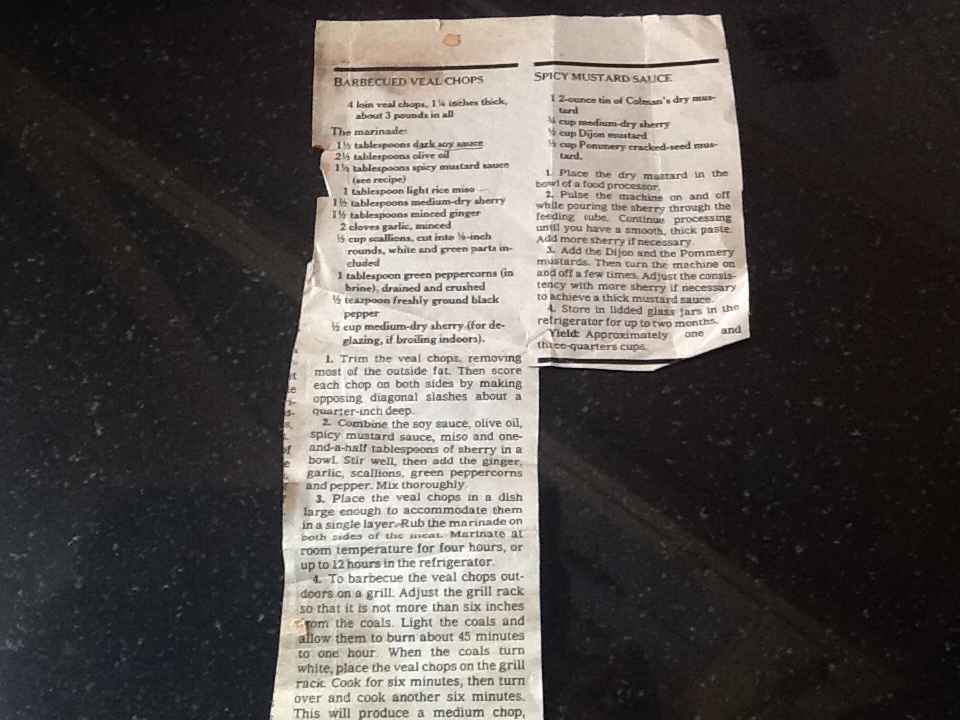
Recently, we were having a dinner party for 6 meat loving friends.  I decided to take the challenge, and prove to myself that I can grill as good as the next guy/gal.  After all, I have watched enough episodes of chef Bobby Flay on the grill.  I also have another secret weapon.  I had a foolproof recipe for barbecued veal chops that I tore out of the New York Times Magazine in 1985.  At that time, I was planning my first dinner party where the food was to be cooked on a grill.   I was nervous, to say the least, but this recipe was very explicit in it’s directions.  It worked to perfection then and has not failed me since.
So I would like to share the marinade, as well as the cooking method with you.  The cooking method used in this recipe from the Times was a charcoal grill, as gas grills were not as common as they are now.  However, I also have the perfect method for the gas grill as well, by consulting several grilling cookbooks over the years.    Once you try this,  I believe it will be in your grilling repertoire for many years to come.  Please don’t let the rice miso scare you.  It’s now very  easy to find in most supermarkets, and you can use the extra in soups and dips.
Come on ladies…. you can do it!

RECIPE:  Barbecued Veal Chops

4 loin veal chops, 1 1/4 inch thick

The marinade:

1 1/2 TBSP dark soy sauce

2 1/2 TBSP olive oil

1 1/2  TBSP spicy mustard sauce (see recipe)

1 TBSP light rice miso

1 1/2 TBSP medium dry sherry

1 1/2 TBSP minced ginger

2 cloves garlic, minced

1/3 cups scallions, cut into 1/8 inch rounds, white and green parts included

1 TBSP green peppercorns (in brine), drained and crushed

1/2 teaspoon freshly ground pepper

1/2cup medium-dry sherry (for broiling if indoors).

1.  Score each veal chop on both sides by making opposing diagonal slashes about a quarter-inch deep.

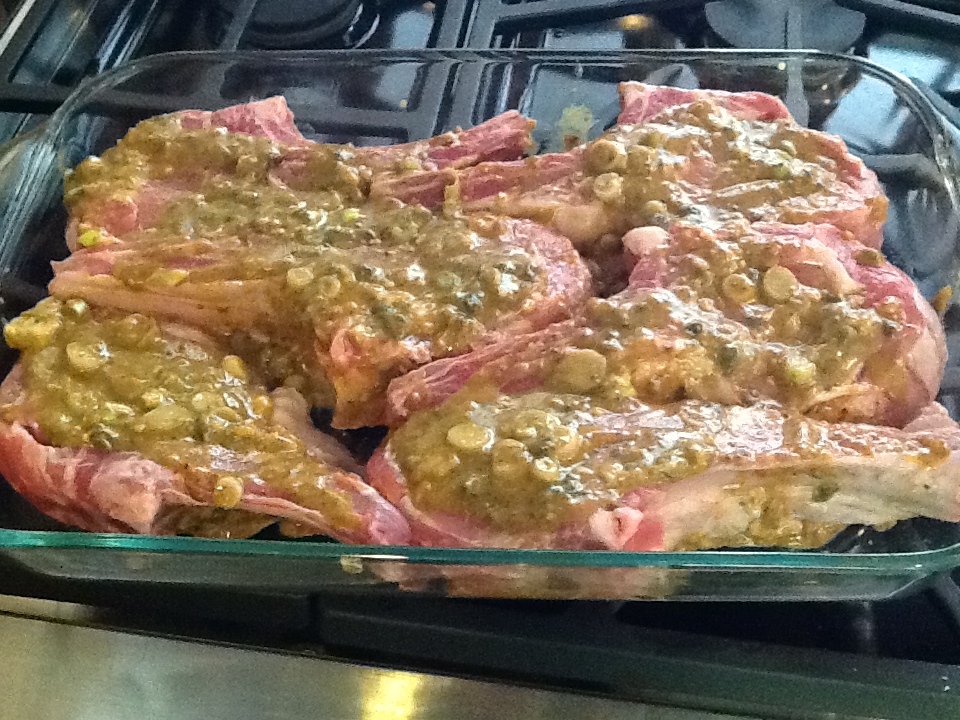
2.  Combine the soy sauce, olive oil, spicy mustard sauce ( recipe below), miso and one-and-a-half tablespoons of sherry in a bowl.  Stir well, then add the ginger, garlic, scallions, green peppercorns and pepper.  Mix thoroughly.

3.  Place the veal chops in a dish large enough to accommodate them in a single layer.  Rub the marinade on both sides of the meat.  Cover with plastic wrap and marinate in the refrigerator for four to twelve hours.  Take the meat out of the refrigerator thirty minutes or so before grilling, to bring it back to room temperature.

4.  To barbecue outdoors on a charcoal grill:  Adjust the grill rack so that it is not more than six inches from the coals.  Light the coals and allow them to burn about 45 minutes to one hour.  When the coals turn white, place the veal chops on the grill rack.  Cook for 6 minutes, then turn over and cook another 6 minutes.  This will produce a medium chop, crusty on the outside and pink within.  Allow the meat to sit at least 5 minutes on a serving plate before serving.   To barbecue on a gas grill:  Turn the grill on to High heat.  Let it heat up for 15 minutes.  Put the chops on the direct high heat.  Cook for 5 minutes, and then turn  the meat and cook for another 5 minutes.  Let the meat rest for 5 minutes before serving.

5.  To cook indoors in the broiler:  Preheat the broiler for 20 minutes.  Place the veal chops on a rack resting in a shallow roasting pan.  Broil them as close to the flame as possible for 6 minutes.  Turn the chops over and carefully sprinkle in a half cup of sherry, which will prevent the drippings from burning and will add flavor to the natural sauce.  Broil the chops another 6 minutes, then remove to a serving platter. Reduce and deglaze the the drippings by placing the pan over a low heat, then stirring until all the juices have been incorporated into the sauce.  Pour this over the chops.

Spicy mustard sauce:

1 2-ounce tin of Colman’s (or any brand) dry mustard

3/4 cup medium dry sherry

1/2 cup Dijon mustard

1/2 Pommery (or any brand) cracked-seed mustard

1.  Place the dry mustard in the bowl of a food processor.

2.  Pulse the machine on and off while pouring the sherry through the feeding tube.  Continue processing until you have a smooth, thick paste.  Add more sherry if necessary.

3.  Add the dijon and cracked-seed mustards. then turn the machine on and off a few times.  Adjust the consistency with more sherry if necessary to achieve a thick mustard sauce.

4.  Store in lidded glass jars in the refrigerator for up to two months.

Image

Image

Image

Image

Image

Image

Image

Image

Image

Penne with Roasted Tomato Sauce

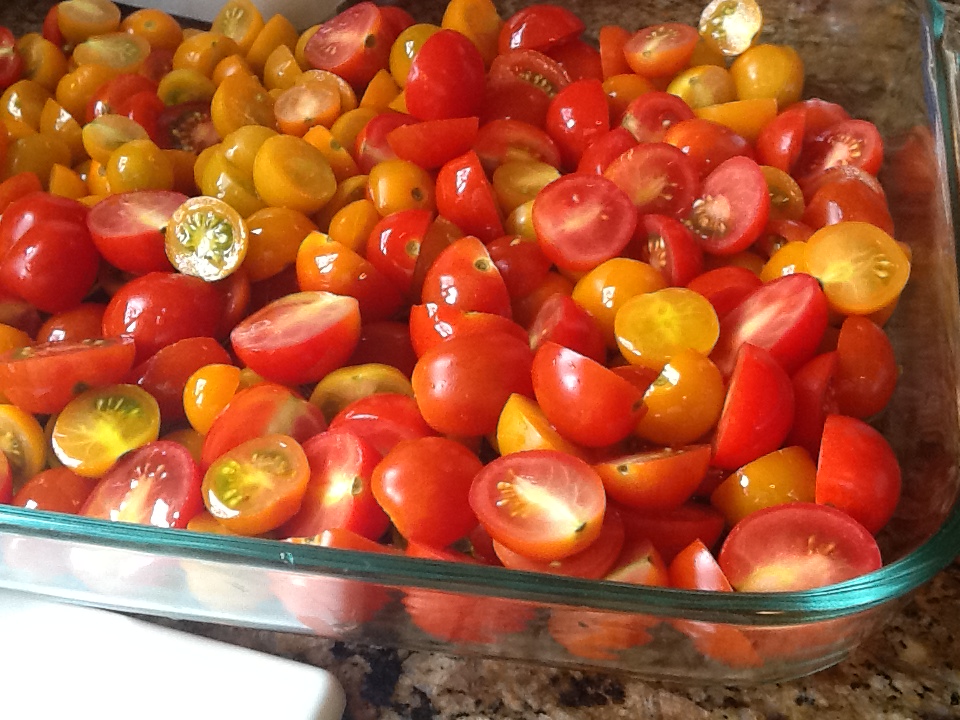
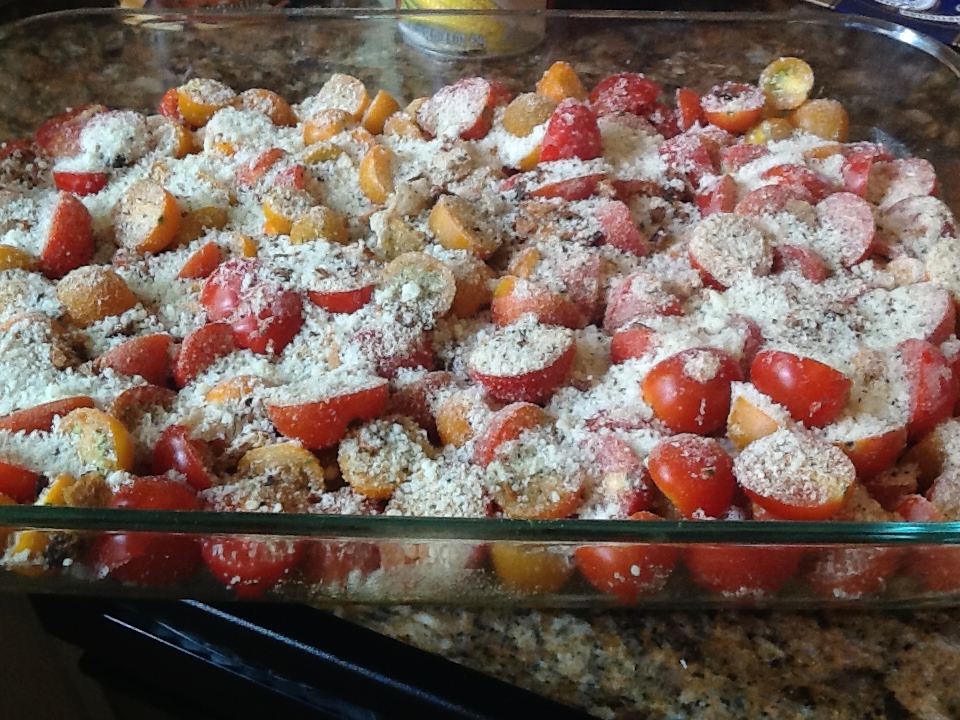
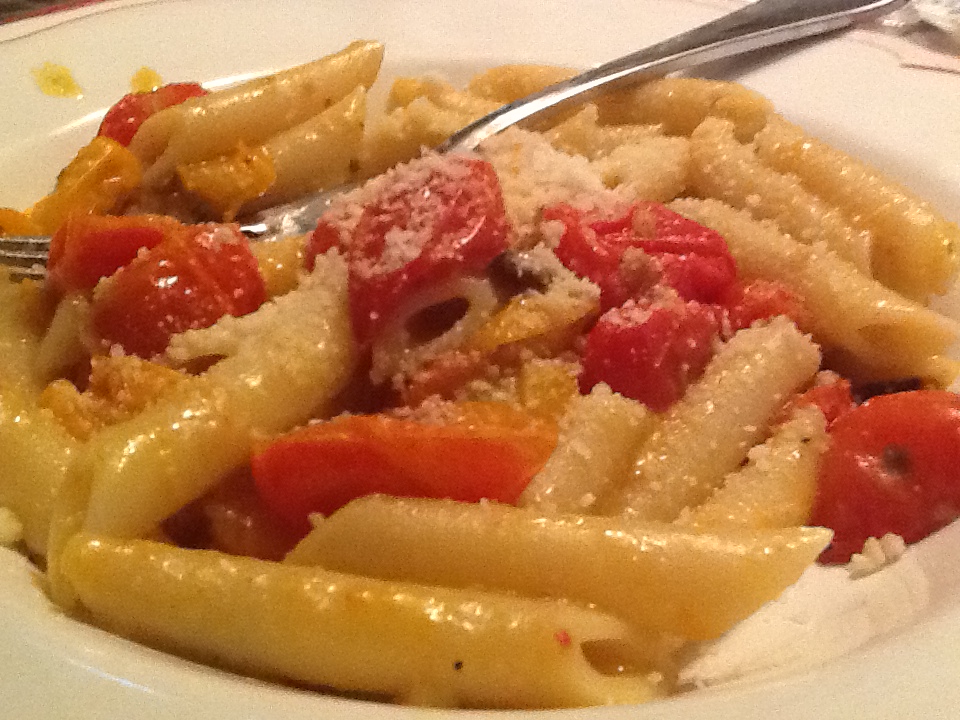
Image 2001 was the year of the “cherry tomato.”  When I look through my folder of pasta recipes, I laugh at all the different recipes using cherry tomatoes that my friends and I shared during this period.  We were crazy for these red, juicy, flavorful little tomatoes.  Over the years, we have seen yellow ones, orange ones, and even some purple colored heirloom types appear at farmers’ markets and supermarkets.  I love using these tomatoes whenever I can.  When I first came upon this recipe in 2001, I thought that perhaps I could substitute this sauce for a Sunday “red sauce” for my family.  It’s a bit richer and thicker than the other cherry tomato sauce I have posted.  But while everyone thought it was delicious, it just didn’t cut it for my Italian family, who only wanted a heavy red sauce (“ragu”) on Sundays.  Really people, not even in the summer??  I did try this several times when we were gathered at the Jersey Shore ( notice I didn’t say “down the shore”), but still it was a “no go” for Sundays.  Thank goodness times change, and so do people.  Now even my 92 year old dad enjoys this roasted tomato sauce on Sundays.  I just made it for him this past Sunday, and after his second bowl, he said, “why don’t we have this more often?”  And, as you will see from the pictures, I didn’t use only red tomatoes! The beauty of this dish, aside from the colorful presentation, is that it can all be made in under thirty minutes.  Once you put the tomatoes in the oven, you just boil the pasta water, cook the pasta al dente, and then it all comes together at one time.  I promise you that this dish will become a mainstay for your family, yet elegant enough for company.  I’ve “wowed” many with this dish, especially unexpected company.  I usually have cherry tomatoes in the refrigerator, and of course, the other ingredients are staples for any Italian home cook. I hope Sunday’s leftovers are still in the fridge.  It’s yummy cool as a pasta salad as well.

RECIPE:

2 pounds small cherry tomatoes, of any color, halved

2/3 cup extra virgin olive oil, plus 3 TBSP for tossing

Sea salt

Freshly ground pepper

1/2 cup freshly grated Pecorino Romano cheese, plus more for serving

1/2 cups bread crumbs (I use Italian flavored bread crumbs)

1 pound penne

1.  Preheat oven to 425 degrees.  Line bottom of casserole dish with cherry tomatoes in a single layer, halved side up.  ( I crowd them all together and don’t pay too much attention to what side is up). 2.  Pour oil on top.  Season with salt and pepper.  Sprinkle cheese and bread crumbs on top. 3.  Bake until tomatoes have wilted, about 20 to 25 minutes. 4.  Meanwhile, bring a large pot of salted water to a boil.  Season with enough se salt     so that the water tastes mildly salty. 5.  When tomatoes are just about done, add penne to water and cook until al dente.  Scoop out about a cup of pasta water and reserve. 6.  Drain pasta and add to casserole.  Place over medium heat and fold tomatoes and pasta together, adding another 2 to 3 tablespoons of oil, to coat.  Taste and adjust seasonings.  If it is too dry, add a little reserved pasta water. 7.  Serve, passing more grated cheese at the table. Image Image Image Image Image Image Image Image Image

Key Lime Pie

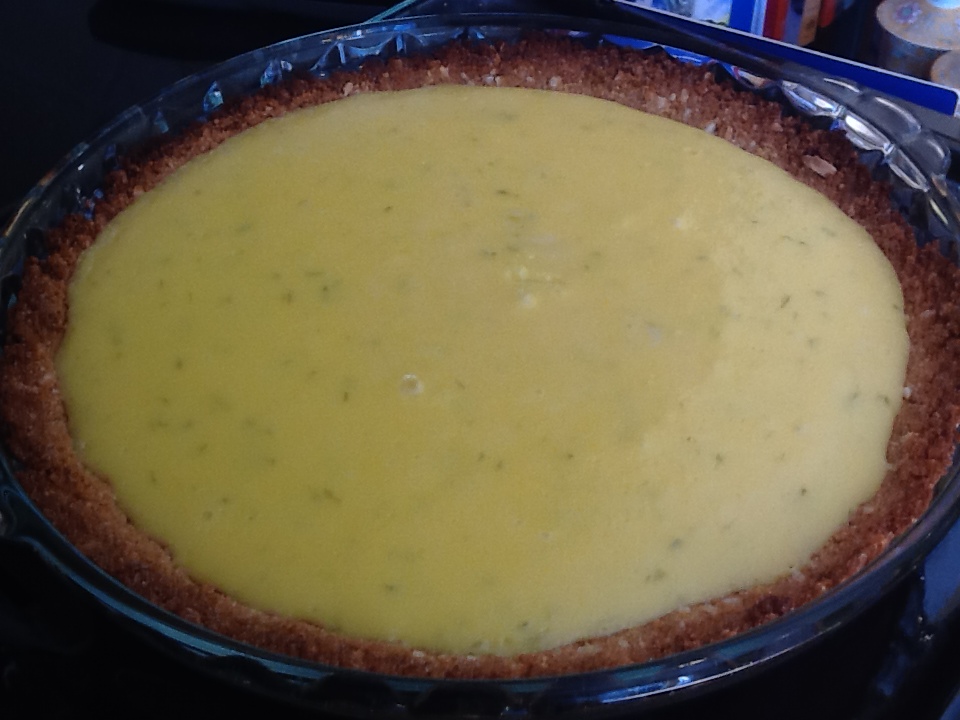
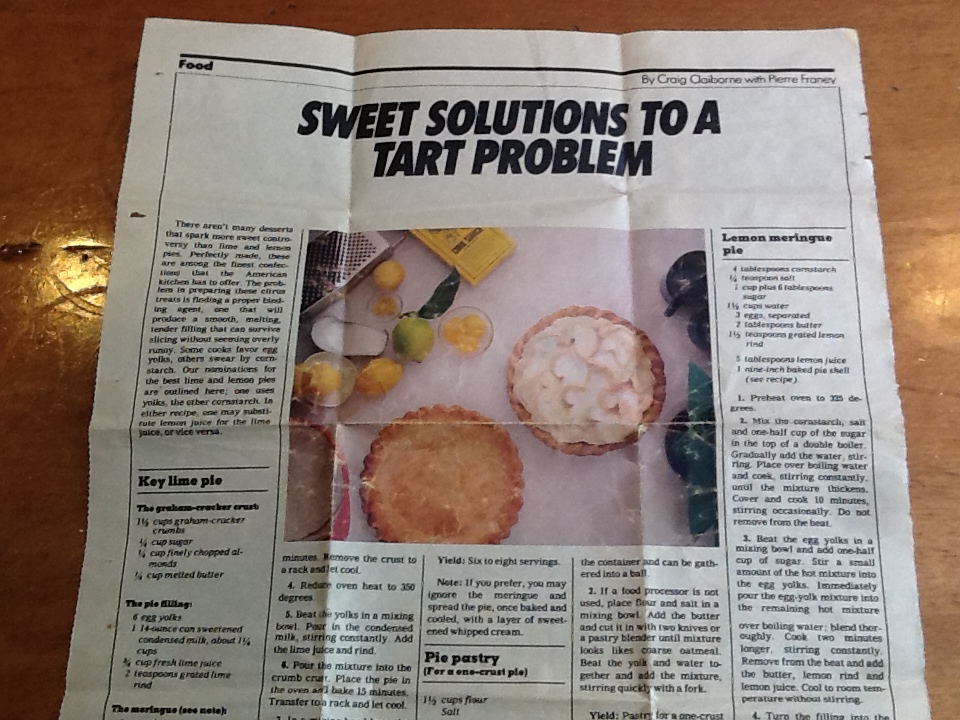
ImageI first tasted Key lime pie in Key Biscayne, Florida when I was 19 years old.  Upon first bite of this velvety, sweet dessert, I knew I was in love.  I would forever be on a quest for the perfect Key lime pie.  It was not easily found outside of Florida back then, so many years went by before I met up with this delicious stranger once again.  But whenever I went to Florida, you knew what I was getting for dessert, even before a menu came out.  Now that I am spending more time in Florida (oops, is my age showing?), I always order Key lime pie every time we are out to dinner.  After our stay is over, I pick the “winner” as they all claim to be the “authentic recipe.”  I do admit to being a bit obsessed.  

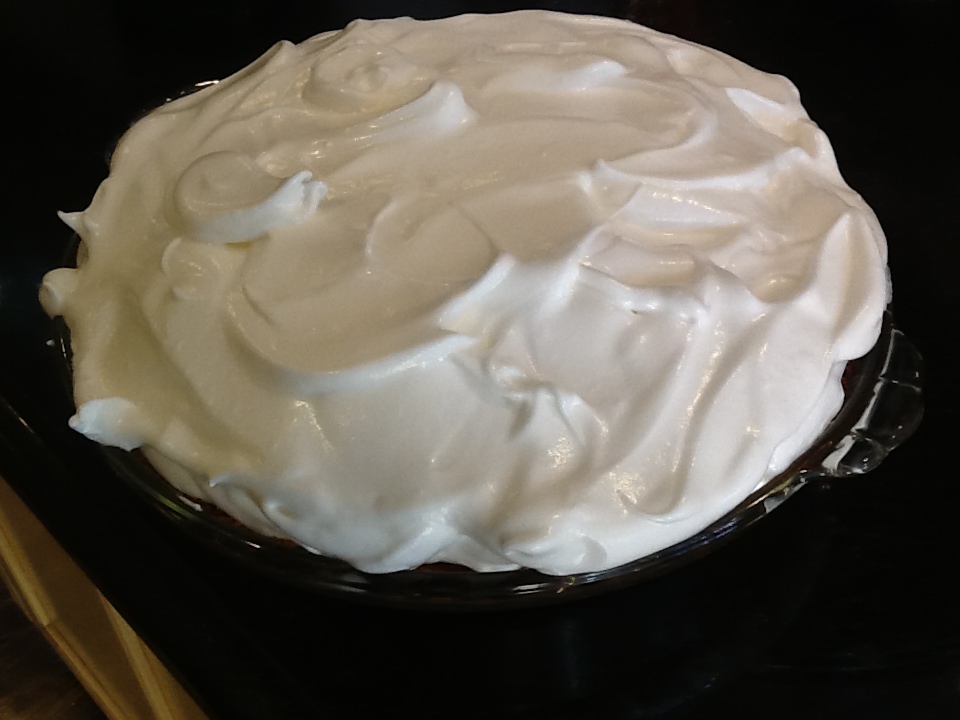
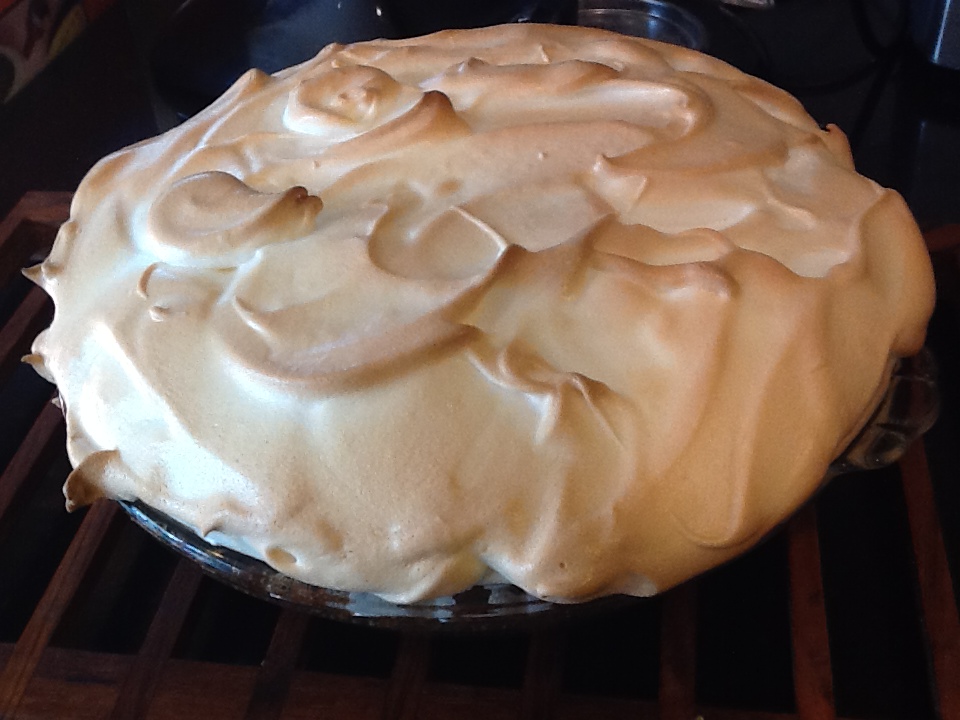
But the real “winner” is from this recipe that I tore out of the New York Times Magazine in 1981 by Craig Claiborne and Pierre Franey.  These two chefs were culinary icons at this time, and their recipe intimidated me.  Was I up to their standards?  I didn’t think so at the time, but I simply had to give it a try.  Even though I keep comparing it to many others, I always come back and say “this one is simply the best.”  I think the meringue could have something to do with it.  You be the judge, and please let me know what you think.  And if you have a better recipe, or a restaurant to recommend, please do.  I just can’t get enough  of this Floridian sweet.

RECIPE:

The graham-cracker crust:

1 1/2 cups graham-cracker crumbs

1/4 cup sugar

1/4 cup finely chopped almonds

1/4 cup melted butter

The pie filling:

6 egg yolks

1 14-ounce can sweetened condensed milk, about 1 1/4 cups

3/4 cup fresh lime juice

2 teaspoons grated lime rind

The meringue (see note):

6 egg whites ** See note

1 cup sugar

1/2 teaspoon cream of tartar

1.  Preheat oven to 375 degrees.

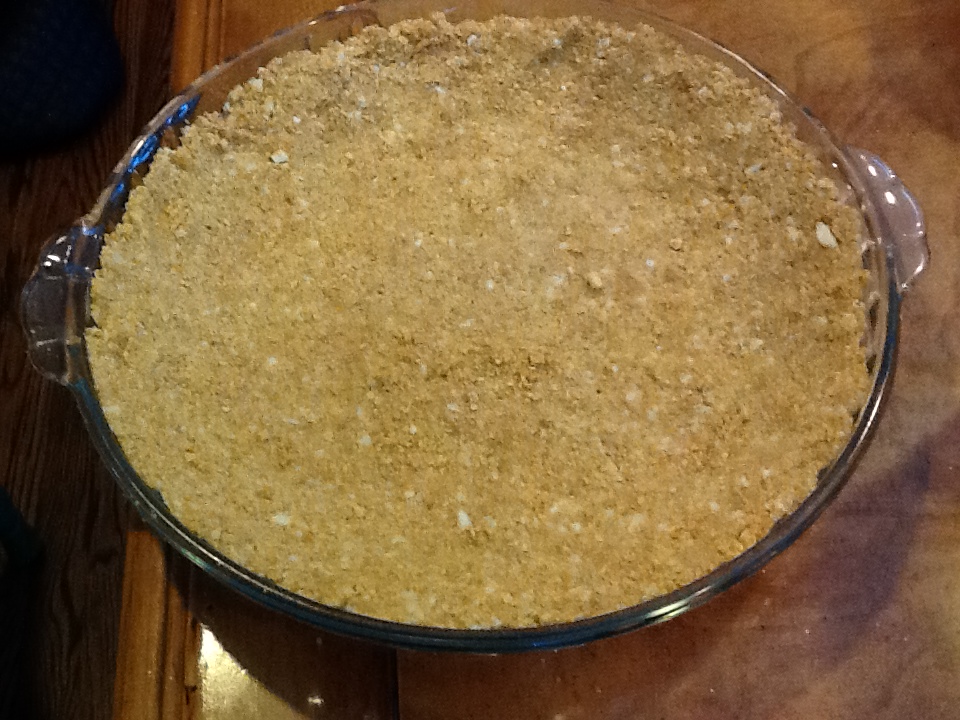
2.  Combine the crumbs, sugar, almonds and butter in a bowl.  Blend well.

3.  Use the mixture to line the bottom and sides of a 10-inch pie plate.  Bake eight to ten minutes.  Remove the crust to a rack and cool completely.

4.  Reduce oven heat to 350 degrees.

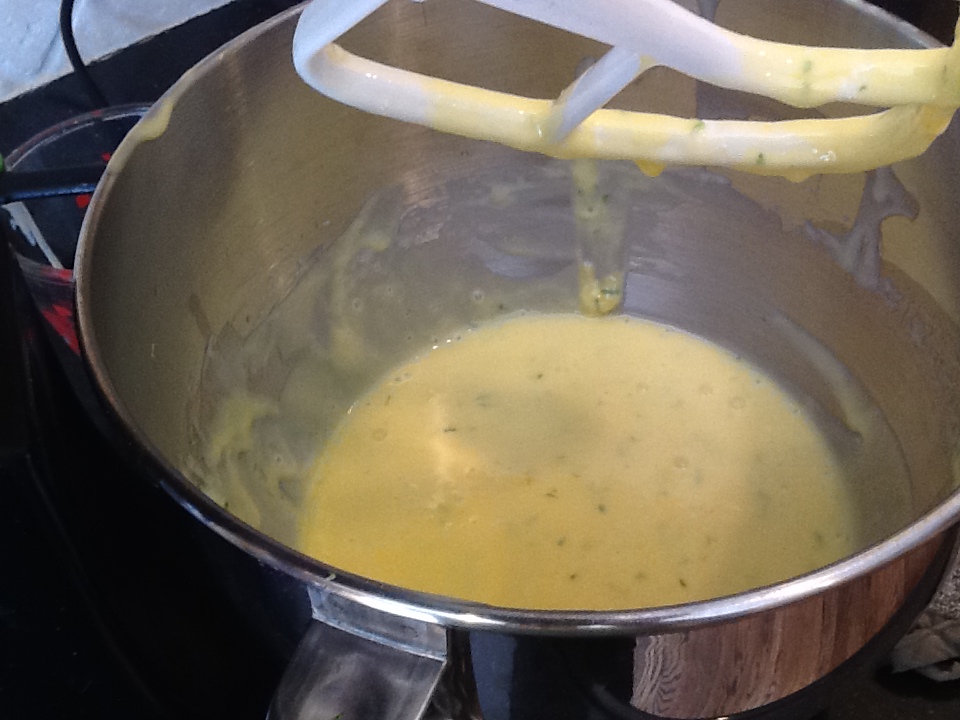
5.  Beat the yolks in a mixing bowl.  Pour in the condensed milk, stirring constantly.  Add the lime juice and rind.

6.  Pour the mixture into the crumb crust.  Place the pie in the oven and bake 15 minutes.  Transfer to a rack and cool completely.

7.  In a mixing bowl, beat the egg whites until frothy.

8.  Gradually add the sugar and cream of tartar, beating constantly until peaks form.  Continue beating until stiff.

9.  Spread the meringue over the pie, being sure to cover all the way to the edge of the crust.  Bake five to six minutes or until meringue is nicely browned.  Remove to a rack to cool. Serve chilled.  ***See note.

NOTE:  from Craig and Pierre (but definitely not me).  “If you prefer, you may ignore the meringue (not), and spread the pie, once baked and cooled, with a layer of sweetened whipped cream.”  

**NOTE:  I use 7 egg whites to make sure that the meringue is plentiful!

***NOTE:  Make sure you cool the finished pie completely before you chill it in the fridge.

Image

Image

Image

Image

Image

Image

Image

Image

Image